
Which Interface and Method Does the Belt Adhesion Result Describe?
Identify the actual interface, belt construction and test method before ranking adhesion values. Cover-to-carcass and inter-ply evidence have different subjects, and alternative methods need their stated comparison basis. An adhesion result is not a splice-fatigue result or a steel-cord bond qualification by default.
On this page
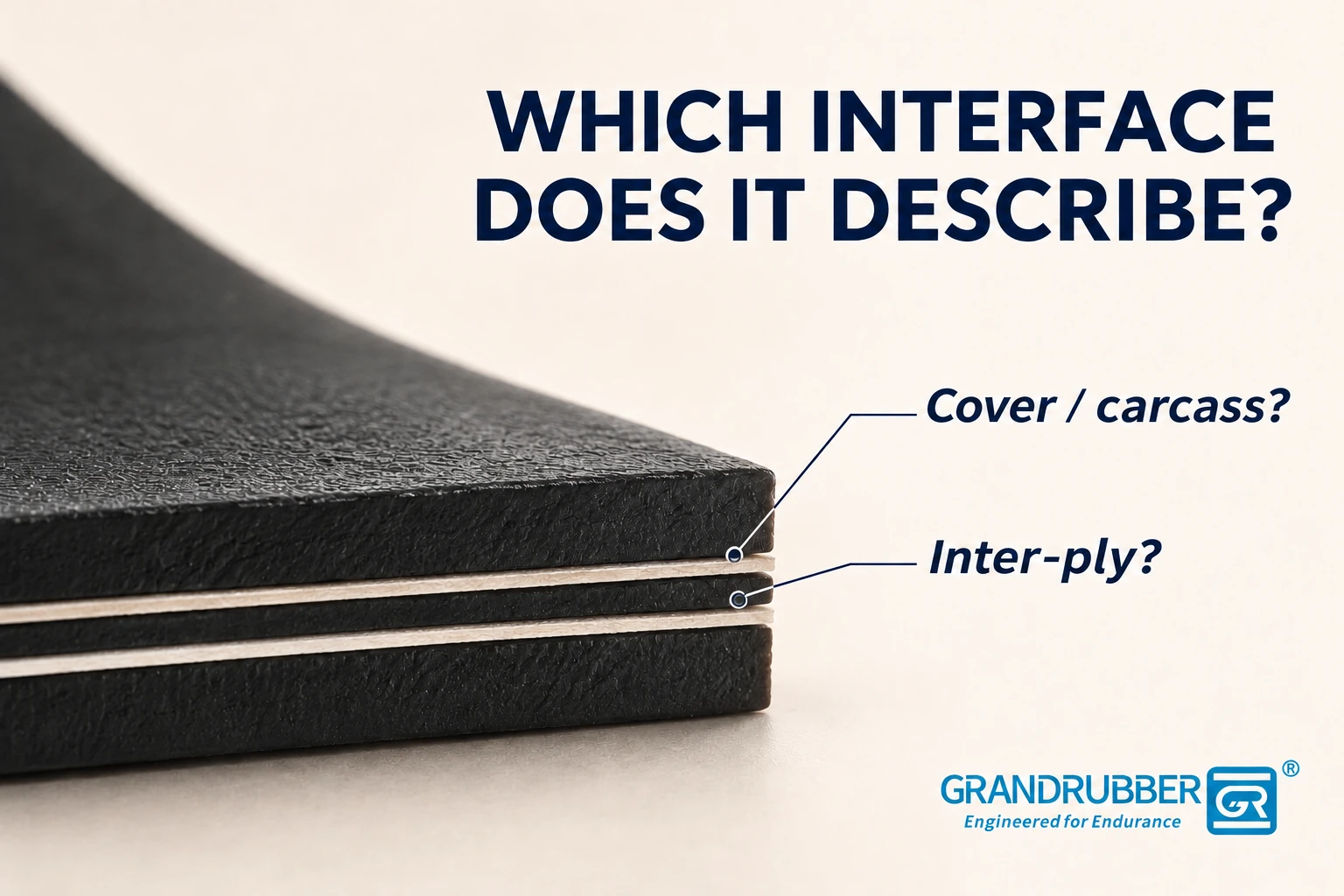 Open full-size image ↗
Identify the actual interface, belt construction and test method before ranking adhesion values. Cover-to-carcass and inter-ply evidence have different subjects, and alternative methods need their stated comparison basis. An adhesion result is not a splice-fatigue result or a steel-cord bond qualification by default.
Adhesion needs a named interface
A belt contains several physical relationships that can appear under the broad word bonding. The buyer should ask which interface a result describes rather than treating adhesion as one universal property number. A report can be useful for one relationship while leaving another unassessed.
ISO 252:2023’s public abstract concerns adhesion between plies and between covers and carcass. It identifies alternative methods A/B and notes that their calculated mean values can differ, with construction suitability to be considered. Its scope excludes steel-cord reinforcement and other specified belt categories. This guide uses the public scope, not the full test procedure.
The practical request is therefore an identified interface and method for the actual offered construction. Do not copy a fabric-belt adhesion figure into a steel-cord or splice-performance line merely because every subject involves some form of bond.
Connect the test subject to the actual belt proposal
Identify the quoted belt designation and construction, then ask what actual specimen or product the report represents. Keep the relevant material and document references visible. A nominal rating or similar photograph cannot establish that a report describes the offered item.
Record the interface tested and the stated method/edition with the actual result and units. If several interfaces are reported, retain them separately rather than reducing the table to whichever value is largest. The applicable purchase requirement should identify what is to be assessed.
The first table is a comparison record, not a test instruction or acceptance specification. It gives no specimen preparation, peeling speed, force threshold or GR minimum. The full applicable procedure and actual project requirements belong with the responsible competent parties.
| Field | Actual reference | Do not replace with |
|---|---|---|
| Belt construction | Offered item and report subject | Nominal rating only |
| Interface | Actual cover/carcass or ply relationship | Generic bond wording |
| Method | Stated alternative/edition and scope | Common units alone |
| Result | Original reported quantity and basis | An invented converted or averaged figure |
| Requirement | Actual requested interface and responsible disposition | Splice fatigue or whole-service approval |
Do not normalize unlike methods with an invented conversion
Before comparing suppliers’ values, check whether the interface, construction and method basis are comparable. Common units alone do not reconcile different subjects or alternative methods. The official abstract itself cautions that the methods can produce different means.
Ask the belt manufacturer or responsible reviewer which basis is applicable and whether the evidence supports the actual requirement. Do not create a universal factor converting one method into another, average unlike interfaces or change a report’s heading to make the comparison appear consistent.
A report outside the cited method’s construction scope should not be presented as compliance with that method without the actual appropriate basis. This guide does not reproduce every scope limit or decide a complete conformity assessment. Obtain the actual applicable method and construction response for the purchase.
Worked tender: two adhesion values with different interfaces
Consider a hypothetical fabric-belt tender. One submission reports an identified cover-to-carcass result; another gives an inter-ply result without a clear method reference. The buyer ranks them by value as if both answer the same adhesion requirement. No actual numbers or GR results are represented.
First identify which interfaces the purchase requires and which each document actually addresses. Request the missing method and offered-item relationship. The first result should retain its cover/carcass subject, while the second needs its own identified basis. Neither value should be moved to the other interface’s cell.
If alternative methods are involved, obtain the responsible comparison response instead of declaring the larger mean superior. A method label is part of the result’s meaning, not optional fine print.
The second table separates these gaps. It enables a consistent evidence request without inventing an adhesion threshold, a cross-method conversion or an unsupported claim that GR exceeds a standard by a particular percentage.
| Submission | Gap | Clarification |
|---|---|---|
| Cover/carcass result versus inter-ply result | Different interfaces | Request evidence for each required relationship |
| Method omitted | Result basis unclear | Identify actual method and report scope |
| Alternative methods ranked directly | Comparable basis not established | Obtain responsible method/construction response |
| Fabric report used for steel cord | Scope relationship absent | Identify the actual applicable evidence |
Keep adhesion distinct from complete splice or service acceptance
An adhesion test addresses its own stated subject and loading conditions. It does not automatically establish repeated-flexing splice performance, every internal condition or the life of a belt in a conveyor. Those requirements need their own applicable evidence and review.
If the offered belt construction or material changes, ask whether the earlier report remains applicable. Retain the final proposal and relevant evidence together rather than attaching one old test to every future variation in a product family.
The commercial order should also state what evidence is actually required and available. No test value, pass threshold or human technical approval is created by this educational guide. GR’s fabric-belt category is an enquiry entry, not proof that a particular report or method result is held for every item.
Request an interface-specific adhesion response
Provide the actual belt designation, required interfaces and project evidence basis with the enquiry. Ask GRAND RUBBER to identify the offered construction and relevant available documents, with method/subject gaps stated explicitly for responsible review.
Use the splice-evidence guide for the separate static-versus-repeated-duty question and the technical-documents guide for general scope checks. Here the distinctive decision is whether the adhesion values actually concern the same interface and method before they are compared.
The next action is one table preserving actual result, interface, method and offered-item relationship. Keep unlike subjects visibly separate and obtain the applicable disposition instead of turning every bonding-related document into one universal approval.
Buyer FAQ
Are all belt adhesion figures the same property?
No. Identify the actual interface, construction and method represented by the result.
Can methods A and B be treated as numerically interchangeable?
The public abstract notes different calculated means can occur. No universal conversion is provided here.
Does a fabric adhesion report qualify steel-cord bonding?
Not by default. Preserve method scope and obtain the applicable evidence for the actual construction.
Does high adhesion prove repeated splice life?
No such outcome follows from that separate test alone. Request the actual splice and duty evidence required.
Does this guide set a minimum adhesion value?
No acceptance threshold or GR result is supplied. Use the actual applicable purchase and method requirements.
What if a construction changes after testing?
Ask whether the report represents the revised offer and obtain the responsible applicability response.
What should the next supplier request specify?
Actual belt identity, required interface, method/basis and the evidence relationship to the offered item.
Sources
Related technical resources
Related products
 Multi-ply Fabric Conveyor Belts
Document and page references
- ISO 252:2023 — Public Abstract: Public scope: ply/cover-carcass adhesion, methods A/B and construction exclusions. Abstract only, not full procedure or universal acceptance limit. Not steel-cord bond test, splice fatigue evidence or GR above-standard claim.
- Editor-derived evergreen purchasing analysis; hypothetical examples are not real cases, field results or approved operating procedures.
Download the reference tables
Source-labelled review extract. Historical references remain historical; this is not a formal TDS, certificate or current availability confirmation.
Download guide tables CSV