GRAND RUBBER — Engineered for Endurance
HomeAbout UsBuyer SupportFAQWorksheetSearchMarkets / EN

GRAND RUBBER / INDUSTRY OVERVIEW

Mining & Quarrying

Ore, mineral, coal or aggregate handling: define the loading point separately from the transport route.

Operating scenarios
3
Candidate product routes
10
Related buying guides
25
EP/NN multi-ply conveyor belt construction illustration showing textile plies and rubber covers.
Multi-ply Fabric Conveyor Belts · EP/NN series construction illustration; selected dimensions require confirmation.

01 / PROCESS & APPLICATION

Separate the operating duties

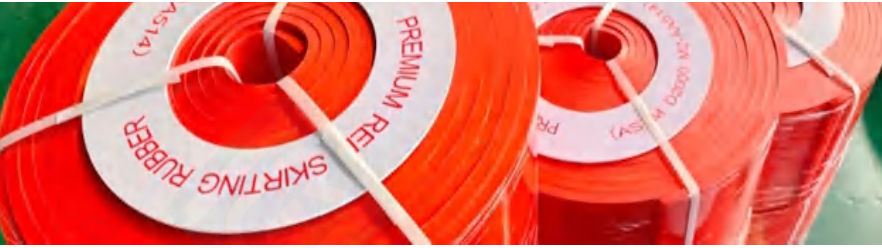
Rubber sheet rolls stored upright in the mining rubber sheet catalogue section.
Mining Rubber Sheets · ; confirm the selected dimensions and configuration.
OPERATING STAGE 02

Mining chutes & wear protection

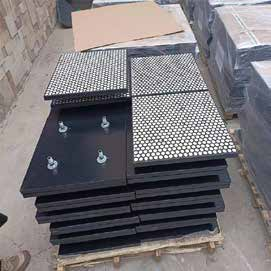
Compare the wear mechanism and installation interface before choosing a sheet or liner.

Check: Record sliding wear versus impact, particle size, medium, temperature, substrate, thickness, cut-piece drawing and bonding/fixing responsibilities.

Open this duty and its product routes →
EP/NN multi-ply conveyor belt construction illustration showing textile plies and rubber covers.
Multi-ply Fabric Conveyor Belts · EP/NN series construction illustration; selected dimensions require confirmation.
OPERATING STAGE 03

Mining conveyor-belt replacement

Start from the complete existing belt specification and route conditions.

Check: Record whole-belt strength, reinforcement, plies or cord layout, covers, width, length, conveyor geometry, tension and splice scope.

Open this duty and its product routes →
02 / DUTY-TO-PRODUCT MAP

Match the product role to the operating problem

Operating stage → candidate products → information needed for review
Operating dutyCandidate productsWhat the buyer needs to establish
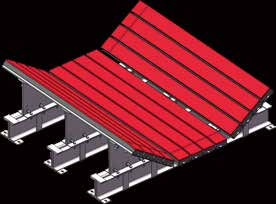
Mining loading & transfer pointsRecord loading drop, largest lump, material density, throughput, belt width, trough angle and the support/fixing drawing.
Mining chutes & wear protectionRecord sliding wear versus impact, particle size, medium, temperature, substrate, thickness, cut-piece drawing and bonding/fixing responsibilities.
Mining conveyor-belt replacementRecord whole-belt strength, reinforcement, plies or cord layout, covers, width, length, conveyor geometry, tension and splice scope.

These are catalogue-based review routes. Confirm the complete duty and evidence; an industry listing is not an engineering approval.

03 / CONSTRUCTION & INTERFACES

Review the candidate product range

EP/NN multi-ply conveyor belt construction illustration showing textile plies and rubber covers.
Multi-ply Fabric Conveyor Belts · EP/NN series construction illustration; selected dimensions require confirmation.
Conveyor Belts

Multi-ply Fabric Conveyor Belts

EP/NN multi-ply rubber conveyor belts for mining, cement and bulk handling. Match whole-belt strength, plies and cover grade to your material and conveyor before ordering.

Carcass
EP or NN
EP single-ply strength series
100, 125, 150, 200, 250, 300, 350, 400 and 500 N/mm
NN single-ply strength series
100, 125, 150, 200, 250, 300, 400 and 500 N/mm
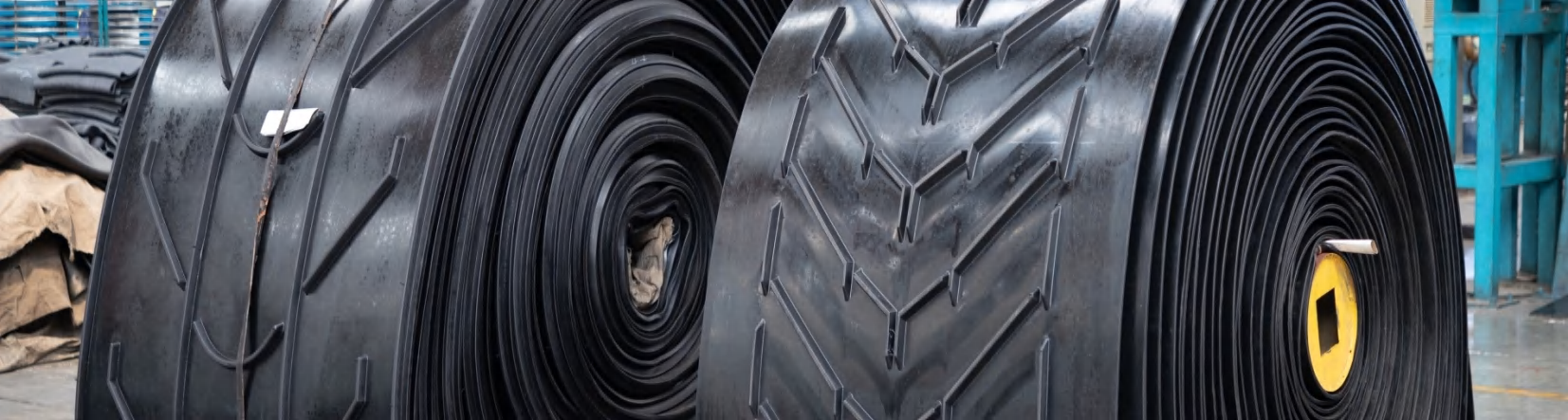
Rolled conveyor belts with raised chevron profiles.
Chevron Conveyor Belts · ; confirm the selected dimensions and configuration.
Conveyor Belts

Chevron Conveyor Belts

Chevron conveyor belts with raised profiles for inclined material handling. Match the pattern and base belt to the material, conveyor incline and approved mould dimensions.

Profile families
Y, V, U, Multi-V and other catalogue patterns
Profile height options
5, 8, 10, 15, 17, 25 and 32 mm
Other profile heights
31.5 mm and low-profile patterns are shown in the mould range
Rubber sheet rolls stored upright in the mining rubber sheet catalogue section.
Mining Rubber Sheets · ; confirm the selected dimensions and configuration.
Mining Rubber Sheets

Mining Rubber Sheets

Rubber sheets with catalogue 10 MPa and 15 MPa grades for mining wear-protection locations. Compare abrasion, impact, dimensions and attachment conditions before choosing a grade.

Hardness
60±5 Shore A (10 MPa grade) / 60±5 Shore A (15 MPa grade)
Density
1.2 g/cm³ (10 MPa grade) / 1.2 g/cm³ (15 MPa grade)
Tensile strength
≥10 MPa (10 MPa grade) / ≥15 MPa (15 MPa grade)
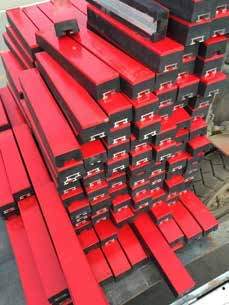
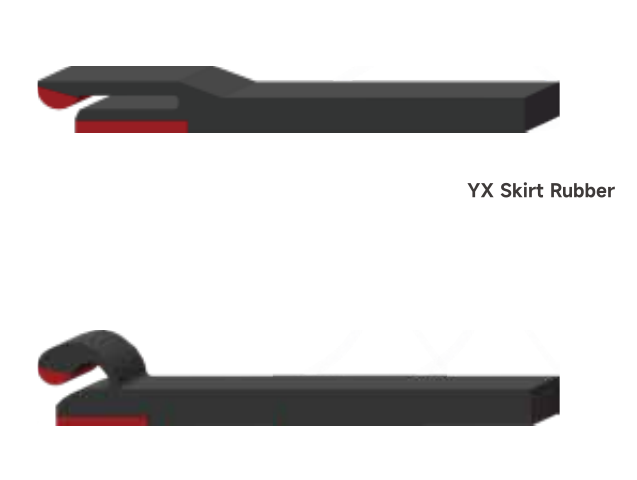
Rubber Skirtboard Sheet · original GRAND RUBBER catalogue product photograph
Rubber Skirtboard Sheet
Conveyor Components & Maintenance Materials

Rubber Skirtboard Sheet

Rubber skirtboard sheet for conveyor transfer-point interfaces. Specify sheet dimensions, holder and contact conditions, then confirm the actual grade and property combination.

Hardness Shore A
55 / 60 / 65 ±5
Density g/cm³
1.5 / 1.45 / 1.35 / 1.3 / 1.25
Tensile strength MPa
4 / 6 / 8 / 10 / 15

04 / ENGINEERING HANDOFF

Prepare the industry-specific project inputs

Mining & Quarrying · review checklist

  • Material
  • density
  • largest lump
  • throughput
  • loading drop
  • route length
  • incline
  • belt speed
  • wear location
  • ambient/material temperature and safety requirements
01

Identify the operating stage and existing product

02

Share known conditions and the controlled drawing

03

Confirm the selected construction and document scope

Share what you know. Leave unknowns for review.

Send the existing reference, drawing or operating conditions. Confirm the offered construction and document scope before ordering.

Prepare a requirement

05 / BUYER SUPPORT

Read the guidance for your next decision

BUYING GUIDE

EP or NN: what must a buyer compare?

EP and NN names do not establish interchangeable conveyor belts. Compare the declared textile carcass, complete construction and response required by the equipment before accepting a change, even when nominal strength or ply count appears to match.

BUYING GUIDE

How to compare conveyor belt quotations

Compare conveyor belt offers against one requirement revision, identify technical departures first, and align quantity and supply boundaries before comparing price. An unpriced or unconfirmed difference remains an open decision, not an assumed saving.

BUYING GUIDE

What information belongs in a conveyor belt quotation request?

A useful conveyor belt quotation request separates documented requirements, observations and missing inputs. Identify the belt and duty, assign each uncertainty to the right reviewer, and state whether you need preliminary guidance or a defined quotation.

BUYING GUIDE

Datasheet, test report or certificate: what does each prove?

Match each document to the specific claim it supports: a product description, a result for an identified specimen, or certification of a stated scope. More files do not close an evidence gap if they concern a different item or question.

BUYING GUIDE

Hardness alone does not select a wear lining

Hardness is one material property, not a wear-lining selection rule. Compare the actual damage and mounting duty with identified material evidence measured on a compatible basis before choosing a lining.

BUYING GUIDE

Does ST1000 identify one complete belt construction?

ST1000 is a strength designation, not a complete steel cord belt specification. Identify the source schedule and full offered construction before comparing covers, cord arrangement, width and joining requirements.

All technical resources

Questions buyers ask before choosing

How do I choose between EP and NN conveyor belts?

Start with the existing belt designation, width, number of plies, covers and required whole-belt strength. EP and NN identify different reinforcement constructions; the label alone does not establish interchangeability.

Continue to the related product or guide
What is the difference between supplied specifications and batch test results?

A datasheet describes the identified product and specification. A batch test report records the tests and results for its stated sample or batch. A management-system certificate describes a named organisation and certified scope; it does not establish every product performance claim.

Continue to the related product or guide
What is the difference between a test report and a certificate?

A datasheet describes the identified product and specification. A batch test report records the tests and results for its stated sample or batch. A management-system certificate describes a named organisation and certified scope; it does not establish every product performance claim.

Continue to the related product or guide
How do I compare two belt quotations with different technical specifications?

Place belt width, length, carcass, strength, ply count, top and bottom covers, edge type and stated standard in one comparison table. List deviations rather than assuming two offers describe the same product.

Continue to the related product or guide
What information is needed to request a conveyor belt quote?

Include product type, existing designation, width, quantity, belt length or roll lengths, carcass, strength, covers and the required standard where known. State what is unknown instead of guessing.

Continue to the related product or guide

06 / PROCUREMENT DOCUMENTS

Product-specific files & evidence

Catalogue extracts contain the listed specifications, source and purchasing conditions. Controlled TDS, batch reports and certification originals require confirmation for the selected product and order.

Catalogue reference

Source-labelled data and actual extract downloads are available above.

Order-specific evidence

Confirm file revision, applicable product, required tests and acceptance conditions.

Document control

Manufacturing & quality

Review company and quality information separately from the source catalogue values.

Review the evidence routes

Catalogue basis and project evidence

; ; African Mining draft. These are catalogue application scenarios, not a representation of an authorised GR project at a named customer. Request the applicable drawing, offered specification and evidence.

Review manufacturing and quality information