
How should mining buyers compare a belt cover and its evidence?
Mining buyers should compare the stated cover requirement and the evidence for the actual offered compound on the same basis. Separate wear, cutting, impact and other exposures before ranking abrasion numbers or adding cover thickness.
On this page
 Open full-size image ↗
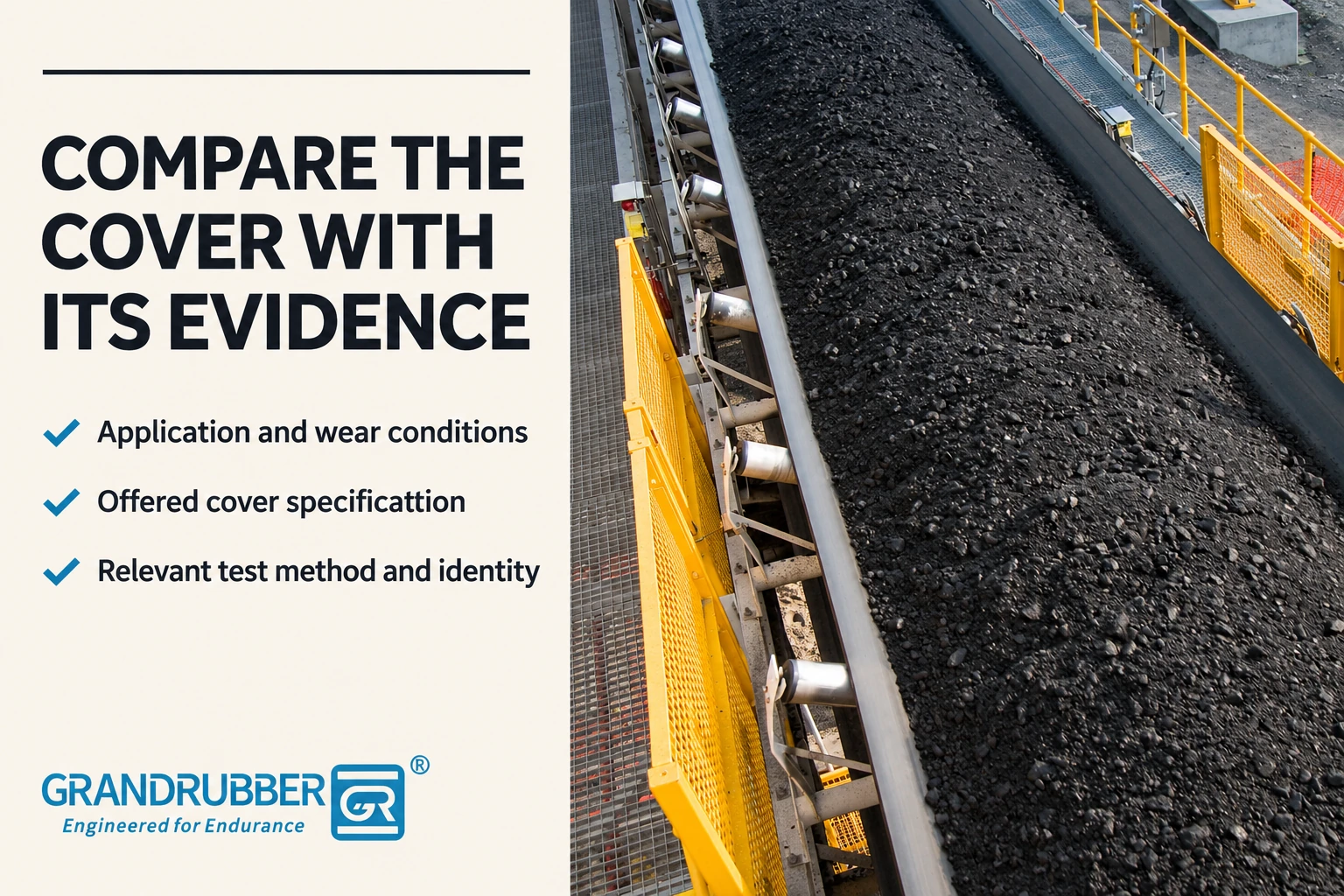
A mining-belt cover comparison needs a duty description and a traceable compound proposal. A low abrasion value, a thick cover or a mining photograph does not establish the best complete belt. This guide focuses on cover evidence; the thickness and full-specification guides address different purchase decisions.
Describe the damage or duty rather than a desired slogan
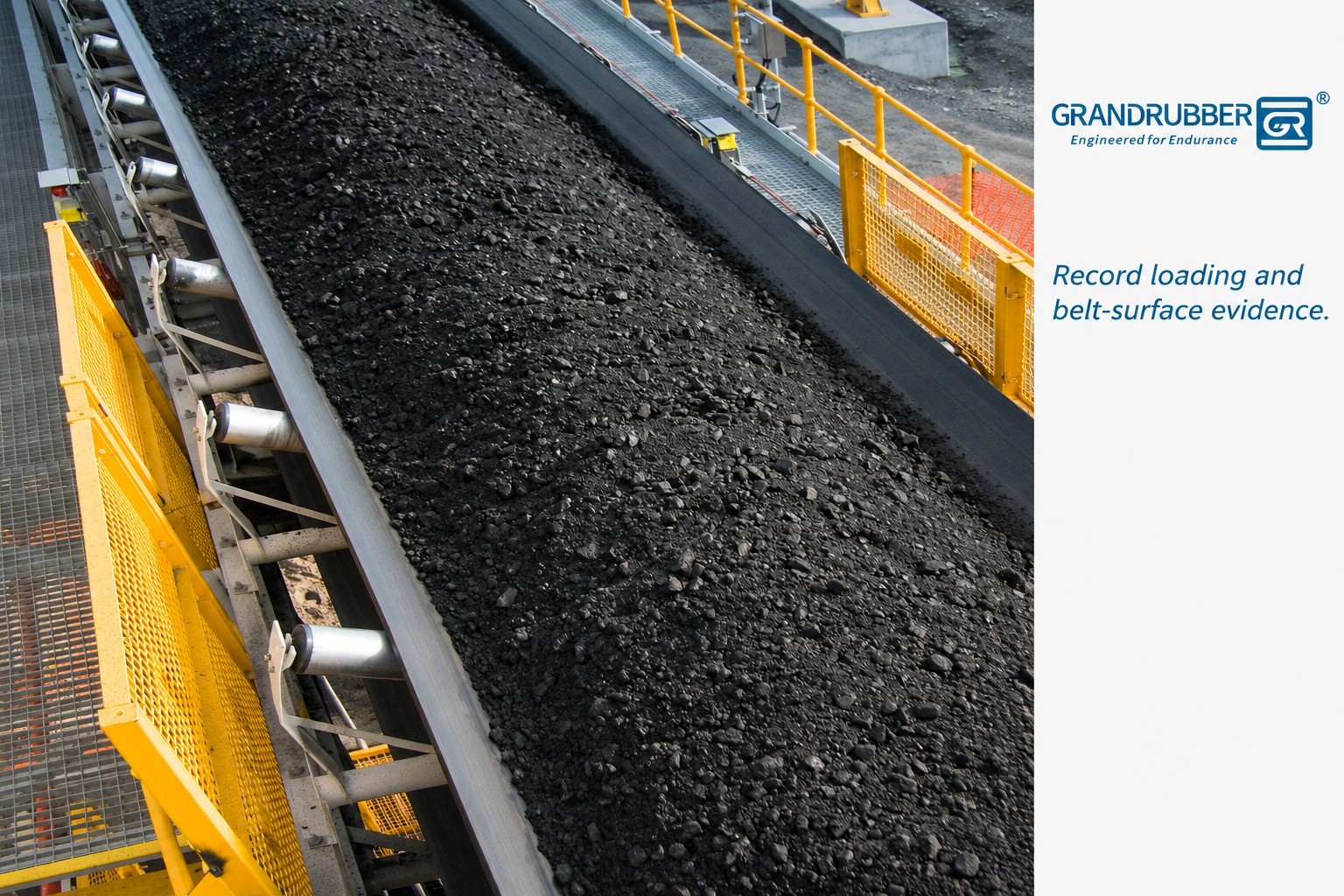
Identify the material, loading arrangement and observed wear or damage from authorized site records. Distinguish gradual surface loss, cutting, local impact damage and other exposures where actually observed. Avoid diagnosing the whole conveyor from one photograph.
The general catalogue lists cover-property categories alongside separate belt constructions. Those categories help identify a required property discussion, but do not show that one offered compound supplies every listed resistance or that changing the cover resolves the site’s underlying problem.
Compare results only with an identified basis
Ask for the actual offered compound designation, relevant test method, unit and conditions, and the specimen or product represented. Distinguish a required limit, a nominal catalogue entry and a reported test result.
The first table keeps these records separate. An abrasion result does not describe every cutting or impact response, and different methods should not be ranked as if they were the same test. A statement such as heavy-duty needs a defined meaning before it can support a comparison.
| Record type | Identify | Do not confuse with |
|---|---|---|
| Duty | Material and observed exposure | Generic mining label |
| Required property | Method, unit and acceptance basis | A reported result |
| Offered compound | Exact identity and construction | Every catalogue option |
| Test evidence | Sample, conditions and applicability | Guaranteed site life |
Worked example: the lower abrasion number is incomplete
Assume a hypothetical buyer receives two cover proposals. One highlights abrasion; the other refers to resistance to cutting. Their methods, compound identities and duty assumptions are not aligned. No values, prices or service lives are assigned.
Ask each supplier to respond to the same duty and evidence request. Identify whether the reported properties answer the observed failure question and what other requirements remain. Do not turn one test advantage into a promised life or downtime reduction.
The second table records a defensible comparison outcome: evidence may be comparable for one property while another concern remains open. If a proposal changes thickness, reinforcement or joining as well as compound, list those separately so a cover comparison does not conceal a complete construction change.
| Concern | Comparable response | Open if absent |
|---|---|---|
| Surface wear | Same relevant test basis | Number-only ranking |
| Cutting/impact | Applicable evidence for concern | Abrasion as all-purpose proof |
| Other exposure | Identified actual requirement | Universal resistance claim |
| Construction change | Separate marked departures | Hidden thickness/carcass change |
Request a marked cover proposal against the duty
Send the duty record and required property basis through the relevant conveyor-belt enquiry. Request the exact compound, supporting evidence, complete offered construction and any departures. Keep the review linked to the identified material and equipment context.
If site causes are not established, ask the responsible technical team what further assessment is needed. This guide does not assign a wear grade, set inspection intervals or predict belt life. An internal mining brochure draft is not evidence of a measured mine result or a current product approval.
Buyer FAQ
Does a lower abrasion number always mean longer belt life?
No universal life prediction follows. The result’s method and applicability matter, and actual duty may include other damage mechanisms.
Can I request every resistance in one cover?
Describe the actual combined exposures and ask for an offered-compound assessment. A catalogue option list does not establish that all options are cumulative.
Should thicker cover be part of this comparison?
Record it as a separate construction question and review the equipment and complete specification. Thickness alone does not define compound performance.
Can a mine photograph support a service-life claim?
Not by itself. A photograph supplies context, not measured performance or proof of a completed project.
What if a supplier only gives a grade name?
Ask for its definition, exact offered compound and the relevant evidence. Keep the proposal preliminary if those facts are required but missing.
Related technical resources
Related products
 Mining Rubber SheetsRubber sheets with catalogue 10 MPa and 15 MPa grades for mining wear-protection locations. Compare abrasion, impact, dimensions and attachment conditions before choosing a grade.
 Multi-ply Fabric Conveyor BeltsEP/NN multi-ply rubber conveyor belts for mining, cement and bulk handling. Match whole-belt strength, plies and cover grade to your material and conveyor before ordering.
 Steel Cord Conveyor BeltsSteel-cord conveyor belts for high-tension, long-distance bulk conveying. Compare ST, STE and STH constructions against belt width, cord layout, pulley and splice requirements.
Document and page references
- Catalogue_GRAND_RUBBER.pdf, PDF pp4,5,6,7,8,9: Separate belt/cover categories and property contexts; no mine outcome or combined-resistance approval.
- Decision tables, hypothetical examples and follow-up questions are editorial purchase-review aids; they are not customer cases, site instructions or technical approval.
- Internal African-mining brochure is a draft, not verified performance/case evidence; no numerical life or downtime claim adopted.
Download the reference tables
Source-labelled review extract. Historical references remain historical; this is not a formal TDS, certificate or current availability confirmation.
Download guide tables CSV