
What should a distributor specify for roll packing and marking?
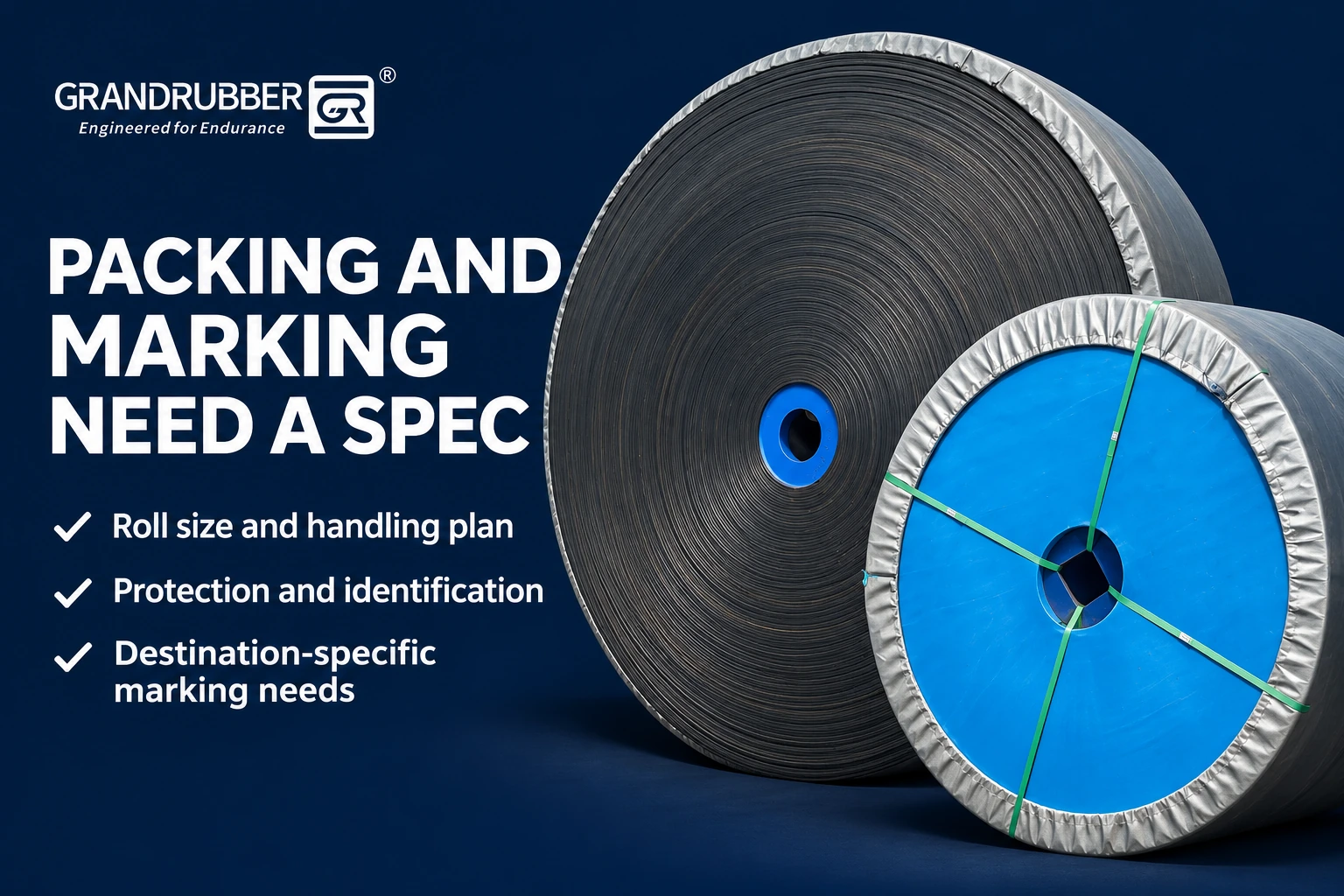
Give each product line and each physical package a traceable identity. Agree supply format, package allocation, handling constraints and approved marking before dispatch; a product code alone cannot identify a mixed shipment.
On this page
 Open full-size image ↗
A distributor’s packing handoff connects the accepted item schedule to the actual rolls, pieces or assemblies shipped. Separate product identity, package identity and buyer-approved artwork. This guide prepares that record; it does not set lifting instructions, promise a packing format or approve a shipping mark.
Start with the accepted item schedule
Identify the exact product, revision, ordered unit and supply format for every line. A roll, piece and assembly need different descriptions. If multiple sizes or constructions share a family name, use separate item identities so the warehouse does not rely on appearance.
The conveyor manual includes storage/handling and package context, but a general catalogue does not define the packing for every order. Draft service descriptions likewise do not establish agreed branding, lead time, minimum quantity or included accessories.
Map physical packages back to product lines
Record a package identifier and its relationship to the accepted line items. Include the agreed quantity/unit and the actual packing information once available. Identify receiving constraints such as handling access and storage requirements for responsible review.
The first table is a mapping structure, not an invented packing list. Mark estimates as provisional and replace them with verified dispatch information. Do not assign a package weight from a generic product photograph or an unrelated catalogue construction.
| Record | Identify | Status before dispatch |
|---|---|---|
| Order line | Accepted item/revision/unit | Confirmed order basis |
| Package | Unique package reference | Linked to actual contents |
| Packing data | Actual quantity/unit and agreed format | Provisional or verified |
| Receiving context | Destination handling/storage constraints | Responsible review |
Worked example: similar-looking rolls for different orders
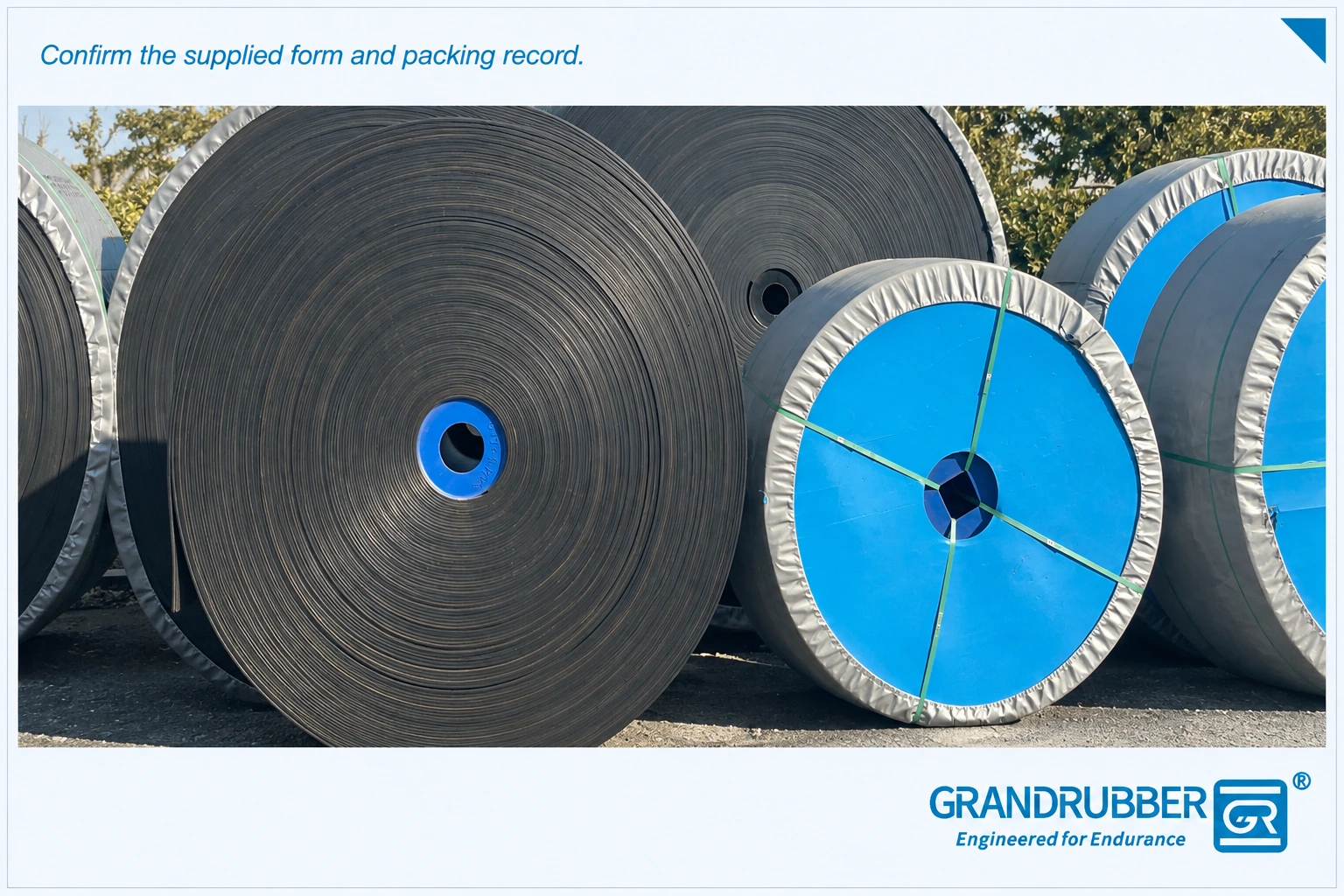
Assume a hypothetical shipment contains rolls for two customer references and pieces of a separate rubber product. Their external colour is similar. No quantities, weights or package dimensions are invented.
Assign traceable package references and connect them to the approved line schedule. Ask who approves the label text, customer reference and any private branding. Keep labels consistent with the packing list and item identification rather than treating artwork as an independent design task.
The second table distinguishes product facts from logistics and commercial instructions. A marking request should not change the product designation or imply certification. A customer logo should be used only within the agreed authorization and artwork scope.
| Label content | Confirm | Do not infer |
|---|---|---|
| Product designation | Accepted item identity | Unapproved replacement code |
| Customer reference | Buyer-approved exact text | Permission from a draft |
| Logo/artwork | Approved file and scope | Unlimited branding rights |
| Document link | Packing-list/package correspondence | Proof of certification |
Release the pack and marking schedule as a revision
Send the line schedule, destination/receiving context and proposed marking requirements through the product enquiry. Request the proposed packing, package allocation, document relationship and unresolved constraints. Ask the buyer to approve the exact artwork and language where applicable.
Before dispatch, reconcile the actual package record with the accepted order and documents. Keep loading methods and handling execution under the responsible controlled process. This article does not supply rigging calculations or turn a catalogue storage illustration into shipment-specific instructions.
Buyer FAQ
Can package IDs replace product codes?
They serve different purposes. Retain the link from each package to the accepted product line and revision.
Should dimensions on the label be copied from a catalogue range?
Use the agreed item-specific and verified dispatch information. A range does not identify the actual contents.
Does private marking mean a product is independently certified?
No. Marking and certification evidence are separate matters; use only applicable approved claims.
Can estimated weights be used as final shipping data?
Keep estimates clearly provisional and obtain the verified information required for dispatch documents and handling planning.
Who approves a customer’s logo placement?
Assign that responsibility in the handoff and retain the accepted artwork/version and authorized use scope.
Related technical resources
Related products
 Cow Mats & Mattress CoversRubber cow mats, stable mats and mattress covers for different farm areas. Compare surface pattern, backing and dimensions against the floor layout, cleaning and fixing requirements.
 Mining Rubber SheetsRubber sheets with catalogue 10 MPa and 15 MPa grades for mining wear-protection locations. Compare abrasion, impact, dimensions and attachment conditions before choosing a grade.
 Multi-ply Fabric Conveyor BeltsEP/NN multi-ply rubber conveyor belts for mining, cement and bulk handling. Match whole-belt strength, plies and cover grade to your material and conveyor before ordering.
 Steel Cord Conveyor BeltsSteel-cord conveyor belts for high-tension, long-distance bulk conveying. Compare ST, STE and STH constructions against belt width, cord layout, pulley and splice requirements.
Document and page references
- GRAND_RUBBER_Conveyor_Belts.pdf, PDF pp18: General package/storage context only, not shipment-specific handling instructions.
- Catalogue_GRAND_RUBBER.pdf, PDF pp6,7: Product construction/dimension fields, not approved shipping marks.
- Decision tables, hypothetical examples and follow-up questions are editorial purchase-review aids; they are not customer cases, site instructions or technical approval.
- Legacy draft packing/service text is not an approved shipment specification or commercial commitment.
Download the reference tables
Source-labelled review extract. Historical references remain historical; this is not a formal TDS, certificate or current availability confirmation.
Download guide tables CSV