
Why can two GRAND RUBBER catalogues list different dimensions?
When catalogues differ, identify the exact edition, product construction, field label and applicable offered specification. Do not choose the more attractive number or combine values from different schedules into one undocumented product.
On this page
 Open full-size image ↗
A catalogue discrepancy is a clarification task, not permission to assemble a better-looking specification. Retain both source entries, identify whether they describe the same subject and request the controlled basis for the actual offer. The tables below preserve existing reference differences; they are not a current product approval.
Decide whether the entries describe the same thing
Compare document identity, product family, model, construction and field meaning before comparing numbers. Estimated component weight, cover dimensions and a temperature test label are different kinds of information. A newer-looking design or filename alone cannot establish which source governs an order.
Ask whether a difference reflects another construction, a different measurement context, an error or a superseded edition. If the cause is unknown, keep it unknown. The procurement outcome needed is an identified offered item and applicable document, not a speculative explanation for every old discrepancy.
Preserve the original comparison without blending rows
The first table retains explicit source differences already recorded for steel-cord covers, sidewall weight, filter width and heat-related labels. These entries identify where clarification is required. They are not selections for the buyer’s equipment.
Different temperature subjects must remain separate even when a grade name looks the same. Likewise, a production envelope does not prove availability of every construction within it. Request the offered drawing and schedule rather than adopting whichever edition offers the largest range.
| Topic | General / historical reference | Conveyor manual reference | Required decision |
|---|---|---|---|
| ST1000 GB covers | PDF01 p5 / PDF06 p5: 6/6 mm | PDF03 p22: 4/4 mm | Confirm the quoted top/bottom covers and full cord schedule |
| MDSF H240 sidewall weight | PDF06 p14: 7.50 kg/m | PDF03 p8: 5.87 kg/m | Confirm component drawing and rubber/reinforcement version |
| Filter width envelope | PDF06 p16: up to 6500 mm | PDF03 p33: printed range reaches 4500 mm; zero lower bound is invalid | Confirm actual drawing and available construction |
| T4 temperature labels | PDF01 p8 / PDF06 p8: test temperature ≤180°C | PDF03 p35: continuous material ≤175°C, peak 250°C, surface ≤150°C | Different measurement labels must not be treated as equivalent |
Keep draft notes and neighbouring products in their own scope
The second table retains draft-only and page-layout distinctions. The white-belt dimensions and chemical-property labels named there are historical draft references, not confirmed supply or test evidence. The actual general catalogue p13 places pipe-belt data beside thin-belt content; page proximity must not merge the two.
The components manual p19 separately labels polymer and PTFE products. Preserve its printed text as a source issue without inventing a missing minus sign or assigning a polymer claim to PTFE. This is why the product heading and column boundaries matter as much as the number itself.
| Product or field | Existing source content | How to use it |
|---|---|---|
| White-belt dimensions | DOCX03 Product 08: typical width 300–1800 mm; cover thickness 1–6 mm | Draft only; confirm actual white compound, complete construction and offered dimensions |
| Chemical-belt property labels | catalog.docx names hardness IRHD, breaking strength and elongation; PDF01 p9 omits these labels | Draft explanation only; do not merge differing adhesion values across versions |
| Thin-belt numeric tables | PDF01 p13 left side is Pipe Conveyor Belt; right side is Thin Conveyor Belt | Use the right-column four structures; do not borrow the pipe table |
| Polymer / PTFE | PDF04 p19 separates the two sections and prints 196°C in polymer text | Do not add a minus sign or transfer polymer claims to PTFE |
Worked example: two cover schedules appear in one offer
Assume a hypothetical offer cites one edition for a steel-cord designation and another for cover dimensions. It does not identify a complete offered construction. No dimension or rating is selected in this example.
Ask the supplier for one item-specific schedule and a marked explanation of the departures. The third table records the disposition: which source is a reference, which document defines the actual offer and which conflicts remain unresolved.
If the offer intentionally combines features, have that combination explicitly declared and reviewed. It must not be inferred by the buyer from separate catalogue rows. Preserve the answer with the quotation revision so later purchasing does not reopen the same ambiguity.
| Record | Required response | Outcome |
|---|---|---|
| Two source entries | Edition/page/model/field | Traceable discrepancy |
| Offered item | One complete drawing/schedule | Identified proposal |
| Reason for difference | Confirmed explanation or unknown | No invented reconciliation |
| Acceptance | Reviewed revision and departures | Order basis retained |
Close the discrepancy with a traceable document
Send the two source extracts and exact field names through the relevant product enquiry. Ask for the applicable document number/revision, complete offered specification and a clear response to each conflict. Retain historical entries as reference rather than silently deleting them.
Where a discrepancy prevents comparison, keep the offer preliminary. No amount of editorial reconciliation replaces a controlled product-specific clarification or the buyer’s required technical review.
Buyer FAQ
Is the newest filename automatically authoritative?
No. Confirm the controlled document and actual offered item; file naming alone does not establish approval or supersession.
Can I combine the best values from several editions?
Only an explicitly declared and appropriately reviewed offered construction can establish that combination. Do not infer it from catalogue entries.
Does a draft explain missing labels in a published table?
It may identify a question, but it does not by itself validate the published table or the offered product. Keep draft status visible.
Should an obvious-looking typo be silently corrected?
Retain the original entry and obtain confirmation when it affects a buying decision. Do not invent a correction that changes a rating.
What should the accepted order cite?
The agreed item-specific specification and document revision, with accepted departures and unresolved exclusions clearly recorded.
Related technical resources
Related products
 Steel Cord Conveyor BeltsSteel-cord conveyor belts for high-tension, long-distance bulk conveying. Compare ST, STE and STH constructions against belt width, cord layout, pulley and splice requirements.
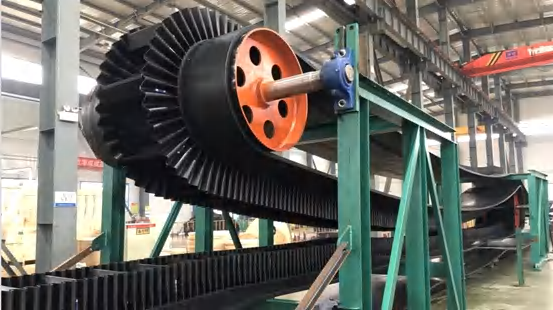 Corrugated Sidewall Conveyor BeltsConveyor belts combining a base belt, corrugated sidewalls and cleats for lifting bulk materials. Review lift, incline and loading geometry together when specifying the assembly.
 Heat-resistant Conveyor BeltsHeat-resistant conveyor belts for hot bulk materials in cement, steel and related processes. Separate continuous, peak and belt-surface temperatures before choosing the construction and cover grade.
 Oil-resistant Conveyor BeltsConveyor belts with oil-resistant cover options for oily materials or exposure. Identify the oil, contact duration and temperature before comparing cover grades and supporting test data.
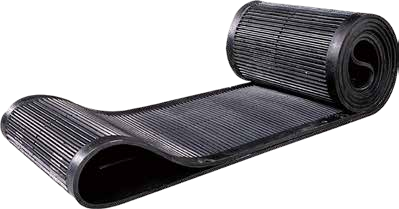 Rubber Filter BeltsReinforced rubber belts with drainage grooves and holes for solid-liquid separation. Check the process medium and equipment drawing to specify groove geometry, holes and belt dimensions.Chemical-resistant Conveyor BeltsConveyor belts for review where materials expose the covers to acids or alkalis. Identify the chemical, concentration, contact time and temperature before assessing the selected rubber grade.
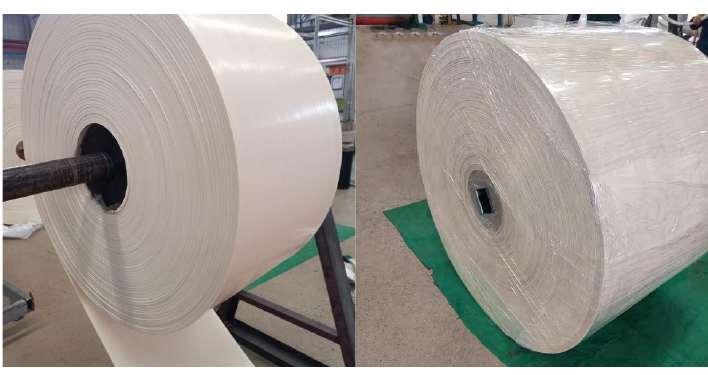 White Conveyor BeltsWhite rubber conveyor belts for product-handling applications. Specify carcass, covers and cleaning conditions, and request applicable original evidence for any direct food-contact requirement.
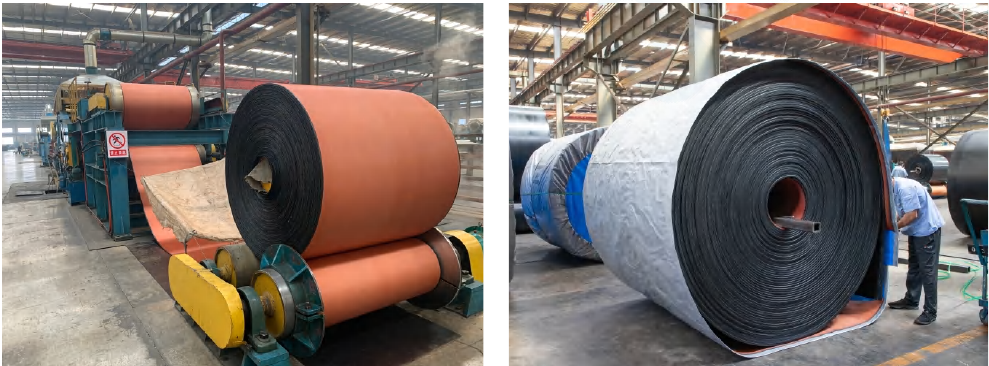 Thin Conveyor BeltsThin conveyor belt constructions for equipment-specific handling. Check thickness, reinforcement, pulley geometry and installation dimensions against the selected source construction and equipment drawing.
 Polymer & PTFE LinersSeparate polymer and PTFE liner options for sliding and material-release interfaces. Confirm the exact material grade, medium, temperature and fixing arrangement before comparing properties.
Document and page references
- Catalogue_GRAND RUBBER 3.pdf, PDF pp5,8,14,16: Historical cover/sidewall/filter/temperature entries retained as discrepancy references.
- Catalogue_GRAND_RUBBER.pdf, PDF pp5,8,13: General reference schedules and actual pipe/thin page boundary.
- GRAND_RUBBER_Conveyor_Belts.pdf, PDF pp8,22,33,35: Other schedules and separately labelled heat subjects, not combined construction.
- GRAND_RUBBER_Conveyor_Components.pdf, PDF pp19: Separate polymer/PTFE headings and printed polymer text.
- Decision tables, hypothetical examples and follow-up questions are editorial purchase-review aids; they are not customer cases, site instructions or technical approval.
- DOCX03 Product08 and catalog.docx remain historical draft-only rows from the preserved baseline; not fresh approved specifications. Underlying full draft files are not distributed.
- GRAND_RUBBER_Product_Catalog_Apple_Style_V1.docx, Product08 (XML table64, 1-based including nested tables): white-belt dimensions are draft reference only, not offered sizes.
- catalog.docx, chemical-belt XML table11 (1-based): historical draft labels only; not approval of published data or supplied product.
Download the reference tables
Source-labelled review extract. Historical references remain historical; this is not a formal TDS, certificate or current availability confirmation.
Download guide tables CSV