
Which temperatures matter in a heat-resistant belt enquiry?
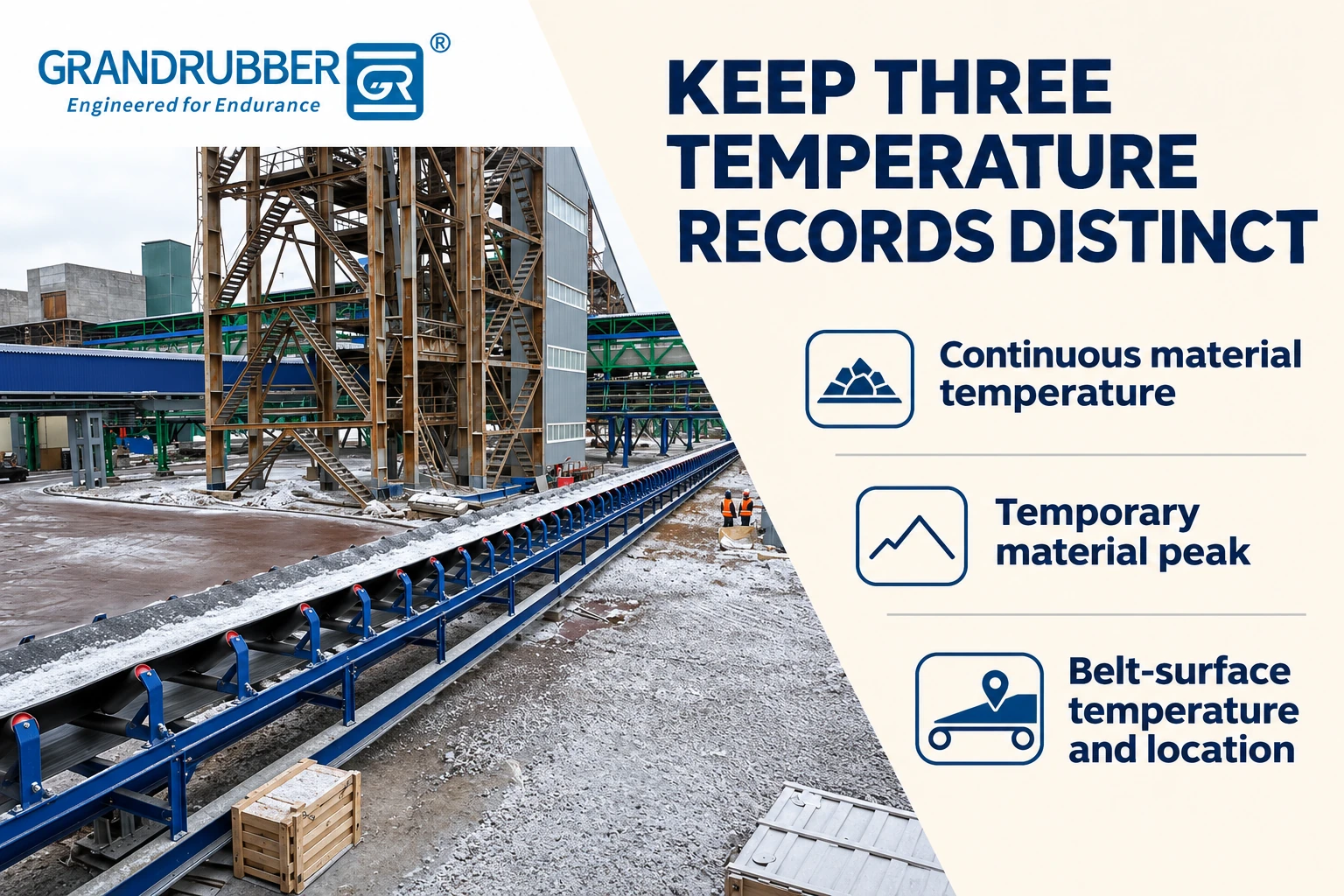
Keep continuous material, temporary material peaks and measured belt-surface temperatures as separate records. Each needs a location, method, duration or frequency and operating context before it can be used in a heat-duty discussion.
On this page
 Open full-size image ↗
A temperature value is incomplete without saying what was measured, where and under which condition. Do not turn a short process peak into a continuous belt-surface value or treat a return-side reading as the material temperature at loading. This guide prepares a measurement record; the heat-selection article reviews the complete belt against the resulting duty.
Define the subject of each reading
Continuous material temperature describes a material condition over the relevant operating period. A temporary peak needs its own event and exposure context. Belt-surface temperature identifies the belt face and location where the reading was taken. None is a universal synonym for the other two.
The belt manual p35 labels these columns separately. The general catalogue p8 uses a test-temperature context for its grade description. A shared T label does not make different column meanings interchangeable or supply a missing measurement.
Build a record another reviewer can interpret
Retain the measured value and unit, instrument or reported source, measurement point, operating condition and date. Identify duration/frequency where relevant and mark estimates as estimates. The first table is a recording structure, not an instruction for obtaining readings near operating equipment.
Use only existing authorized records or a measurement plan approved by the responsible site team. If a point is inaccessible or the instrument method is not known, record that limitation. Guessing a value or approaching an unsafe location does not improve the enquiry.
| Entry | Identify | Missing context |
|---|---|---|
| Continuous material | Material point and operating period | Representative condition not established |
| Temporary peak | Event source and duration/frequency | Peak exposure not characterized |
| Belt surface | Face/location and measurement method | Subject or method uncertain |
| Catalogue reference | Document, column and test/service label | Not a plant measurement |
Worked example: a process alarm and a return reading
Assume a hypothetical enquiry includes an alarm peak for hot material and a separate belt-surface reading on the return route. Their timestamps, locations and exposure relationship are not established. No temperature or grade is assigned.
Keep two entries with two subjects. Ask the site team what the alarm records and what operating condition existed when the return reading was taken. Do not average them or use one to backfill the other. A stable reading at one point does not establish every other contact condition.
The second table converts that inconsistency into specific clarification questions, so a supplier can identify what remains unknown without presenting an invented duty limit.
| Available record | Ask next | Do not do |
|---|---|---|
| Process alarm | What subject, location and event? | Call it belt-surface temperature |
| Return reading | When and where on the belt? | Treat it as every loading exposure |
| Different dates | What operating states differ? | Combine into one measured maximum |
| Only a grade name | What definition and applicable evidence? | Infer missing temperatures |
Send the original observations, not a blended maximum
Submit the labelled temperature record with the material and operating context through the heat-belt enquiry. Keep source catalogue references in separate columns from actual plant measurements. Ask which additional observations the reviewer needs to characterize exposure.
If the purpose is complete belt selection, take the clarified record to the heat-selection guide. This page does not choose a compound, prescribe a test method or authorize operation under an unidentified hot condition.
Buyer FAQ
Can I report the highest value only?
Retain the underlying records and their subjects. A single highest number can hide differences in measurement point, duration or operating state that matter to interpretation.
Is an operator estimate useful?
It can identify a question if clearly labelled as an estimate with its context. It should not be presented as an instrument result or used to manufacture a confirmed exposure.
Must every location be measured before an initial enquiry?
No. Send what is known and identify limitations. Ask the responsible parties which further evidence is required for the actual decision rather than collecting readings indiscriminately.
Does a catalogue peak resolve an unknown process peak?
No. A product reference and an actual operating observation are different records. Keep the unknown input visible.
What if a measurement would require unsafe access?
Do not obtain it through this guide. Refer the evidence need to the responsible site team and its approved inspection or measurement plan.
Related technical resources
Related products
 Heat-resistant Conveyor Belts
Document and page references
- GRAND_RUBBER_Conveyor_Belts.pdf, PDF pp35: Separate continuous, peak and surface headings; no grade or temperature limit adopted.
- Catalogue_GRAND_RUBBER.pdf, PDF pp8: Heat-grade test-temperature-labelled context; not plant measurement.
- Decision tables, hypothetical examples and follow-up questions are editorial purchase-review aids; they are not customer cases, site instructions or technical approval.
Download the reference tables
Source-labelled review extract. Historical references remain historical; this is not a formal TDS, certificate or current availability confirmation.
Download guide tables CSV