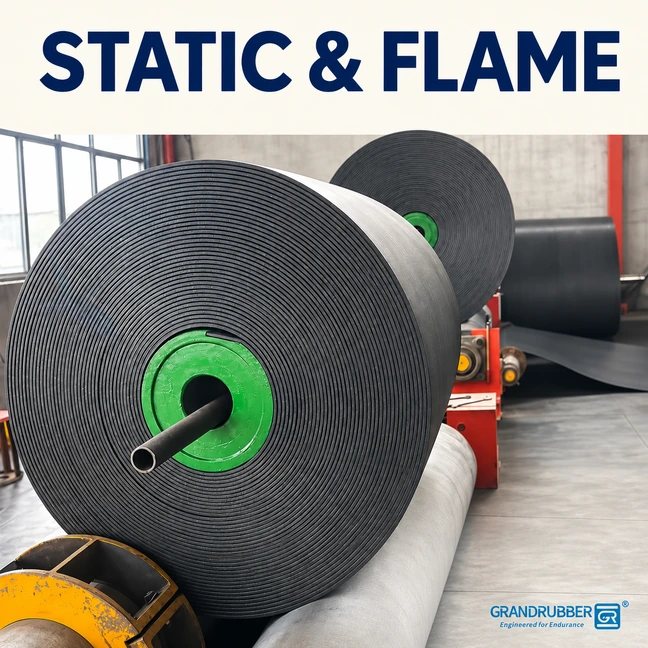
No. Electrical conductivity and reaction to an ignition flame are different properties. A buyer requiring both needs evidence for each requirement on the identified offered belt. Keep product-test evidence separate from the installation’s wider safety assessment and destination requirements.
Elongation at break is not a take-up travel allowance. Identify the elastic and permanent behaviour relevant to the offered belt and the conveyor’s operating basis, then have the responsible equipment reviewer assess the take-up arrangement. A percentage from a laboratory report does not by itself specify a machine setting.
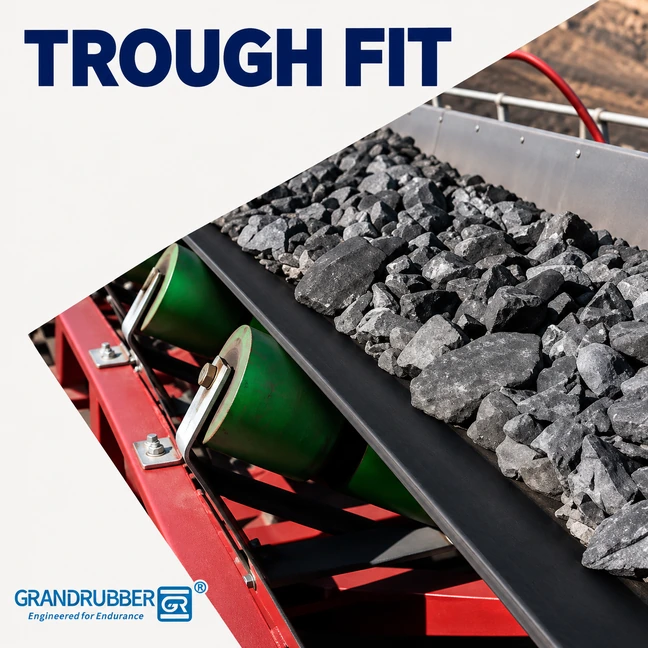
Troughability concerns transverse flexibility: how the belt bends across its width. Check the proposed construction and relevant evidence against the conveyor’s trough arrangement; matching width or nominal strength alone does not establish that fit. Keep the equipment review separate from a laboratory result.
A cow mattress does not remove the need to plan bedding and daily care. Compare the supplied resting surface with the farm’s continuing bedding, cleaning and waste-handling responsibilities before accepting an offer.
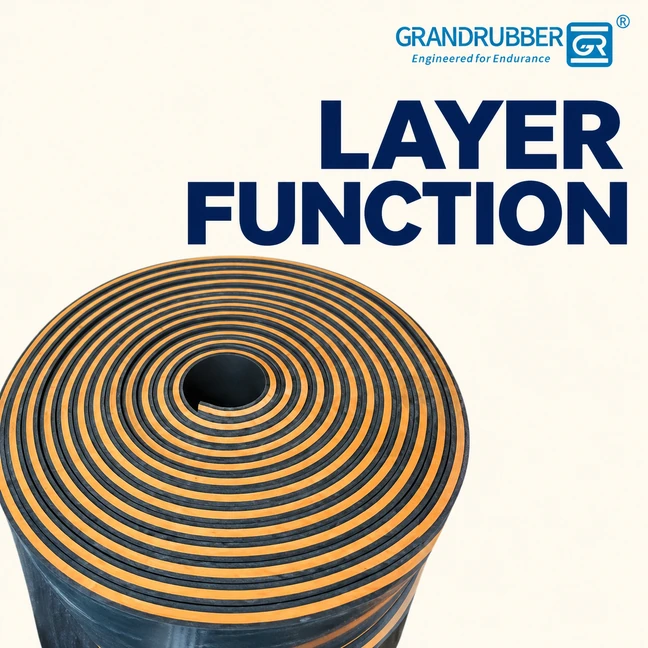
A wear indicator is a documented feature of an identified lining construction. A coloured back, bonding layer or reinforcement does not establish that function. Before ordering, identify the intended signal, inspection access and responsible response for the actual offered item.
Read a rubber lining spark-test result within its identified item, area, stage and procedure. A discontinuity check does not, by itself, establish bond strength or suitability for the service medium; those questions need their own applicable evidence.
A rock-box proposal changes the material-contact arrangement by intentionally retaining material. Review flow, geometry, retained load, attachment and access with the equipment authority before treating it as a sheet-thickness substitution.
Describe production, cleaning and occasional exposures as separate operating states. Ask for a lining proposal against the complete exposure record, including unknown media and relevant pressure or vacuum conditions; a primary process-fluid name is incomplete.