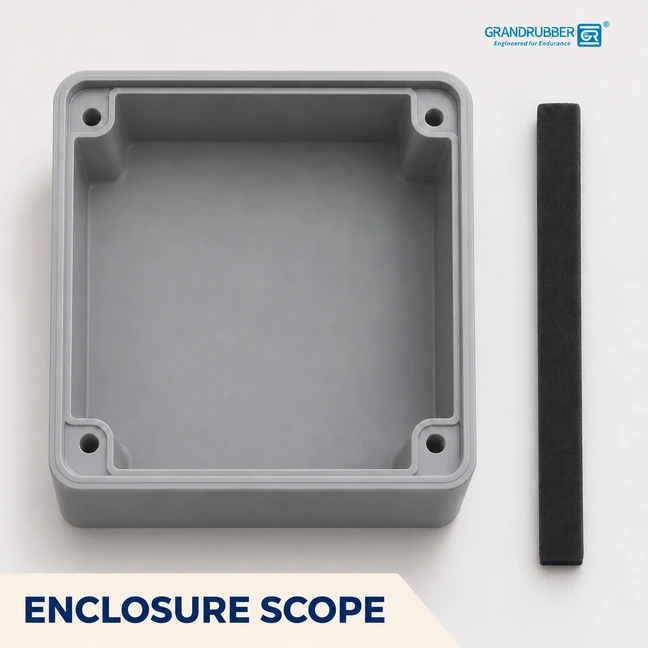
No assembled-enclosure claim follows from the cell-structure label alone. Identify the actual gasket material, joint geometry, interfaces and required ingress assessment. Material water absorption and the completed enclosure’s sealing performance are different evidence questions.
No. Evidence concerning health effects of contact with drinking water and evidence of mechanical sealing performance address different requirements. Check the actual product, scope and conditions for each, and keep destination acceptance separate from a material supplier’s general statement.
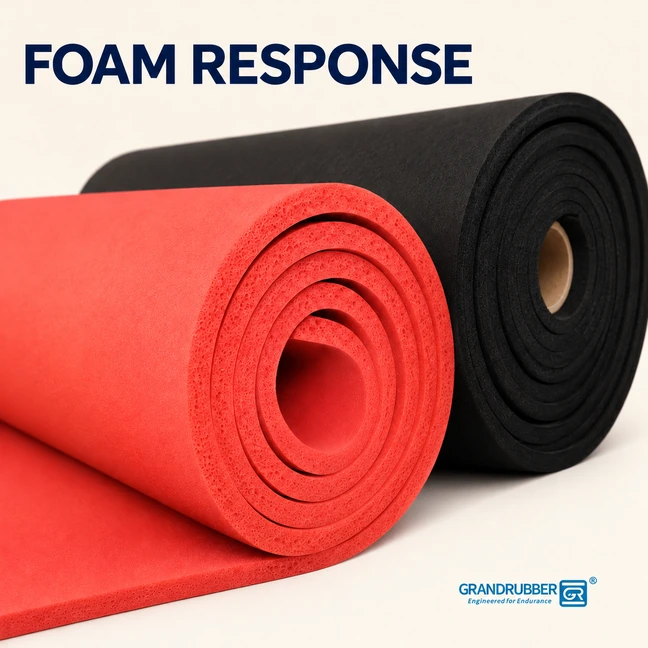
Density is not a closing-force specification. Ask for the offered foam’s compression-force-deflection data and the actual gasket geometry and assembly requirement. Keep material response, total gasket force and the equipment’s closing mechanism separate; a curve for another supplier’s foam is not data for the proposed sheet.
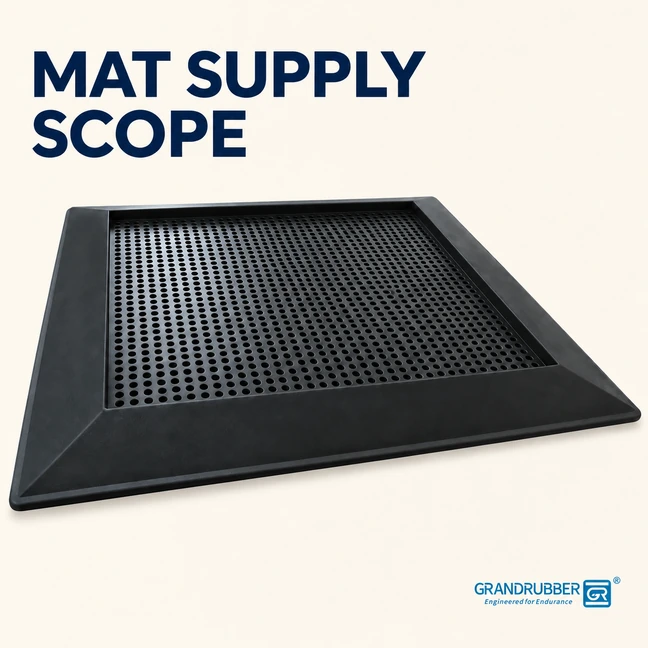
No. Buying a rubber mat does not establish the chemical choice, cleaning process or whole-farm biosecurity arrangement. Define the mat’s actual form and material requirements separately from the farm’s responsible hygiene plan and the chemical manufacturer’s applicable instructions.
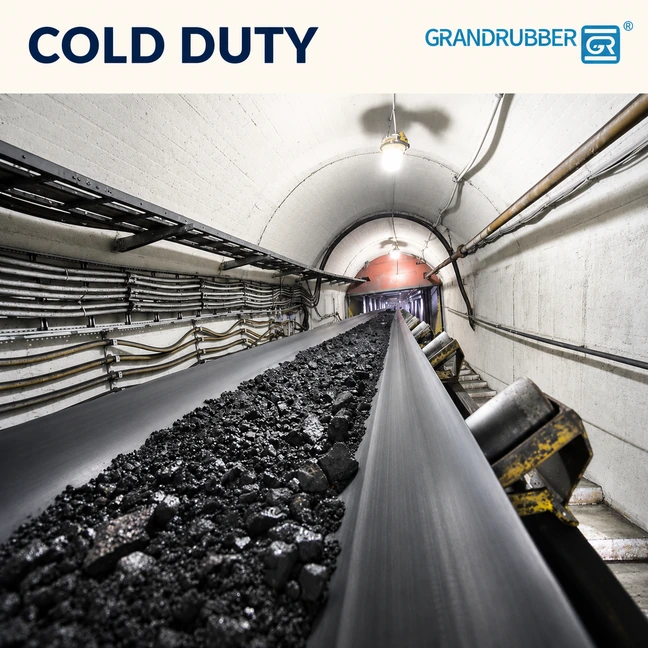
A minimum temperature is useful only with its stated subject and assessment basis. Ask how the offered belt remains sufficiently flexible for the actual duty, including cold starting and bending requirements, rather than treating a temperature number or a room-temperature tensile result as complete low-temperature evidence.
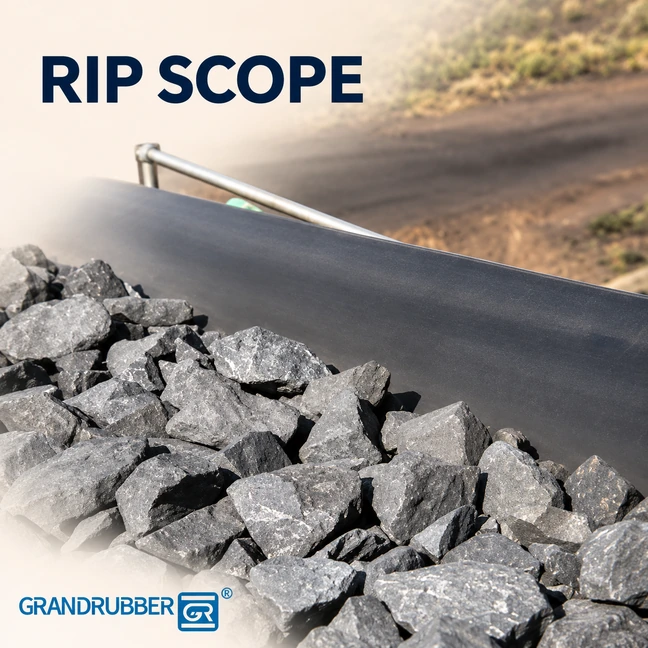
No automatic substitution follows. A breaker is part of the belt’s reinforcement construction; rip detection is a monitoring-and-response function with its own system requirements. Define the protection task, proposed construction and monitoring interface separately before comparing a belt upgrade with an equipment-system change.
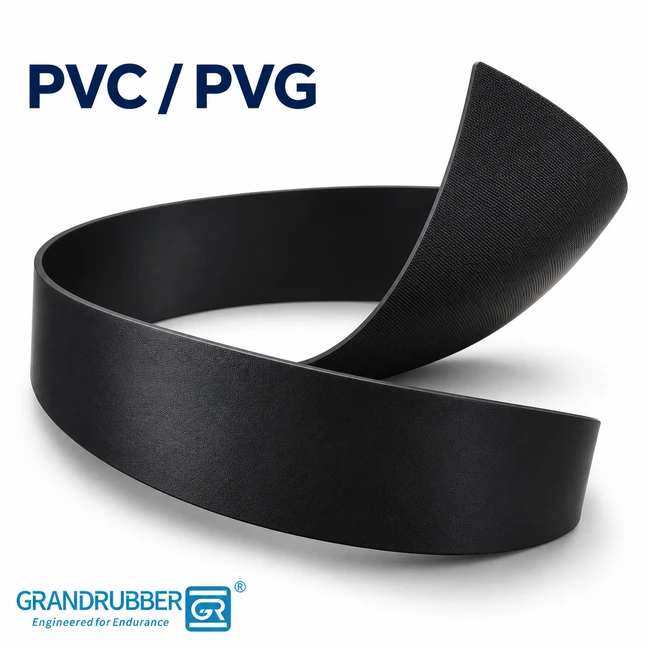
Compare the actual carcass and cover construction, not the abbreviations alone. A rubber-covered solid-woven proposal is a different complete construction from a PVC-covered proposal, and any claimed benefit needs evidence for the offered item. Keep safety, mechanical and joining requirements attached to that same construction.
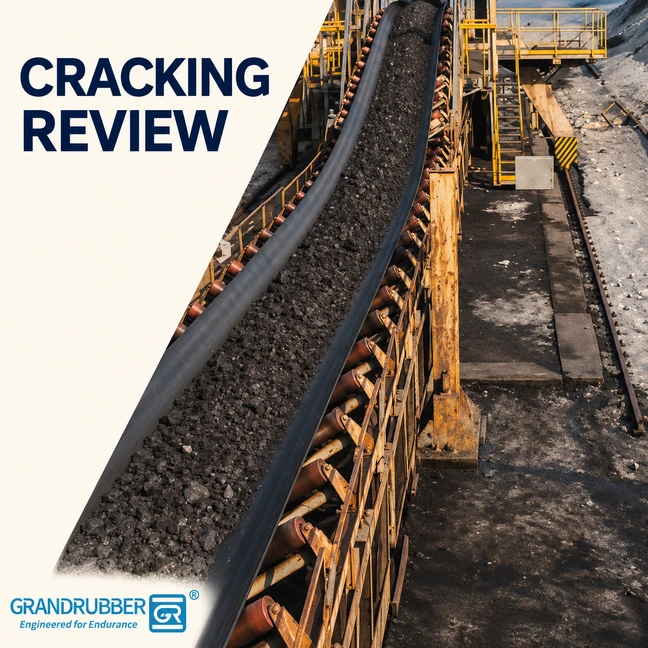
Light wear does not rule out other deterioration, but a photograph of cracks does not prove their cause. Record the crack pattern, affected locations, exposure and belt history, then request a responsible review of material and operating evidence. Keep ozone/UV resistance distinct from abrasion performance.