Assign custody, the applicable preservation documents and a pre-service review before lined equipment is held between delivery and use. Receipt of the item does not establish that later storage, installation and return to service have been accepted.
Investigate debris on the pulley-contact face separately from carryback on the carrying face. Identify where objects enter, how the existing protection contacts the belt, and who will review the protection arrangement before ordering another belt or cover change.
When carryback persists, compare the residue pattern with cover condition and the installed cleaning system. Use a matched inspection and quotation record before choosing cleaning work, cover repair or a replacement belt.
A belt centered at the head and tail may still contact the frame along the return route. Map the contact location, belt-section pattern, operating condition and recent changes before requesting a corrective action.
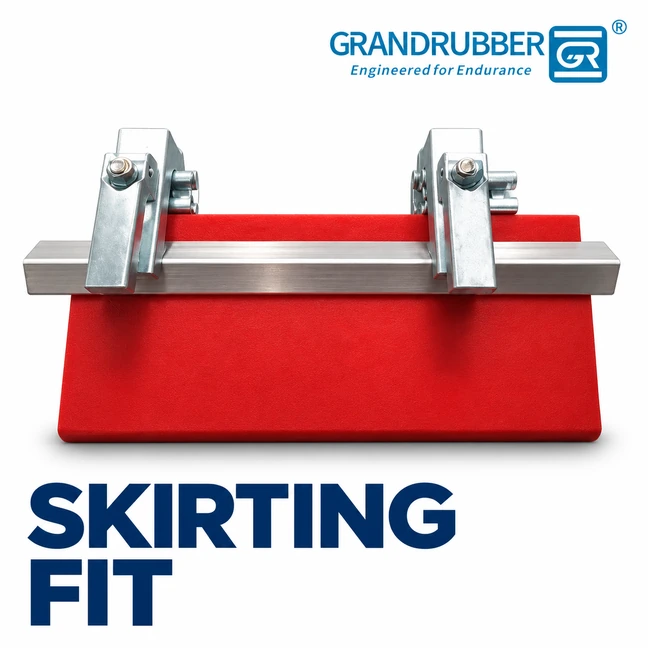
Choose belt-edge skirting and transfer-point dust curtains by their different jobs and mounting interfaces. A strip that seals near the belt is not automatically a substitute for a curtain controlling the transfer opening.
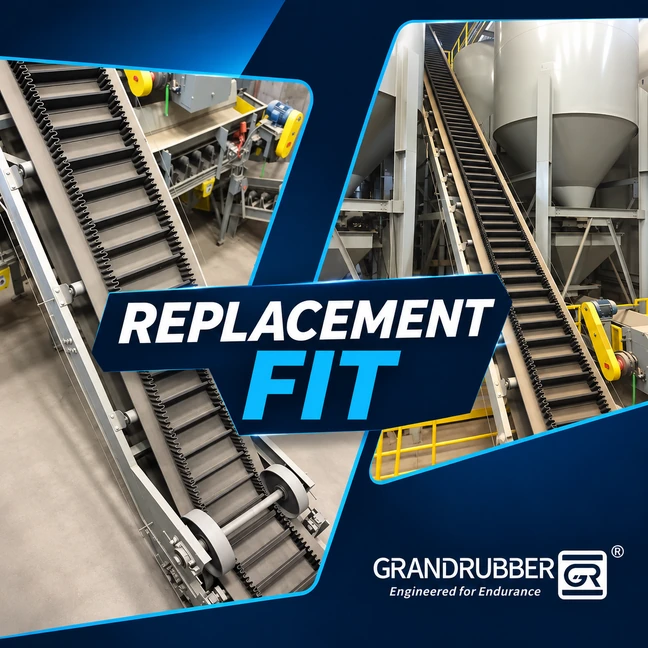
Identify the existing sidewall belt with a complete, revision-controlled geometry record. Match the drawing’s own symbols to basebelt, cleats, sidewalls and inset; photographs and two overall dimensions do not establish replacement equivalence.
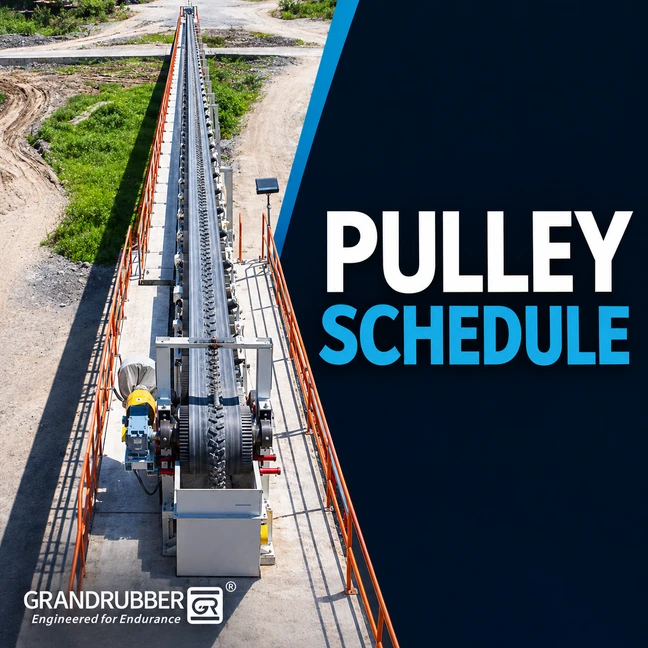
Read an STE or STH pulley schedule with its series, tension basis and pulley role. A minimum-diameter entry taken outside its stated conditions is not a machine design approval.
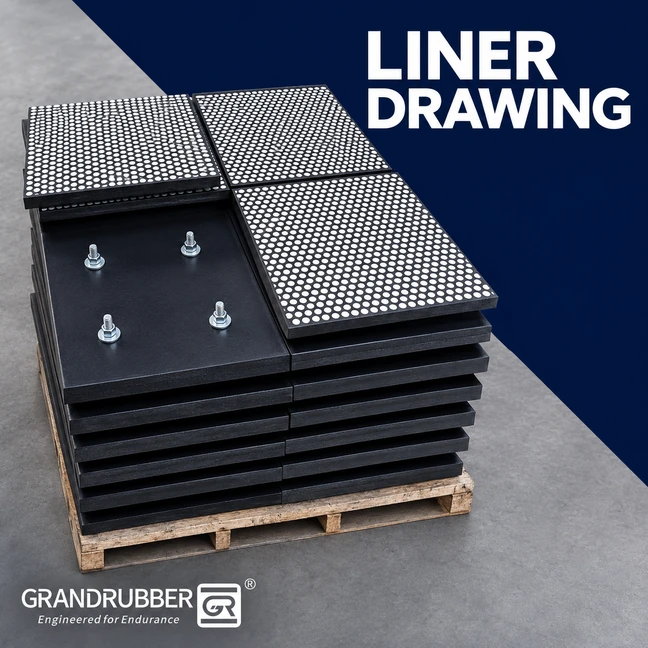
A liner enquiry needs both a material requirement and an installation drawing. Keep rubber, ceramic-rubber, polymer and PTFE proposals separately identified; one liner photograph or a neighbouring catalogue paragraph cannot establish another material’s suitability.