
What should a conveyor belt inspection and document pack include?
Agree inspection and document requirements against the exact ordered construction. A useful pack identifies the item, methods, acceptance criteria, results and responsible review; a collection of unrelated certificates does not establish order conformity.
On this page
 Open full-size image ↗
Build the inspection pack from the accepted purchase requirements, not from a generic list of available tests. Identify what must be checked, when the evidence is required and which item it must cover. This guide prepares an acceptance handoff; it does not certify products or declare tests completed.
Separate the requirement from the reported result
A requirement states what the buyer needs and the applicable acceptance basis. A report records what was actually examined and its results. A product sheet describes a product within its own scope. Keep these roles distinct so a nominal value is not presented as a shipment measurement.
Identify the ordered construction and item revision before assigning evidence. Fabric, steel-cord and special-contact products may call for different checks. A report for a different construction or sample cannot be assumed to cover this order simply because the supplier name matches.
Use the scope table as a buyer-defined checklist
The first table retains the existing inspection-scope categories. It does not establish that every test is necessary, included in the price or already performed. Select the applicable checks and agree method, units, criteria and evidence timing with the responsible parties.
Name the acceptance authority and distinguish an unresolved requirement from a failed result. A missing document needs a recorded disposition, not an invented passing value or a generic certificate substituted for it.
| Area | What to specify |
|---|---|
| Physical properties | Tensile, elongation, hardness, abrasion and ageing as required |
| Adhesion | Cover-to-carcass, ply or cord adhesion appropriate to the construction |
| Safety / contact | Only the flame, antistatic or direct-contact tests actually required |
| Dimensions | Width, length, total/cover thickness, edges and appearance |
| Steel-cord geometry | Diameter, pitch and quantity; any additional inspection method must be agreed |
| Documents | Applicable TDS, test report, order identity, packing list and original conformity evidence where required |
Worked example: the report names a sample but not the order
Assume a hypothetical buyer receives a test report with plausible results but no clear link to the ordered belt. The document may be genuine, yet its applicability remains unestablished. No report result or pass/fail outcome is invented here.
Ask what the sample represents, how it relates to the offered or delivered construction and which requirements the report addresses. Keep the original report intact and record the supplier’s clarification separately. A new cover sheet should not silently extend the original scope.
The second table organizes the evidence chain. Identity, method and acceptance criteria all matter; a good number without that context does not close the requirement. If independent inspection or witnessing is required, agree the scope and timing explicitly rather than inferring it from an inspection logo.
| Link | Record | Gap if missing |
|---|---|---|
| Ordered item | Accepted construction and revision | Unidentified subject |
| Sample/report | Sample identity and applicability | Unlinked result |
| Requirement | Method, units and acceptance basis | No defensible comparison |
| Disposition | Responsible review and open items | Unrecorded acceptance |
Release a document index with open items visible
Send the accepted item specification and selected checklist through the product enquiry. Request a document index that links each requirement to the corresponding evidence, revision, applicability and review disposition. Keep packing identification connected to the shipment where relevant.
Before release, distinguish complete, outstanding and not-applicable items with reasons. The responsible buyer decides whether a documented gap is acceptable within the contract. This article does not authorize waiver, shipment release or technical approval. Draft catalogue inspection lists are planning references only, not proof of GRAND RUBBER test capability or a completed batch pack.
Buyer FAQ
Does every order need every listed test?
No. Agree the applicable requirements for the actual construction and contract; a checklist is not a universal test mandate.
Can a product sheet replace a batch test report?
Only if the agreed requirement permits that document and scope. Do not silently present nominal data as measured batch results.
Is a certificate with the company name sufficient?
Check the issuing body, subject, scope, validity and relationship to the requirement. A company name alone does not establish product conformity.
What if a report is due after delivery?
Record the proposed timing and obtain the responsible buyer’s disposition under the contract. Do not mark the item complete before receipt and review.
Can an internal translation change report units?
Retain the original and make conversions explicit with their basis. Translation must not alter the reported results, scope or acceptance criteria.
Related technical resources
Related products
 Multi-ply Fabric Conveyor BeltsEP/NN multi-ply rubber conveyor belts for mining, cement and bulk handling. Match whole-belt strength, plies and cover grade to your material and conveyor before ordering.
 Steel Cord Conveyor BeltsSteel-cord conveyor belts for high-tension, long-distance bulk conveying. Compare ST, STE and STH constructions against belt width, cord layout, pulley and splice requirements.
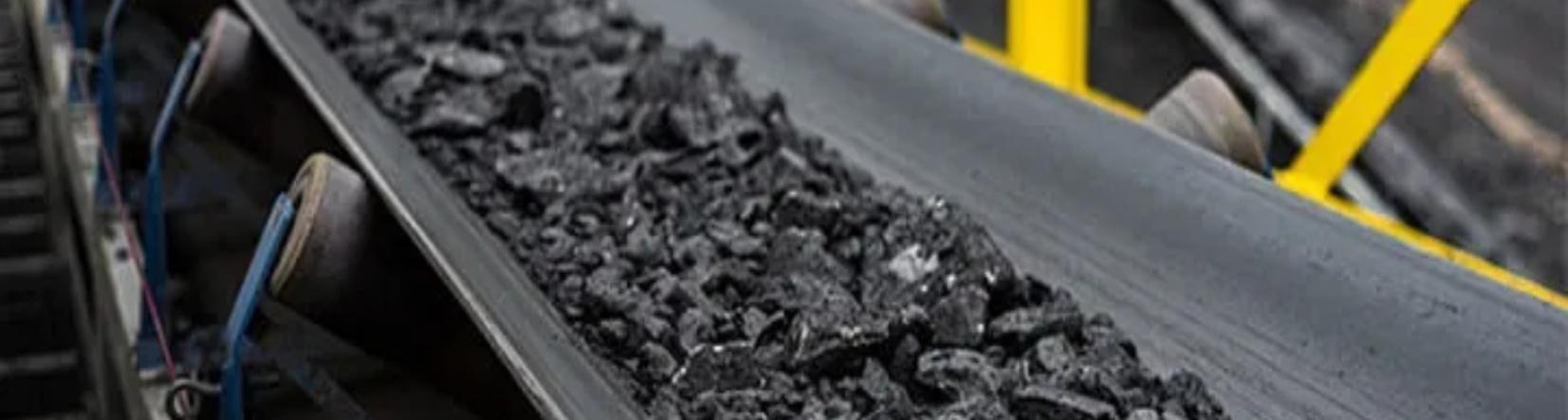 Flame-retardant Conveyor BeltsFabric and steel-cord conveyor belts with flame-retardant catalogue options. Specify the operating location, flame and antistatic requirements, then request evidence applicable to the selected belt.
 Bucket Elevator BeltsFabric and steel-cord belts for bucket elevator assemblies. Match the belt construction, hole pattern and fastening arrangement to your buckets, pulleys and lifting duty.
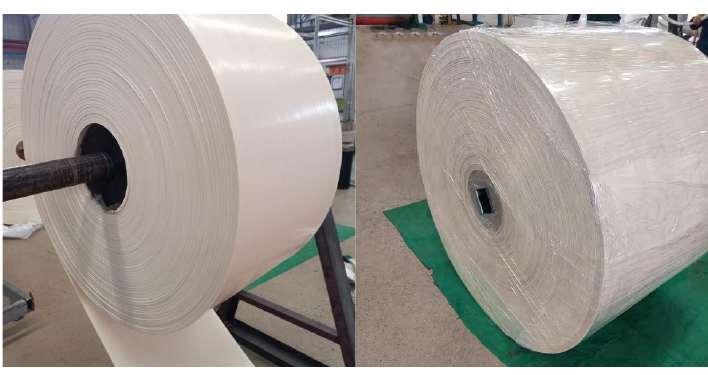 White Conveyor BeltsWhite rubber conveyor belts for product-handling applications. Specify carcass, covers and cleaning conditions, and request applicable original evidence for any direct food-contact requirement.Aramid Conveyor BeltsAramid-reinforced conveyor belts listed in the DPP catalogue range. Compare the full construction, covers and conveyor geometry when reviewing a replacement or project specification.
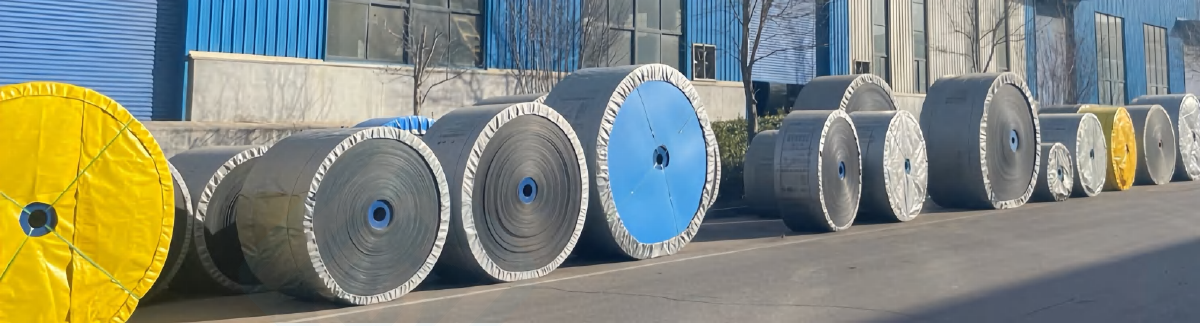 Solid-woven PVC / PVG Conveyor BeltsSolid-woven conveyor belts with separate PVC and PVG cover constructions. Select the complete belt around material exposure, conveyor dimensions and the required safety-document scope.
Document and page references
- Catalogue_GRAND_RUBBER.pdf, PDF pp6,7: Separate construction/dimension and property subjects; not proof of order testing.
- GRAND_RUBBER_Conveyor_Belts.pdf, PDF pp22,27: Steel-cord versus fabric construction fields; scope must match actual ordered product.
- Decision tables, hypothetical examples and follow-up questions are editorial purchase-review aids; they are not customer cases, site instructions or technical approval.
- Legacy draft inspection lists remain checklist inspiration only; no laboratory capability, completed test, certificate or batch release verified.
- GRAND_RUBBER_Product_Catalog_Apple_Style_V1.docx, inspection checklist (XML table114, 1-based including nested tables): draft planning categories only; not a completed test pack or confirmed laboratory capability.
Download the reference tables
Source-labelled review extract. Historical references remain historical; this is not a formal TDS, certificate or current availability confirmation.
Download guide tables CSV