
PVC or PVG Solid-Woven Belting: What Must the Cover Comparison Identify?
Compare the actual carcass and cover construction, not the abbreviations alone. A rubber-covered solid-woven proposal is a different complete construction from a PVC-covered proposal, and any claimed benefit needs evidence for the offered item. Keep safety, mechanical and joining requirements attached to that same construction.
On this page
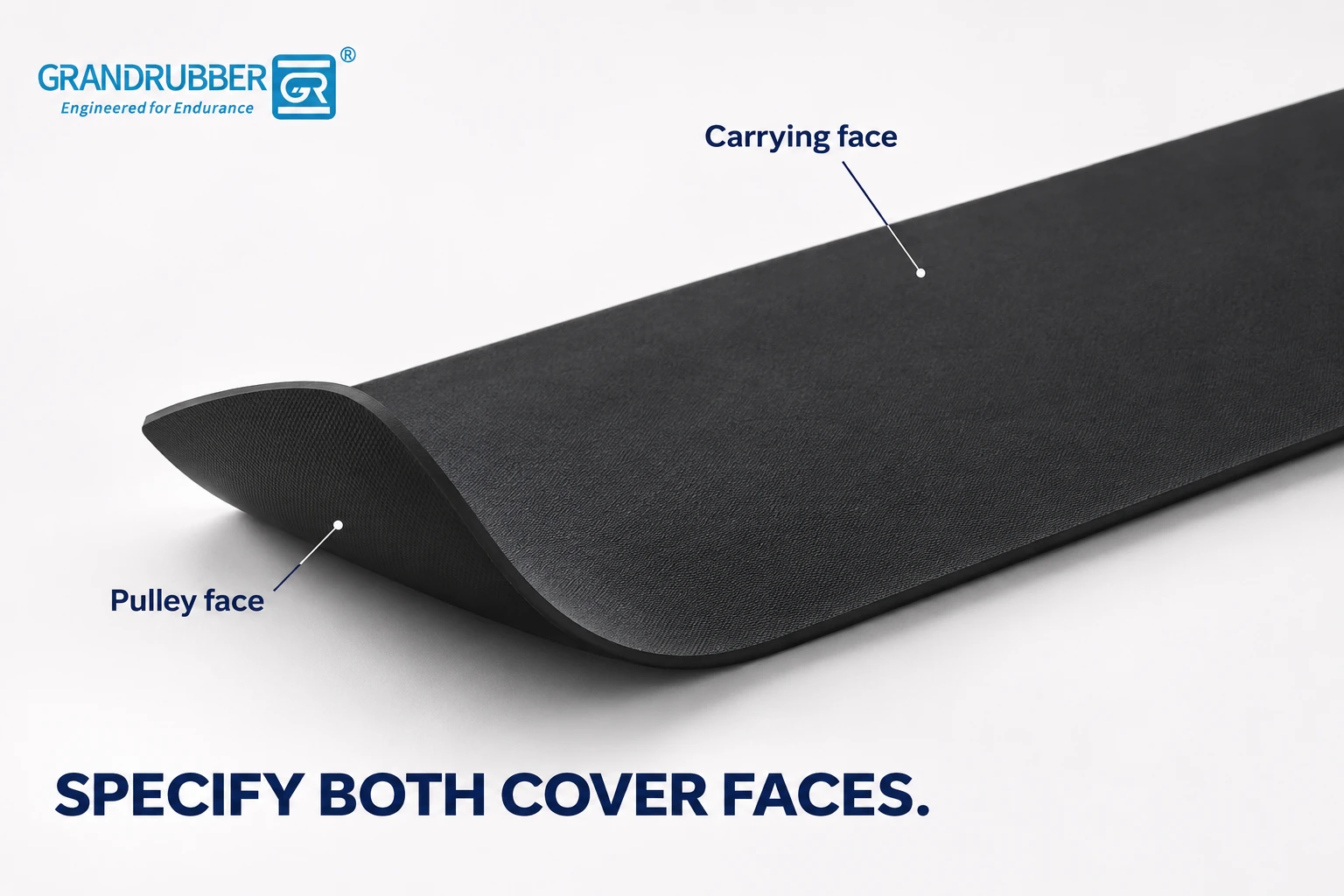 Open full-size image ↗
Compare the actual carcass and cover construction, not the abbreviations alone. A rubber-covered solid-woven proposal is a different complete construction from a PVC-covered proposal, and any claimed benefit needs evidence for the offered item. Keep safety, mechanical and joining requirements attached to that same construction.
Read the cover and the solid-woven construction as separate descriptions
The term solid woven describes a carcass category. Cover descriptions identify another part of the offered belt. A purchase comparison needs both, because a familiar strength or construction label does not tell the buyer what working surfaces are supplied.
Fenner Dunlop’s brochure describes its PVC offering and a named FRSR/PVG form that adds rubber covers over its PVC-based solid-woven construction. This is a manufacturer-specific illustration of why the complete cover arrangement matters. It does not establish that every PVG-labelled product has an identical formulation or that GR has the brochure’s dimensions, ratings or approvals.
Ask the supplier to state what the proposed abbreviation means for the actual item. Identify carcass, cover material and which faces are covered. Do not infer the finished structure from a cut-away picture belonging to another manufacturer or from the colour of a roll.
Compare the actual covered faces and relevant duty
Record the carrying and pulley-side cover descriptions, their stated dimensional basis and the actual belt construction. If one offer changes the working surface while keeping the nominal rating, list that change explicitly. A two-face schedule is more useful than a single column saying PVC/PVG.
Describe the actual material handled and any relevant wet, sticky, abrasive, oil or other exposure requirement. The supplier should respond for the same proposed construction across those requirements. Do not combine a cover benefit from one product page with a safety claim or joining statement from another construction.
The first table organizes those inputs without prescribing a grade. It does not copy the source brochure’s cover thickness, incline, strength or performance values. Ask for an item-specific response to the actual machine and duty rather than treating a named manufacturer’s catalogue envelope as a universal design range.
| Field | Record for each offer | Not established by |
|---|---|---|
| Carcass | Actual solid-woven construction identity | Nominal rating alone |
| Carrying cover | Material and applicable construction/dimensional basis | The abbreviation without a definition |
| Pulley-side cover | Actual face material and arrangement | A top-surface photo |
| Duty/evidence | Applicable exposure and safety/property response | Another manufacturer’s brochure claim |
| Equipment/joining | Actual layout and applicable review references | A familiar carcass-category name |
Keep safety evidence separate from the cover abbreviation
A cover abbreviation is not a complete safety approval. Identify the actual project or destination requirements, the evidence needed and the offered construction each document covers. If electrical-conductivity and flame-related requirements are specified, keep their evidence lines separate rather than assuming either PVC or PVG wording closes both.
Do not transfer the source manufacturer’s worldwide-safety or performance statements to a GR product. The brochure concerns its own offerings, and the actual requirements still need a responsible review. A nominal construction match cannot establish every method, approval or installation scope.
Where an older catalogue or report is used, retain its actual edition and subject. Ask how it applies to the present offer. A new quotation header should not silently extend an old document to a different compound, cover arrangement or product family.
Worked substitution: the same rating hides changed surfaces
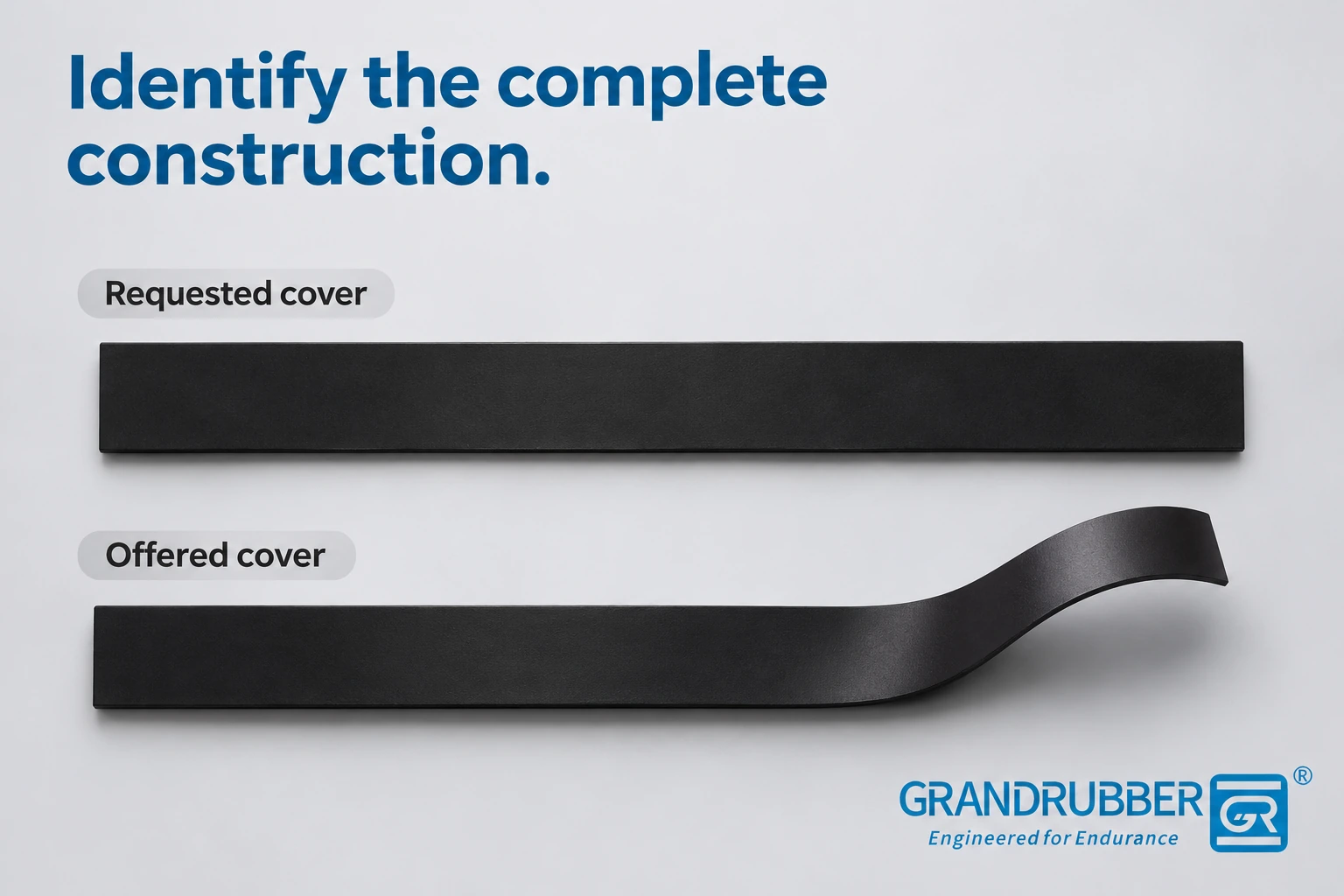
Assume a hypothetical buyer requests an identified PVC-covered solid-woven item. An offer retains the nominal rating but proposes a rubber-covered form described as PVG. No actual quoted price, strength value or field improvement is represented in this example.
The buyer should record the changed cover arrangement rather than treating the offer as an unchanged item. Ask the supplier to identify the complete proposed construction, its intended duty response and the equipment, joining and evidence reviews needed for that change. A cover proposal can be considered without being pre-approved as an equivalent.
A second offer may use the original abbreviation but omit which faces and materials are supplied. That is an identification gap, not proof of a match. Request the actual cover schedule and applicable documents.
The second table makes those cases distinct. The first is an explicit alternative requiring review; the second is an undefined supply description. Neither can be closed merely by copying the requested rating into the comparison sheet.
| Offer situation | Open question | Buyer clarification |
|---|---|---|
| PVC requested; rubber-covered alternative offered | Changed cover construction | Identify full proposal and required disposition |
| Abbreviation matches; faces not described | Undefined actual supply | Request carrying and pulley-side cover schedule |
| Safety document for another construction | Evidence applicability | Identify what connects it to the offered item |
| Cover revised after review | Final equipment/joining applicability | Confirm the accepted complete construction and revisions |
Review mechanical and joining interfaces for the final complete item
Identify the equipment drawing, relevant pulley/layout information and the required joining arrangement. Ask the responsible belt and equipment parties which information and documents apply to the proposed complete construction. Do not reuse a joining instruction solely because the carcass category sounds familiar.
If cover thickness or another part of the construction changes during negotiation, record the resulting final item clearly. The effect on the actual equipment interface requires the applicable review; this guide does not calculate pulley diameters, incline limits, operating tension or a joining procedure.
Commercial scope should also be clear. State whether the offer supplies an open length, a finished loop or another identified form, and which joining or installation work is included. A material abbreviation should not hide a different delivered form or an unassigned work responsibility.
Send a complete solid-woven cover comparison
Use the solid-woven PVC/PVG belt enquiry with the requested and offered carcass/cover schedule, actual duty, equipment references and required evidence. Ask GRAND RUBBER to identify its actual proposed item and any departure. Its product category does not establish a universal cover formula, safety approval or availability of every combination.
Use the quotation-comparison guide to retain the commercial basis and the inspection-pack guide for document mapping. Here the narrower technical decision is whether the buyer has identified and assessed the changed complete cover construction rather than accepting an abbreviation-only match.
The next action is one marked offer comparison showing the two covered faces, carcass identity, relevant evidence and equipment/joining disposition. Keep it with the final purchase revision so the accepted construction is the one actually ordered.
Buyer FAQ
Does PVG always mean the same construction from every supplier?
Do not rely on that assumption. Ask the supplier to define the actual carcass, cover materials and supplied faces for the offered item.
Does matching the nominal rating establish a PVC-to-PVG replacement?
It answers only the stated rating entry. The changed complete construction and its duty, equipment, joining and evidence requirements need review.
Can a rubber cover automatically prove a better result?
No universal ranking is made here. Identify the actual requirement and applicable evidence for the proposed item rather than a generic superiority claim.
Do PVC or PVG labels prove electrical and flame requirements?
They do not supply the required evidence merely by naming a category. Request the applicable documents for each specified property and offered construction.
Can the old joining instruction be kept unchanged?
Ask the responsible parties to confirm the instruction applicable to the final actual construction. Do not infer applicability from a category abbreviation alone.
Are the source brochure’s limits GR limits?
No. Its numerical and approval claims describe that manufacturer’s products. Obtain the actual GR proposal and project-specific supporting evidence.
What should be retained in the final order?
The accepted carcass and both cover faces, supply form, duty/evidence references, any departures and the actual equipment/joining disposition.
Sources
Related technical resources
Related products
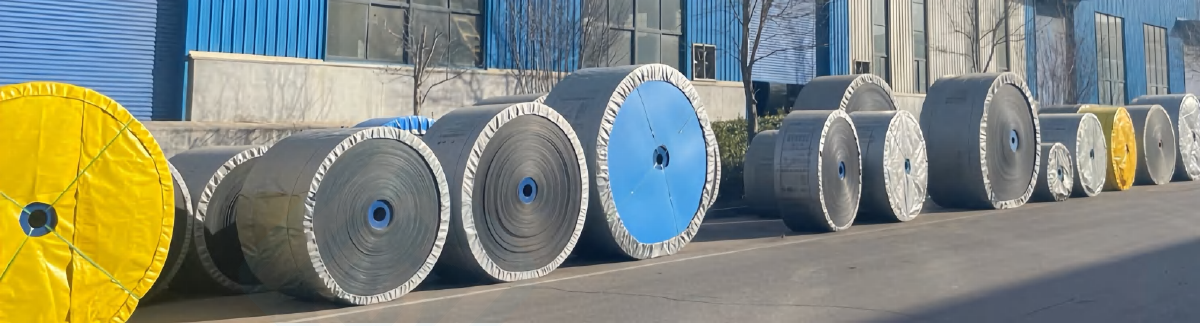 Solid-woven PVC / PVG Conveyor Belts
Document and page references
- Fenner Dunlop — Solid Woven Conveyor Belting brochure: PDFpp6–7: PVCFR and FRSR/PVG cover descriptions; construction applicability. Manufacturer products only; do not transfer covers, thicknesses, strength, incline, safety approval or ratings to GR.
- Editor-derived evergreen purchasing analysis; hypothetical examples are not real cases, field results or approved operating procedures.
Download the reference tables
Source-labelled review extract. Historical references remain historical; this is not a formal TDS, certificate or current availability confirmation.
Download guide tables CSV