
Is a Disinfectant Rubber Mat a Complete Footwear-Disinfection System?
No. Buying a rubber mat does not establish the chemical choice, cleaning process or whole-farm biosecurity arrangement. Define the mat’s actual form and material requirements separately from the farm’s responsible hygiene plan and the chemical manufacturer’s applicable instructions.
On this page
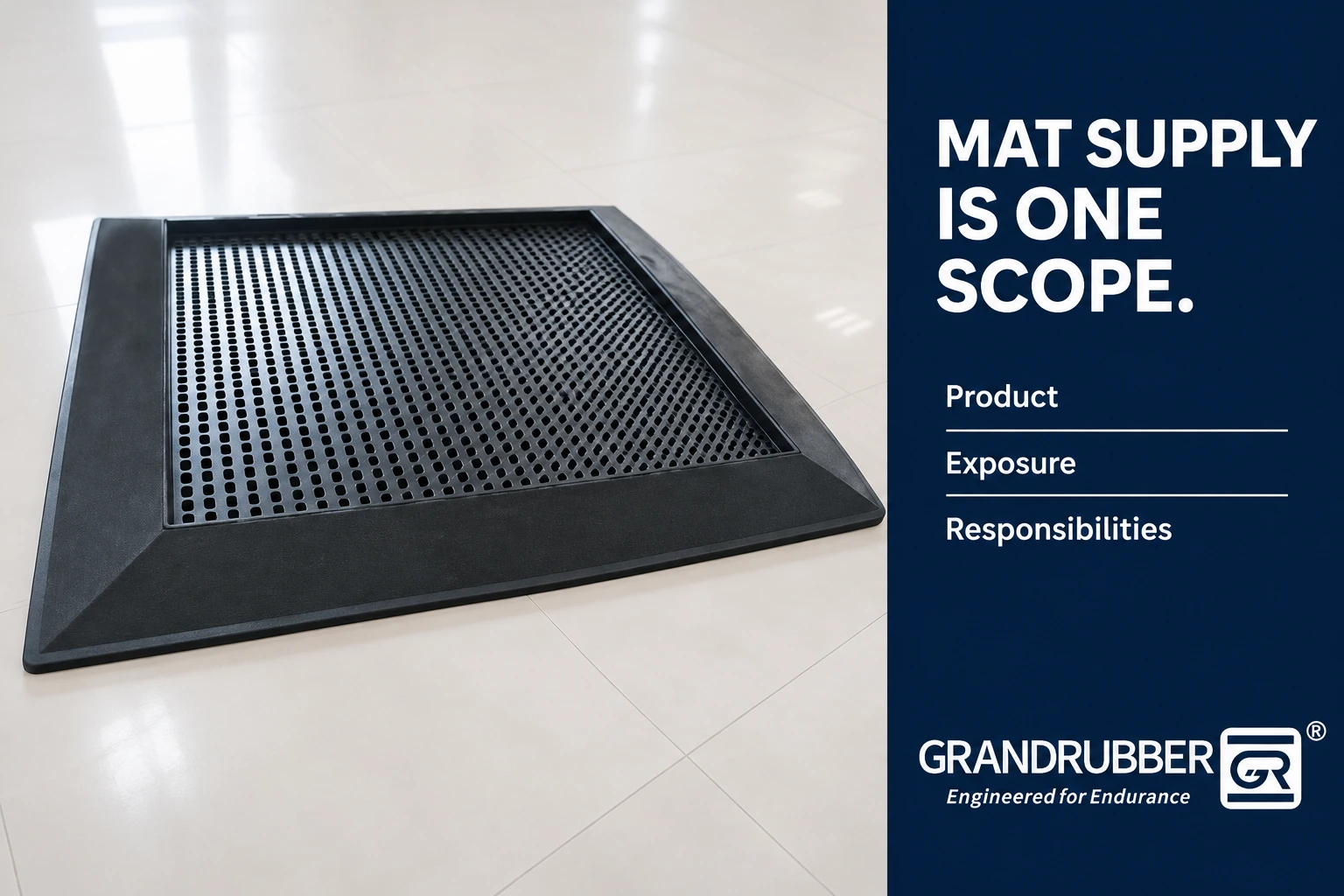 Open full-size image ↗
No. Buying a rubber mat does not establish the chemical choice, cleaning process or whole-farm biosecurity arrangement. Define the mat’s actual form and material requirements separately from the farm’s responsible hygiene plan and the chemical manufacturer’s applicable instructions.
The purchased mat and the hygiene arrangement are different subjects
A mat is a physical product with a particular construction, layout and material. A footwear-disinfection arrangement also involves people, contamination, chemicals and the farm’s actual procedures. A product name alone does not identify or approve that whole arrangement.
Dairy Australia’s footbath guidance says footbaths alone do not protect a farm from disease and places them within a whole-farm biosecurity plan. It also addresses contamination, chemical manufacturer directions and safety information. That supports a distinction between product supply and the responsible hygiene system; it is not evidence of a GR mat’s pathogen performance.
The buying question is therefore not simply which mat looks suitable at an entrance. Ask what the identified mat is intended to do, what the material must be compatible with, and which other requirements belong to the farm and its responsible technical advisers. This guide gives no veterinary treatment or disease-control guarantee.
Define the actual product form and intended entrance conditions
Identify the proposed mat model and construction, the intended location and the actual traffic or footwear context. Record the required dimensions and layout references. If an image shows only the mat surface, do not infer all retaining, draining or assembly features from that image.
State the cleaning and chemical exposure that the material supplier is being asked to review. Keep the actual agent/product identity and its applicable manufacturer documentation with the enquiry where available. If the hygiene plan has not yet selected or defined that exposure, mark the compatibility request as incomplete rather than asking the mat supplier to guess it.
The first table separates these inputs. It is a scope aid rather than a chemical protocol. No dilution, contact time, chemical selection or replacement frequency is prescribed. The relevant chemical and farm authorities must establish their actual requirements through the applicable process.
| Question | Who must provide the applicable input | Do not assume |
|---|---|---|
| Physical mat | Identified product/drawing and supply scope | A name defines the whole entrance system |
| Material exposure | Actual agent and cleaning/use context for review | Every disinfectant is compatible with every rubber |
| Hygiene requirement | Farm’s responsible plan and applicable chemical directions | Mat supply establishes disease protection |
| Care/management | Assigned farm responsibilities and actual documents | These tasks are included in the material price |
| Changes | Updated exposure/layout and responsible disposition | An earlier statement covers every new chemical or use |
Separate material compatibility from disinfection efficacy
A material-compatibility response addresses the mat and its stated exposure. It does not establish that the chemical, concentration or use arrangement achieves a particular hygiene outcome. Likewise, evidence for a disinfectant does not automatically establish that every rubber mat withstands the actual cleaning and use conditions.
Ask the responsible parties to identify which document answers each question. The mat supplier should state the offered material and scope of any compatibility response. The farm’s hygiene authority and chemical supplier should define the applicable hygiene and safe-use requirements. Neither scope should be hidden inside the other party’s product label.
Keep any intended process change visible. If the farm changes the agent or cleaning arrangement, ask whether the earlier material response still applies. A statement about one identified exposure should not become approval of all disinfectants or all ways of using the mat.
Worked purchase review: the material line is mistaken for a complete hygiene plan
Assume a hypothetical farm orders a mat described for disinfectant use. The purchase comparison marks the entrance hygiene arrangement complete, although the actual chemical/exposure and responsibility for cleaning have not been identified. No actual farm, disease outcome or GR product result is represented.
The product order does not supply the missing system decisions. Retain the mat specification and leave the hygiene-scope items open for the responsible farm process. Ask the supplier what material documentation is available and what exposure information it needs for its own response.
A second proposal may include a chemical product but still not define the farm’s actual use arrangement or material suitability. Listing more items does not automatically establish the whole system. Reconcile the actual subjects and responsibilities instead of assuming the longest parts list is the most complete technical answer.
The second table organizes these gaps. It allows a buyer to progress the product enquiry while keeping unestablished efficacy, compatibility and management claims out of the order record.
| Purchase record | What is supplied | What remains separate |
|---|---|---|
| Mat ordered for disinfectant use | An identified physical product | Chemical/exposure and hygiene-plan decisions |
| Chemical listed with mat | Two proposed supply items | Actual material and use applicability |
| General manufacturer page attached | Background product information | Applicable instructions/safety documents and responsible review |
| Entrance marked complete | A project status claim | Evidence of each separately required scope |
Carry care and responsible ownership into the handover
Identify who owns the entrance layout, cleaning/care arrangement, chemical information and material review. Retain the actual manufacturer instructions and safety documentation where required by the responsible process. A general marketing page should not be substituted for the applicable chemical documents.
Where contamination or an observed product condition is reported, record the actual observation and refer it to the appropriate responsible parties. Do not diagnose hygiene failure or recommend a chemical adjustment from a mat photograph. This guide provides no operational procedure for handling or mixing products.
The handover should distinguish what has been supplied and accepted from what remains a separate farm responsibility. That distinction makes the purchase more useful and prevents a rubber-product label from becoming a promise of disease prevention.
Send a product-and-exposure enquiry with clear exclusions
Use the GR4012 enquiry with the intended location, actual product form, required dimensions and identified cleaning/chemical exposure. Ask GRAND RUBBER to state the material and supply scope it offers and any applicable documentation. The product entry does not establish pathogen reduction, a veterinary approval or a complete farm hygiene service.
Use the general material guide if a compound or exposure comparison is needed, and the cow-flooring guide for the separate area/layout question. Here the decision is whether a physical mat purchase is being mistaken for an entire footwear-disinfection arrangement.
The next action is one scope schedule showing the mat requirements and the separately owned hygiene and chemical decisions. Keep unresolved items visible without inventing an efficacy statement or an all-purpose compatibility approval.
Buyer FAQ
Does a disinfectant-mat name guarantee disease prevention?
No GR disease-protection outcome is established by the label or this guide. Keep the mat product and the farm’s actual biosecurity arrangement separate.
Can the mat supplier choose a chemical without the farm context?
Do not assume that is included in material supply. The responsible farm and chemical authorities need to define the applicable requirements and instructions.
Does chemical efficacy prove rubber compatibility?
Not automatically. Request the separate material response for the actual offered mat and identified exposure.
Can this article provide a dilution or contact time?
No. Use the applicable chemical manufacturer documents and responsible farm process. No chemical recipe or operating procedure is supplied here.
What if the chemical has not yet been selected?
State that the exposure is unresolved. Ask what input the material supplier needs, and obtain the responsible hygiene decision rather than inventing compatibility.
Is cleaning and care included in a mat quotation?
Only the actual scope can establish included services. Identify responsibility separately instead of assuming it follows from the product name.
What should the next enquiry contain?
The identified product form, entrance/layout requirement, actual exposure and relevant documents, with the farm’s separately responsible hygiene decisions clearly stated.
Sources
Related technical resources
Related products
 GR4012 · Disinfectant Rubber Mat
Document and page references
- Dairy Australia — Setting Up a Staff and Visitor Footbath: Openingwhole-farm-biosecurity scope; contamination/manufacturer-direction/SDS context. Use material versus hygiene-system scope only; no chemical recommendation, dilution/contact time, medical/veterinary claim, GR pathogen performance or guaranteed disease protection.
- Editor-derived evergreen purchasing analysis; hypothetical examples are not real cases, field results or approved operating procedures.
Download the reference tables
Source-labelled review extract. Historical references remain historical; this is not a formal TDS, certificate or current availability confirmation.
Download guide tables CSV