
Can a Steel-Tank Rubber-Lining Specification Be Reused for Concrete or FRP?
Not without a substrate-specific system review. A steel-based preparation and bonding specification does not establish suitability for concrete or fibre-reinforced plastic. Identify the actual substrate, its condition and the scope of the proposed material-system documents before treating the substitution as approved.
On this page
 Open full-size image ↗
Not without a substrate-specific system review. A steel-based preparation and bonding specification does not establish suitability for concrete or fibre-reinforced plastic. Identify the actual substrate, its condition and the scope of the proposed material-system documents before treating the substitution as approved.
The substrate is part of the lining system requirement
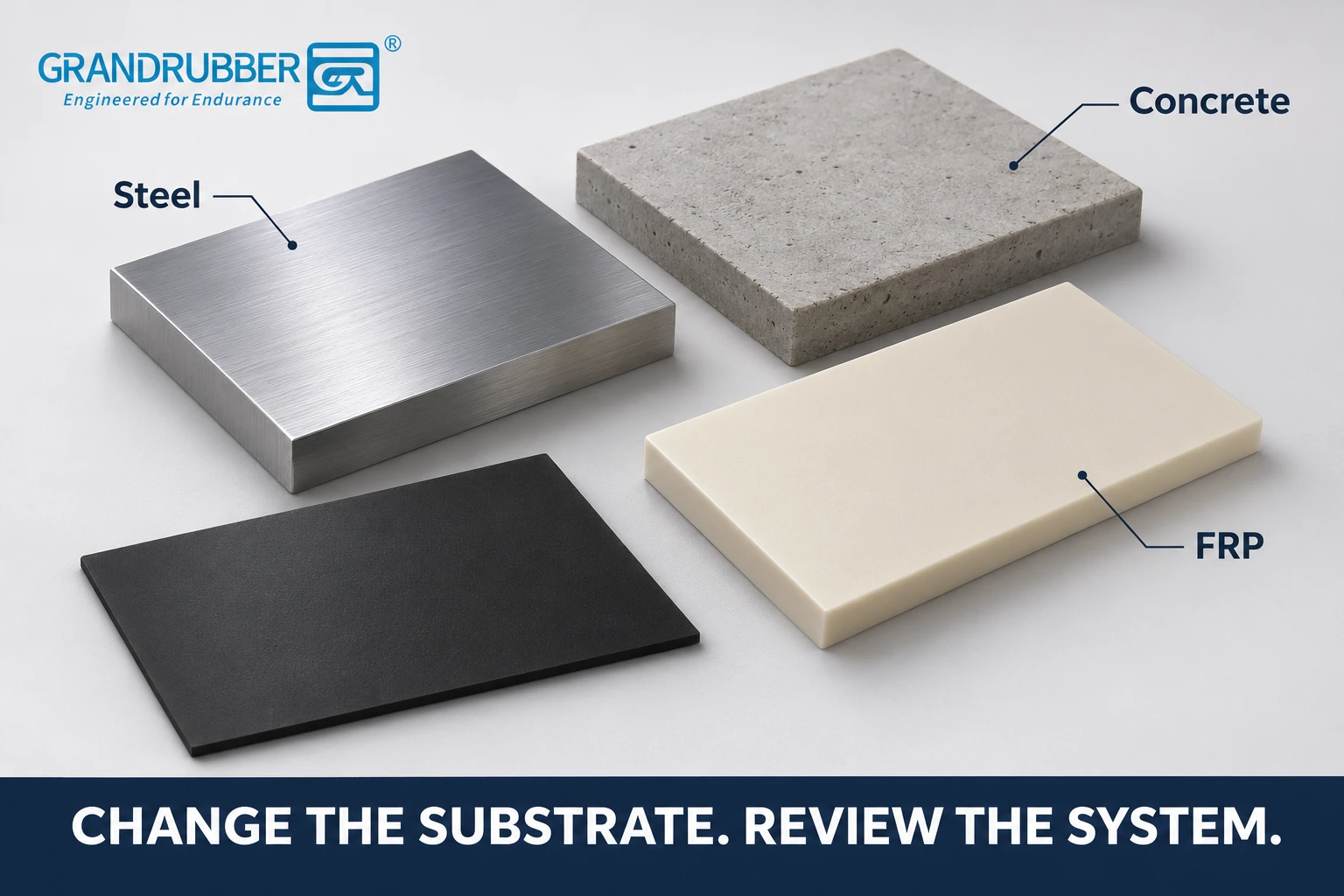
A lining material is installed against something. Changing that underlying substrate changes the interface the proposal must address, even when the selected rubber thickness and process description remain unchanged. The purchase team should therefore treat a move from steel to concrete or fibre-reinforced plastic, FRP, as a defined technical change.
Polycorp’s non-metallic-substrate guidance gives separate sections for concrete and FRP. Its concrete discussion identifies substrate soundness, surface condition and dryness; its FRP section explicitly limits the described application to brand-new tank equipment. These are source-specific scope distinctions. They do not establish a GR-approved system for every non-metal substrate.
The buyer should ask which actual substrate and equipment condition the offered system documents cover. A product data sheet describing rubber properties alone cannot silently become a complete approval of the substrate, attachment system and finished equipment.
Record material identity and condition before comparing systems
Identify whether the substrate is steel, concrete, FRP or another actual material, and obtain the applicable equipment or construction documents. Include known surface treatments, repairs or existing coatings when they are documented. Where the construction is uncertain, mark it as uncertain rather than interpreting a painted surface as evidence of the underlying material.
For existing equipment, distinguish a new-surface proposal from a refurbishment proposal. Previous service, repairs and the condition of retained materials can matter to the responsible review. The fact that a source discusses new FRP equipment is not a basis for extending that procedure to an aged or previously lined tank.
The first table keeps those differences visible. It is an information record, not a substrate inspection standard. This guide does not provide moisture limits, cleaning or blasting steps, resin compatibility, primer selection, surface-preparation values or curing instructions. Ask for the controlled system basis appropriate to the identified equipment.
| Review input | Record the actual subject | Gap to keep open |
|---|---|---|
| Substrate material | Documented steel, concrete, FRP or other construction | Appearance does not identify hidden material |
| Equipment condition | New or existing; known treatments/repairs | A new-equipment example is not a refurbishment approval |
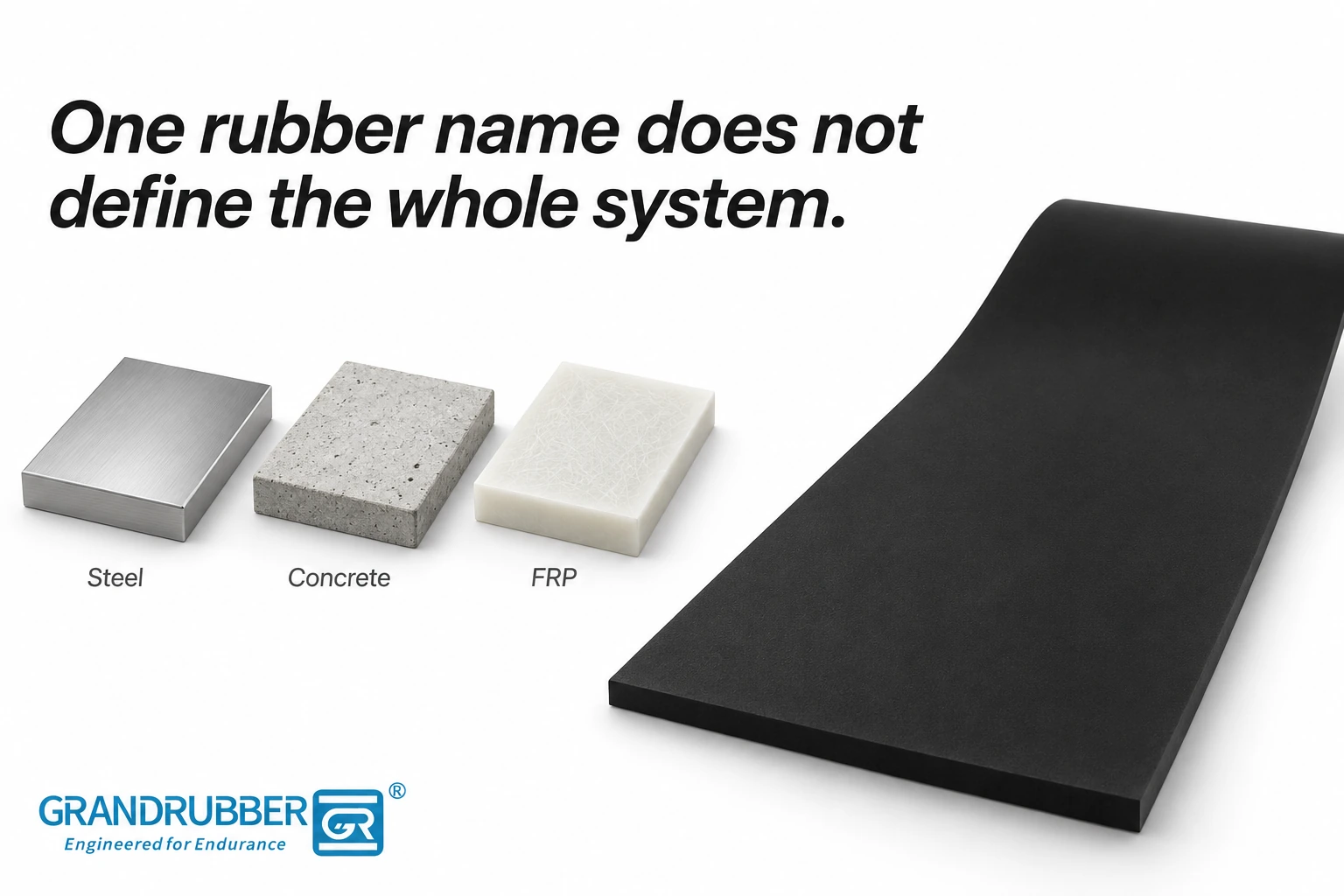
| System documents | Covered substrate and defined material/attachment arrangement | One rubber name is not the whole system |
| Scope owners | Material, substrate, application and acceptance responsibilities | No assumed full-system approval from a product quotation |
| Evidence | Actual project requirements and applicable records | No automatic transfer of another substrate’s inspection basis |
Review the whole proposed system rather than carrying over one product name
Ask which substrate, preparation, intermediate materials, bonding components, lining material and cure state are included in the proposed system documentation. The purpose is to identify the applicable controlled arrangement, not to select components independently from unrelated catalogues. A shared adhesive brand or rubber name does not establish a complete substitution.
Keep supplier responsibilities explicit. The lining-material supplier can identify what it proposes and which documents apply to its supply. The substrate owner or fabricator must provide the actual equipment information. The applicator and relevant technical authority must address the defined work and acceptance basis. Do not assume that one product quotation approves the entire installation.
Where a supplier proposes a departure from the original steel-based requirement, ask it to name that departure and state the evidence and limitations of its proposal. A new title on an old procedure should not hide that the documented subject remains a different substrate or equipment condition.
Worked substitution: the rubber stays the same while the tank material changes
Assume a hypothetical project initially requested a system for a steel tank. The equipment proposal later changes to FRP, but the material comparison carries forward the original rubber and bonding references unchanged. No actual project, test result or material approval is implied.
The unchanged rubber name does not close the new interface decision. The buyer should identify the changed substrate and ask for a response that explicitly covers the proposed equipment condition and actual system. If the supporting source concerns only brand-new FRP tanks, that limitation must remain visible. It should not be rewritten as a general instruction for used FRP equipment.
A concrete alternative raises its own scope question. The supplier should identify the relevant substrate/system requirements instead of substituting the word concrete into the steel document. If information about the base condition is missing, retain it as a required input rather than assuming it has been inspected.
The second table records these differences as a controlled change review. Its purpose is to obtain an applicable answer, not to imply that non-metal lining is generally impossible or that any one proprietary system is universally suitable.
| Change | What cannot be assumed | Required response |
|---|---|---|
| Steel to new FRP | Original steel documents cover the new interface | System scope explicitly addressing the actual FRP equipment |
| New FRP to used FRP | A brand-new-equipment source applies unchanged | Responsible review of existing condition and applicability |
| Steel to concrete | Preparation and attachment requirements are interchangeable | Concrete-specific system and condition response |
| Same rubber name retained | The entire technical basis remains unchanged | Identify affected system, work and evidence references |
Agree what evidence and acceptance apply to the changed substrate
A project may require evidence concerning substrate condition, system applicability, work completion and inspection. Identify the actual requirements and responsible reviewers for the proposed arrangement. A test method or acceptance example for one substrate should not be silently extended to another.
If the original quotation relied on a particular application or inspection assumption, ask whether that assumption remains valid after the change. Preserve any altered scope, exclusion or evidence timing in the revised offer. This keeps a technical substitution from becoming an unexplained commercial difference between suppliers.
The completed record should identify what is accepted, what remains pending and which item revision it concerns. A material-specific document can support that record without being treated as a blanket certificate for every substrate, exposure or equipment condition.
Send a substrate-change review with the lining enquiry
Provide the actual substrate identity, new or existing equipment status, current drawings, known condition and intended exposure. Ask GRAND RUBBER whether the proposed material supply and documentation can address the request; no GR approval for concrete or FRP is established by the NR40 product entry or this guide.
Use the cold-bonding guide for identified component documents and the liner-drawing guide for installed interfaces. Those remain relevant but do not answer the substrate substitution automatically. The specific decision here is whether the entire proposed system basis covers the changed substrate and condition.
The next action is one substrate-change schedule, with the old basis, the proposed basis and each responsible technical response. Keep the accepted system references with the final equipment revision rather than relying on a generic statement that the same rubber is being used.
Buyer FAQ
Does the same rubber compound make the substrate irrelevant?
No. The substrate and attachment interface remain part of the system review. Identify the complete proposed arrangement and its applicable documentation.
Can a steel procedure simply be retitled for concrete?
Do not do that. Obtain the actual substrate-specific system basis and keep the original document’s subject intact.
Does Polycorp’s FRP example cover old tanks?
The reviewed source explicitly limits its described FRP application to brand-new tank equipment. Do not extend that wording to an existing tank without an applicable responsible review.
Does this article confirm GR can supply a concrete or FRP lining system?
No. It defines the enquiry and evidence questions. The actual proposed supply, components and applicability must be confirmed for the project.
Who should identify the existing substrate?
Use the equipment owner/fabricator’s actual records and the applicable technical assessment. Do not identify it from an outside photograph alone.
Can a steel-substrate inspection method be used unchanged?
Ask the responsible reviewer which methods and acceptance basis apply to the actual system. This guide does not authorize transferring an inspection procedure.
What should the revised purchase record preserve?
The changed substrate and condition, the identified system references, responsibilities, applicable evidence and the actual disposition against the final equipment revision.
Sources
Related technical resources
Related products
 NR40 Wear-resistant Rubber Linings
Document and page references
- Polycorp Application Manual — Section9 Non-Metallic Substrate: p1concrete substrate conditions; p2FRP with brand-new-tank limitation. Different substrate/system requirements; source FRP example only brand-new equipment. No GR nonmetal system capability asserted; no cleaning, blasting, epoxy or curing procedure copied.
- Editor-derived evergreen purchasing analysis; hypothetical examples are not real cases, field results or approved operating procedures.
Download the reference tables
Source-labelled review extract. Historical references remain historical; this is not a formal TDS, certificate or current availability confirmation.
Download guide tables CSV