
Before Rubber Lining Starts: What Must the Metal Fabricator Hand Over?
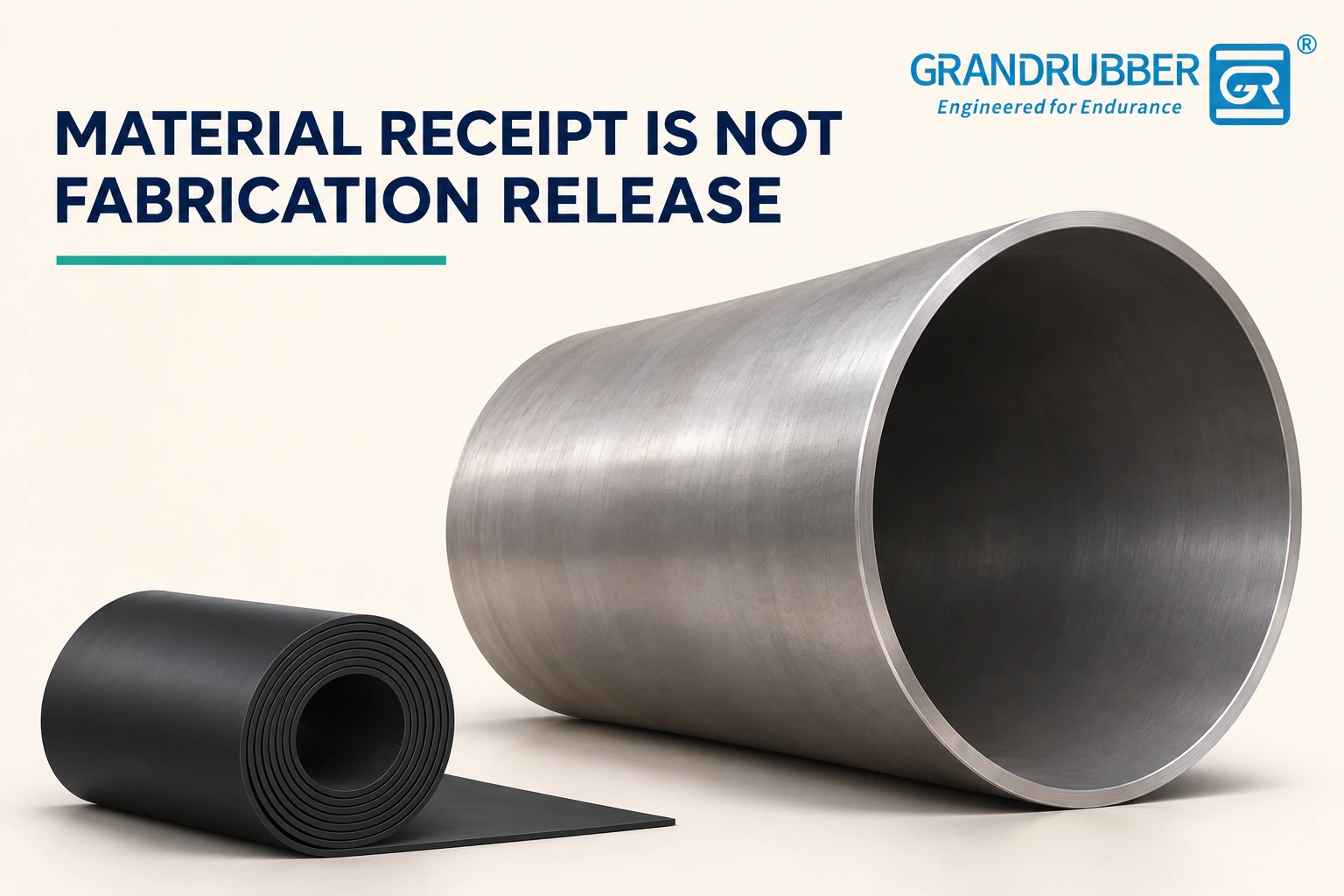
Agree a fabrication-to-lining handover before adhesive or lining work starts. The record should identify the substrate, completed and outstanding hot work, relevant surface-condition findings and who resolves them. Material delivery alone does not establish that the equipment is ready to be lined.
On this page
 Open full-size image ↗
Agree a fabrication-to-lining handover before adhesive or lining work starts. The record should identify the substrate, completed and outstanding hot work, relevant surface-condition findings and who resolves them. Material delivery alone does not establish that the equipment is ready to be lined.
Treat fabrication readiness as a decision before lining
The fabricator and lining contractor work on the same equipment, but they do not necessarily own the same acceptance decisions. A tank can be structurally fabricated while still having unresolved surface or detail issues relevant to lining. The procurement schedule should identify the point at which the equipment is offered for the next stage and who accepts that handover.
Polycorp’s general application guidance places completion of welding before adhesive or rubber-lining application and calls for inspection of surface imperfections before preparation. This illustrates a sequence and interface that buyers should clarify. It is not an approved GR work method or proof that a specific fabricated item has passed inspection.
A practical handover asks what item and drawing are being transferred, what work is complete, what findings remain open and which responsible parties have reviewed them. A delivery note for rubber material does not answer those questions. The material purchase and readiness of the equipment are separate records.
Identify the substrate and the outstanding fabrication scope
Record the actual equipment identification, substrate material and drawing revision. Include any relevant fabrication or repair history already documented. If the substrate is described only as steel, ask whether the applicable specifications and records provide the detail needed by the lining-system reviewer. Do not infer coating, surface treatment or suitability from appearance.
List outstanding hot work, modifications and fabrication findings in their own fields. Mark them with a responsible owner and disposition rather than absorbing them into a generic ready-for-lining note. If a change to a nozzle, weld or attachment is still being considered, the lining contractor should know it is unresolved before material is applied.
The first table is a buyer-defined handover record, not a set of surface acceptance criteria. The applicable project documents and responsible technical parties determine what evidence is required. This guide supplies no weld profile, preparation grade, surface roughness, ambient threshold or treatment instruction.
| Record area | Input to identify | Responsible answer needed |
|---|---|---|
| Equipment | Item identity, substrate and current drawing | Which equipment/revision is offered for review? |
| Completed work | Applicable fabrication and examination records | What is actually complete within its own scope? |
| Open findings | Outstanding hot work, changes or recorded imperfections | Who resolves each item and records the disposition? |
| Next-stage basis | Applicable lining-system and project requirements | Which readiness review and evidence are required? |
| Scope ownership | Fabrication, preparation, material, application and inspection | Which party owns each decision and exclusion? |
Separate fabrication acceptance from surface preparation and lining acceptance
Use separate headings for the interfaces even if one contractor performs more than one activity. Fabrication completion concerns the equipment and its workmanship requirements. Surface-preparation readiness concerns the applicable lining-system requirements and recorded condition at that stage. Completed lining acceptance concerns a later subject. One signature should not silently be extended across all three scopes.
The purchase contract can identify who provides each record, who reviews it and what happens when a finding requires further fabrication. Keep responsibility for approval separate from responsibility for supplying information or materials. GRAND RUBBER supplying an identified lining material does not establish that it also accepts a fabricated vessel or performs global site work.
If inspection or witnessing is required, agree the location, scope and record before the activity. Do not invent a completed hold point because a generic checklist exists. The useful purchasing output is a clear handover boundary with evidence timing, rather than a promise that all contractors will resolve the interface informally.
Worked schedule review: the lining material arrives before fabrication is resolved
Assume a hypothetical project has received its quoted lining materials, but an equipment modification remains open. The schedule labels the next task start lining. No actual project, delay cost or field outcome is represented here. The material’s arrival proves receipt, not fabrication readiness or permission to proceed.
The buyer should preserve the open modification in the handover record, identify its decision owner and ask the fabricator and lining contractor what it means for the next-stage review. A purchasing team should not close the finding simply because changing the schedule is inconvenient. Neither should it decide a technical repair or substitute a generic coating instruction.
The second table separates three records that can otherwise be confused: supplied material, completed fabrication and accepted next-stage readiness. Each has a different subject. If the project revises the equipment, the affected lining review should identify the same new drawing rather than retaining an earlier version by default.
Once the responsible parties reach a disposition, retain it with the handover. An unresolved item may remain open pending evidence; a completed item needs the actual supporting record. The example does not authorize either starting or stopping a particular worksite operation.
| Available record | What it establishes | What it does not establish |
|---|---|---|
| Lining material receipt | An identified supply was delivered | The vessel is ready for lining |
| Fabricator completion note | Completion stated within that note’s scope | Acceptance of every lining-relevant condition |
| Open modification list | A change remains to be resolved | Permission to ignore the affected interface |
| Recorded next-stage disposition | A responsible response against a defined item | Approval of later unreviewed equipment revisions |
Carry changes and rework responsibilities into the quotation boundary
Ask the quoting parties to identify which fabrication, examination, preparation, lining, curing and final inspection activities are included. A material-only price and a contractor’s applied-lining price should not be treated as the same scope. Identify excluded or provisional tasks directly so an outstanding substrate issue is not discovered as an unassigned commercial responsibility.
When additional fabrication is proposed after an earlier review, record who assesses the implications for the lining and which documents must be revisited. Do not assume that the original handover remains valid for a changed substrate or that the material supplier has approved a site alteration.
The accepted scope should also identify record custody. The buyer needs to know where fabrication findings, changes and readiness dispositions will be retained for later equipment handover. That supports traceability without claiming that the existence of a file proves every inspection was satisfactory.
Send a readiness review pack with the material enquiry
Provide the equipment/substrate identity, current drawing and service requirement with the lining-material enquiry. State which fabrication and site activities are supplied by other parties and request the documents needed for the proposed material system. GRAND RUBBER’s NR40-related product entry is not approval for every substrate or exposure and is not a vessel-release service.
Use the drawing guide for dimensions and interfaces, and the storage-handover guide for custody after lining or delivery. The present decision comes earlier: whether the equipment and responsibilities are defined well enough for the applicable next-stage review.
The buyer’s next step is a fabrication-to-lining handover sheet naming the item revision, open findings and decision owners. Ask the fabricator and lining contractor to respond against that sheet, and retain their actual disposition rather than replacing it with an assumed ready status.
Buyer FAQ
Does receiving rubber lining material make the tank ready for application?
No. Material receipt and equipment readiness are separate subjects. Obtain the applicable fabrication and next-stage review records from the responsible parties.
Can the fabricator’s structural completion certificate cover every lining requirement?
Check its scope. Structural fabrication evidence should not silently become a complete lining-readiness approval; identify the applicable system requirements and review ownership.
Should open weld findings be removed from the handover once a contractor arrives?
No. Preserve the actual findings, their owners and dispositions. Presence on site does not supply the missing technical decision or record.
Can this guide specify a blast profile or environmental limit?
It does not. Use the applicable controlled project and material-system instructions with the responsible contractor; no preparation or operational parameters are prescribed here.
What if the equipment drawing changes after the handover?
Identify the new revision and ask the affected responsible parties which earlier reviews and scope decisions need revisiting. Do not carry the old acceptance forward automatically.
Does a GR material quotation include fabrication or site acceptance?
Only the actual quoted scope can establish included services. A material product entry does not imply vessel acceptance, global site application or a completed inspection.
Where should the final readiness decision be recorded?
Keep the actual disposition with the equipment identity, drawing revision, open-item register and relevant scope schedule so the subsequent parties can trace the handover.
Sources
Related technical resources
Related products
 NR40 Wear-resistant Rubber Linings
Document and page references
- Polycorp Rubber Lining Application Manual — Section6: p1 general guidelines, metal fabrication and pre-preparation inspection. Use only fabrication/inspection handover logic. No blasting, solvent, dew-point, surface-profile, curing or operating procedure/threshold copied.
- Editor-derived evergreen purchasing analysis; hypothetical examples are not real cases, field results or approved operating procedures.
Download the reference tables
Source-labelled review extract. Historical references remain historical; this is not a formal TDS, certificate or current availability confirmation.
Download guide tables CSV