
How should cow flooring be selected by use area?
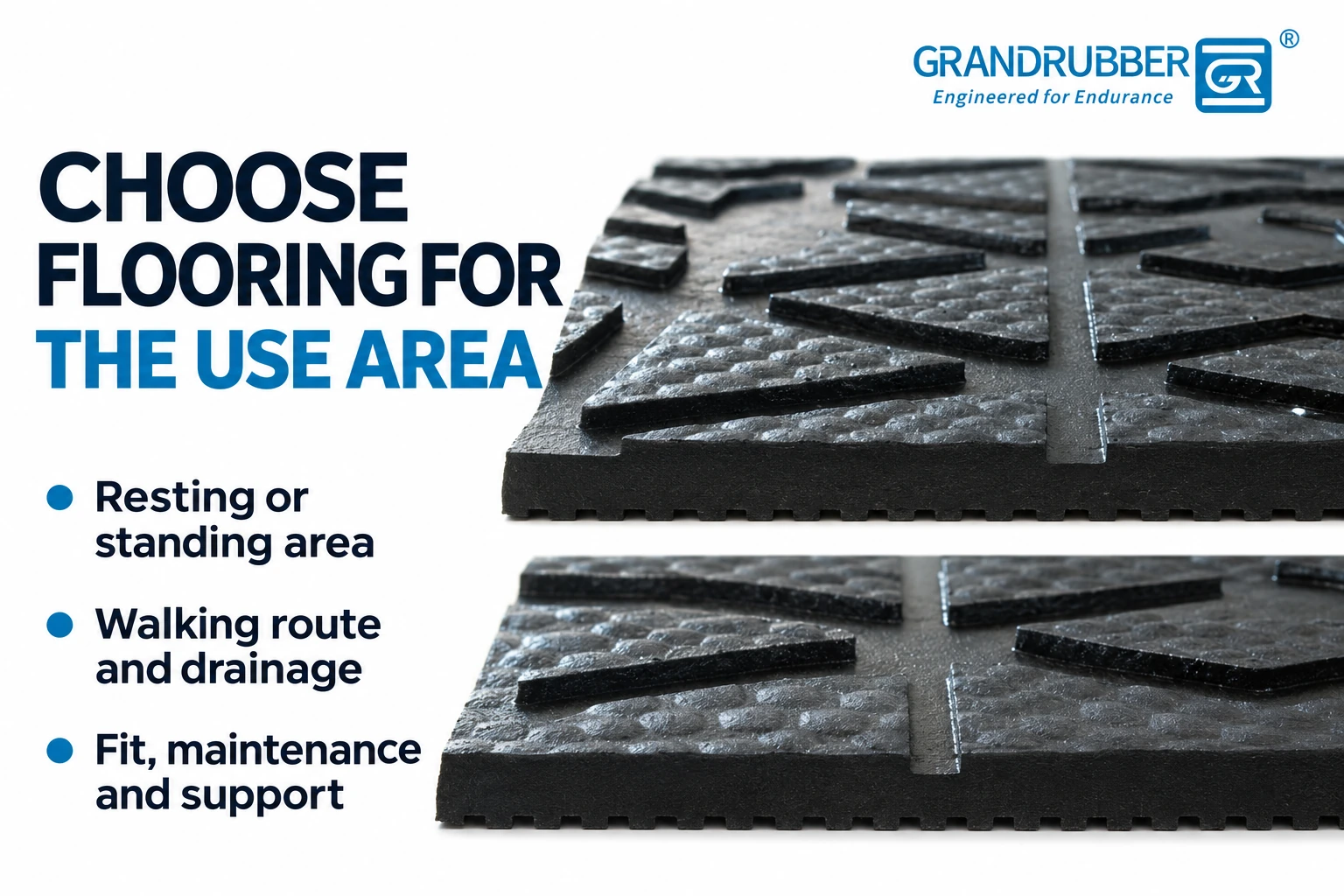
Select cow flooring by the actual zone and its interfaces: resting, standing, walking and ramps ask different questions. A pattern name alone cannot confirm traction, cleaning compatibility or a suitable installed layout.
On this page
 Open full-size image ↗
Mark each flooring zone on a plan before choosing a mat or roll. Record how animals and equipment use it, how it is cleaned and how edges meet the surrounding floor. This is a product-enquiry guide, not a farm-layout design or a guarantee against slipping.
Give every area its own use description
Separate resting spaces from standing or walking routes and from sloped transitions. Identify turns, gates, crossings, drains and cleaning equipment where relevant. A mat promoted for comfort in one place should not be assumed suitable for every traffic or slope condition.
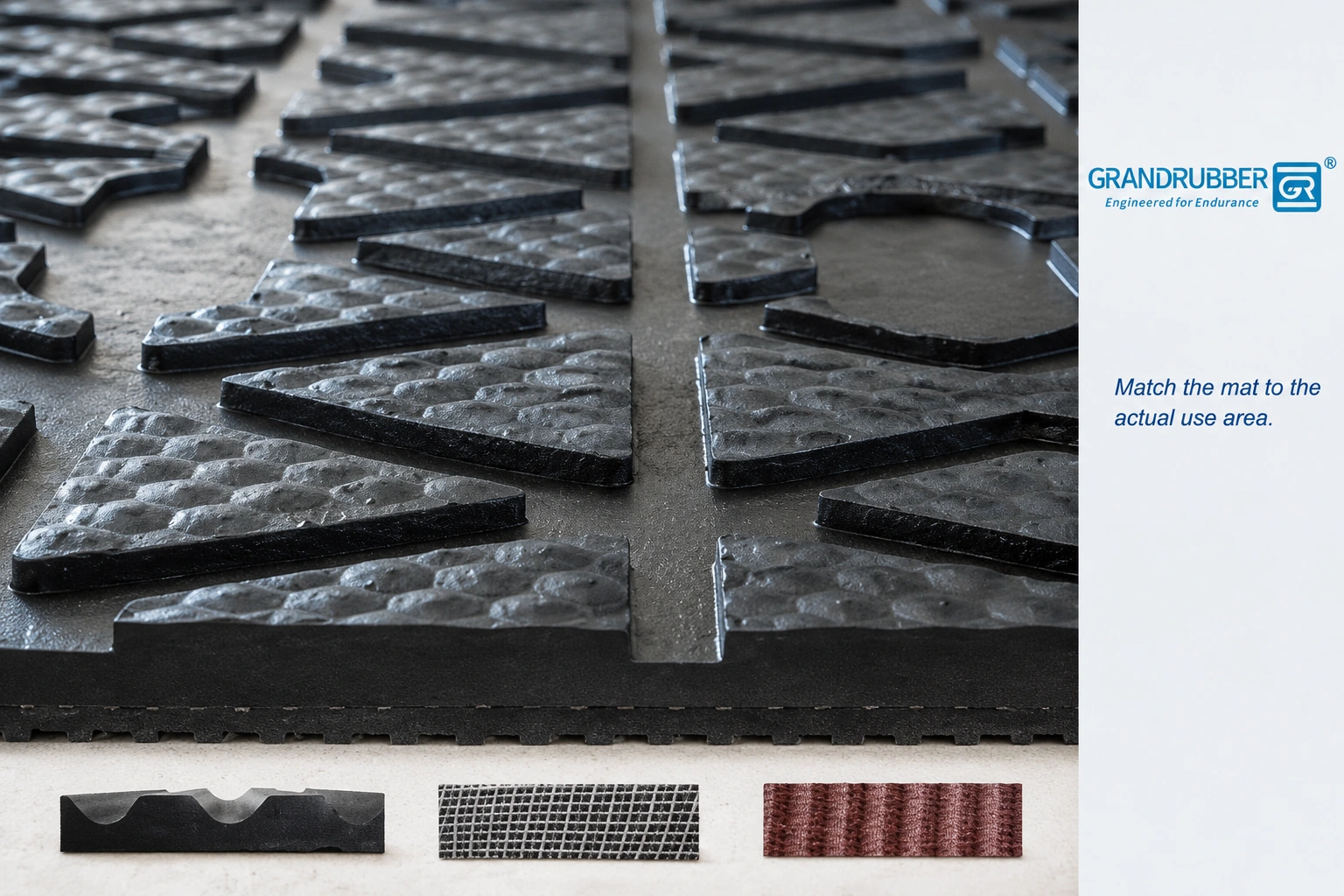
The current cow catalogue lists different patterned mat and ramp products. The historical catalogue also describes layer and reinforcement options. Those entries justify asking about offered construction; they do not establish that all models have the same reinforcement or installed performance.
Describe floor, drainage and cleaning interfaces
Record the base reference, slope and drainage arrangement, available layout dimensions, cleaning method and any scraper contact. Identify rolls or pieces, joints, edge transitions and proposed fixing scope. Keep photographs linked to plan locations.
The first table assigns questions to use areas. It supplies no permitted slope or friction coefficient. If a dimension or cleaning interface is unknown, keep it open for the responsible site team rather than approving a model from a photograph.
| Area | Describe | Review interface |
|---|---|---|
| Resting | Bed/base and assembly scope | Cover versus complete system |
| Standing/walking | Traffic, turning and contact | Joints, edges and cleaning |
| Ramp/transition | Actual slope and route | Surface, attachment and drainage |
| Equipment crossing | Actual equipment and contact | Layout and offered-product review |
Worked example: one pattern requested for two zones
Assume a hypothetical order asks for one patterned product across both a level passage and a sloped approach. The buyer likes the appearance but has not supplied drainage, traffic or cleaning details. No safe slope, mat thickness or traction result is assigned.
Split the request into two zones and ask what evidence is needed for each. Check the offered surface and backing, how edges and joints will be treated and whether the cleaning arrangement imposes another requirement. A single commercial order can contain separate line items and acceptance questions.
The second table converts the site observations into a supplier response schedule. If the proposal uses a layered or reinforced construction, have that feature identified for the actual product; do not borrow a historical construction diagram as evidence of a current model.
| Site reference | Supplier response | Keep unresolved |
|---|---|---|
| Zone identity | Exact offered model/construction | Appearance-only selection |
| Base and drainage | Applicable layout details | Unverified site geometry |
| Cleaning interface | Proposed product compatibility | Unassessed scraper contact |
| Delivery format | Roll/piece and zone allocation | Unassigned joints/edges |
Ask for a layout-linked product proposal
Send the marked plan and area descriptions through the cow-flooring enquiry. Request product identities, proposed supply formats, joint/edge details, fixing scope and unresolved interfaces. Keep the product schedule tied to zone identifiers so packing or installation does not confuse similar-looking pieces.
Ask the responsible farm team to assess the actual use and care requirements. A product description cannot establish animal-health improvements, milk yield, hygiene results or universal non-slip performance. Keep those claims out of the purchase decision unless supported by appropriate evidence for the actual conditions.
Scraper-contact zones: add the equipment interface to the floor plan
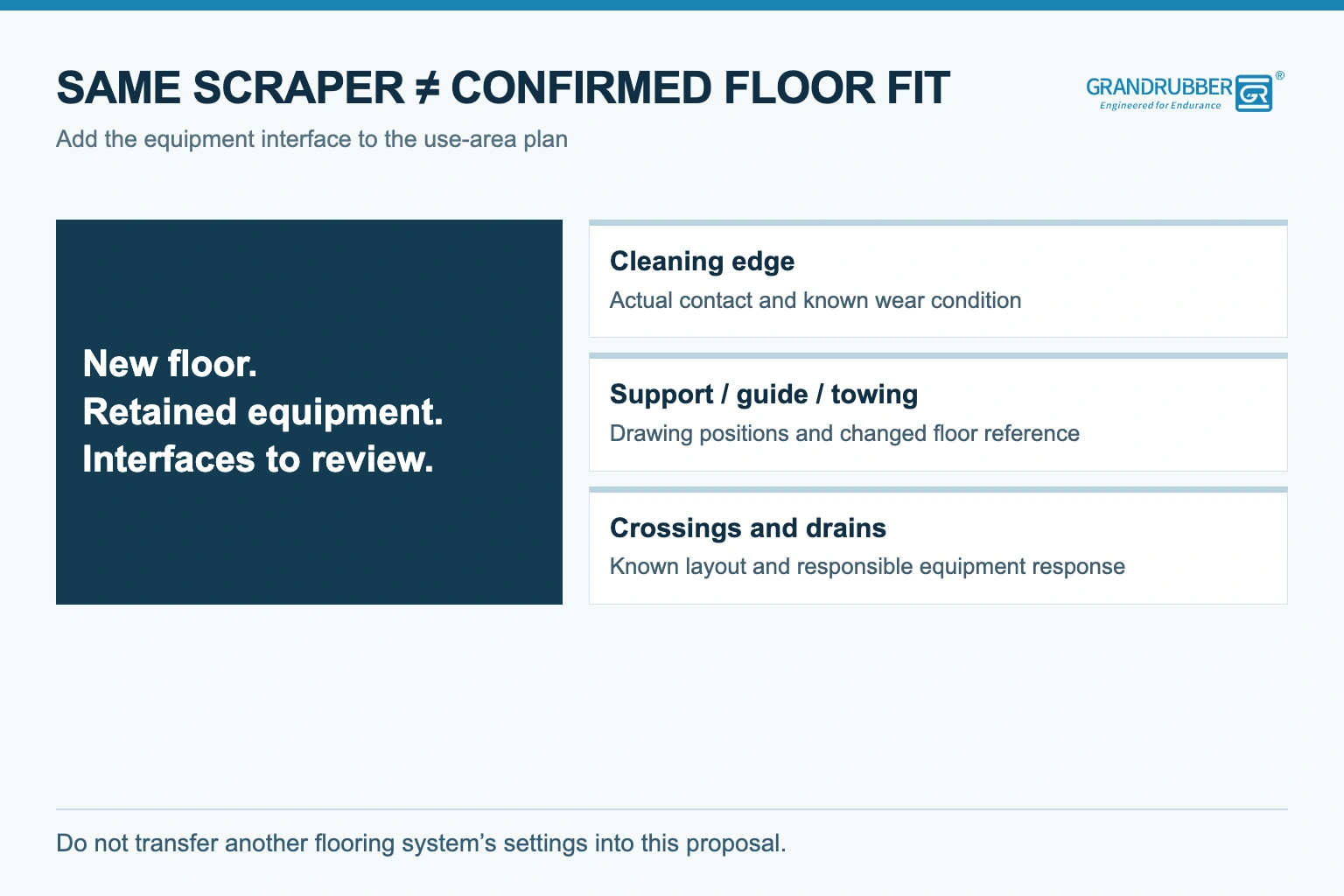
For an alley cleaned by a mechanical scraper, identify the actual equipment and the portions that contact or pass close to the rubber. Mark cleaning edges, supporting parts, guides, towing elements, crossings and drains where relevant. Ask which observations come from a drawing and which reflect the current worn condition. A mat pattern does not establish the complete scraper interface.
KRAIBURG’s paved-floor scraper guide distinguishes contact edges, bearing surfaces and towing/guide arrangements for its own flooring system. Its dimensional and pressure requirements are not GRAND RUBBER installation values. Use that distinction to frame the interface question, then obtain the applicable requirements from the actual floor and equipment parties. The source footer carries 12/2023; it is not a newly issued November 2026 rule.
Worked scraper handover: keep the same machine, change the floor
Assume a hypothetical farm replaces an alley surface while retaining the scraper. The supplier receives mat dimensions but no equipment interface record. No model, clearance, pressure, slope or safe modification is selected.
Ask what the change does to the relative floor level, guide/crossing arrangement, supporting contact and edge transitions. Have the equipment and floor parties identify the applicable checks and any changes each requires. A quotation for rubber does not establish that a retained machine needs no adjustment, and this guide provides no adjustment instructions.
The scraper table makes each question assignable. Record who reviews the actual equipment condition and who accepts the matched arrangement. If the owner cannot provide a reliable drawing or condition record, leave the affected interface open rather than transferring another brand’s dimensions into the order.
| Interface | Identify | Responsible reply |
|---|---|---|
| Cleaning edge | Actual contact and known wear condition | Applicable equipment/floor requirements |
| Supporting parts | Contact area and proposed floor reference | Assessment by responsible parties |
| Guide/towing/crossing | Drawing positions and relevant floor change | Unresolved interface or accepted proposal |
| Supply and acceptance | Material versus equipment/site tasks | Named scope and revision |
Add an equipment response to the flooring proposal
Include the scraper identity and marked contact zones in the same zone-based enquiry used for the floor layout. Request the actual offered mat construction and the equipment party’s response to the relevant interfaces. Keep new rubber supply, machine assessment, site work and acceptance as separate tasks.
After a proposal changes, retain the revised drawing and agreed responsibility record. A cleaner-looking passage, a favourable pattern description or a general anti-slip claim does not verify the mechanical interface or the animals’ outcome. Use actual evidence for the intended layout and cleaning arrangement.
Buyer FAQ
Does a hammer pattern guarantee a non-slip floor?
No universal result is established. Review the actual surface, use, cleaning and installation conditions with appropriate evidence.
Can one roll replace all piece mats?
Confirm the layout, joints, handling, attachment and product suitability first. Supply format alone does not establish equivalence.
Must all cow mats have fabric reinforcement?
No such universal construction is established. Identify the reinforcement, if any, for the exact offered product.
Can a supplier select from barn photographs?
Photographs help explain the site, but plan dimensions, use areas and critical interfaces still need identification.
Does this guide select a ramp slope?
No. Provide the actual route and have the responsible parties assess the layout and product proposal.
Can another brand’s scraper clearances be used for our mat?
No automatic transfer is established. Ask the actual equipment and floor parties for the applicable requirements and review.
Does keeping the same scraper mean the new floor is compatible?
Not by itself. Identify any changed floor level, support, guide and contact conditions and obtain the appropriate response.
Should the mat supplier confirm the scraper’s condition from a photograph?
Photographs can support the enquiry but do not replace the responsible equipment assessment or define site-work responsibilities.
Sources
Related technical resources
Related products
 Cow Mats & Mattress CoversRubber cow mats, stable mats and mattress covers for different farm areas. Compare surface pattern, backing and dimensions against the floor layout, cleaning and fixing requirements.GR4001 · Hammer Top Cow MatGR4001 hammer-top cow mat with listed backing and reinforcement options. Choose dimensions and backing together to match the use area, floor layout and fixing requirements.
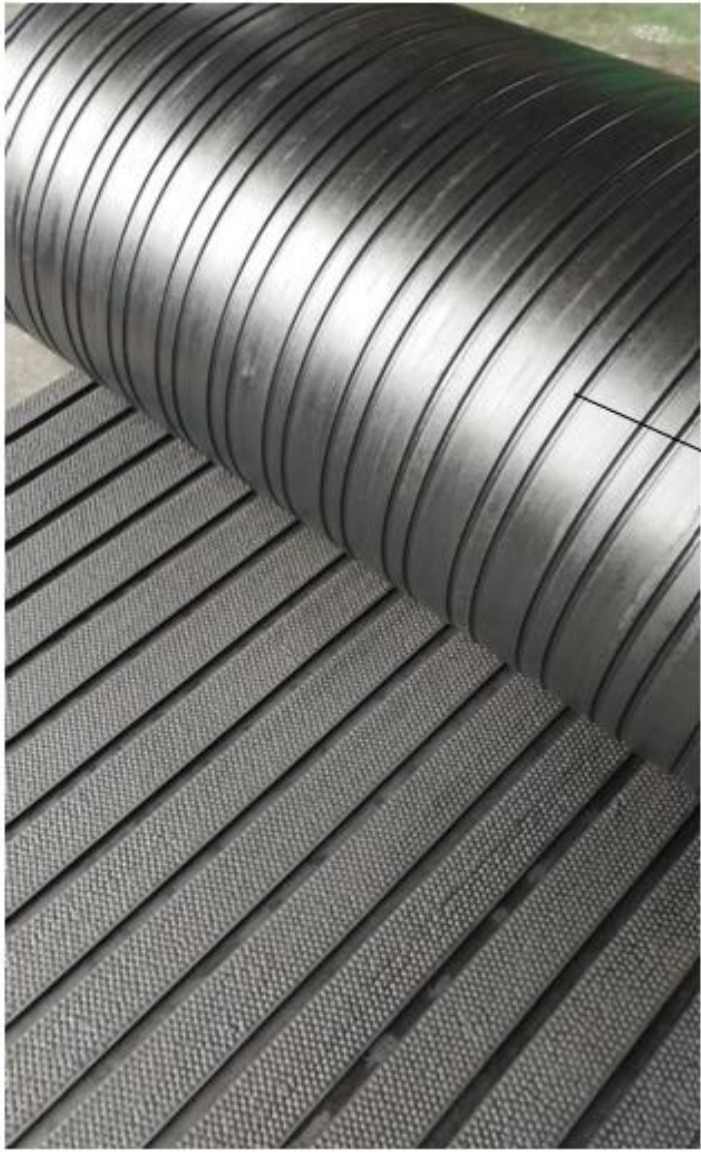 GR4009 · Ribbed Hammer Cow MatGR4009 ribbed/hammer cow mat with a composite-rib backing. Match the catalogue thickness and roll format to the floor layout, drainage, cleaning and fixing requirements.
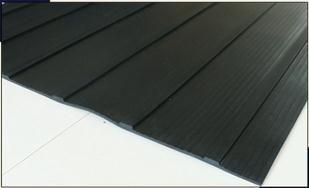 GR8002 Ramp MatGR8002 ramp mat with a 14 mm catalogue thickness. Check the current drawing, installation area and fixing requirements when comparing the older 15 mm reference.
Document and page references
- Grand Rubber Cow Mat.pdf, PDF pp2,6,10,14,15: Distinct current mat, cover and ramp references; no traction/health approval.
- GR Cow Mat Catalogue.pdf, PDF pp4,12,15,18,21: Historical construction and surface examples, not universal current-model specification.
- Decision tables, hypothetical examples and follow-up questions are editorial purchase-review aids; they are not customer cases, site instructions or technical approval.
- KRAIBURG: own-system scraper/floor interface guide: Physical PDF pp1–4, contact/support/guide/towing references; footer12/2023, exact publication day unknown.
- New comparison/checklist entries and worked examples are editorial review aids, not measured results, approved specifications or real customer cases.
Download the reference tables
Source-labelled review extract. Historical references remain historical; this is not a formal TDS, certificate or current availability confirmation.
Download guide tables CSV