
Can Rubber Mats Make Existing Slatted Flooring Structurally Acceptable?
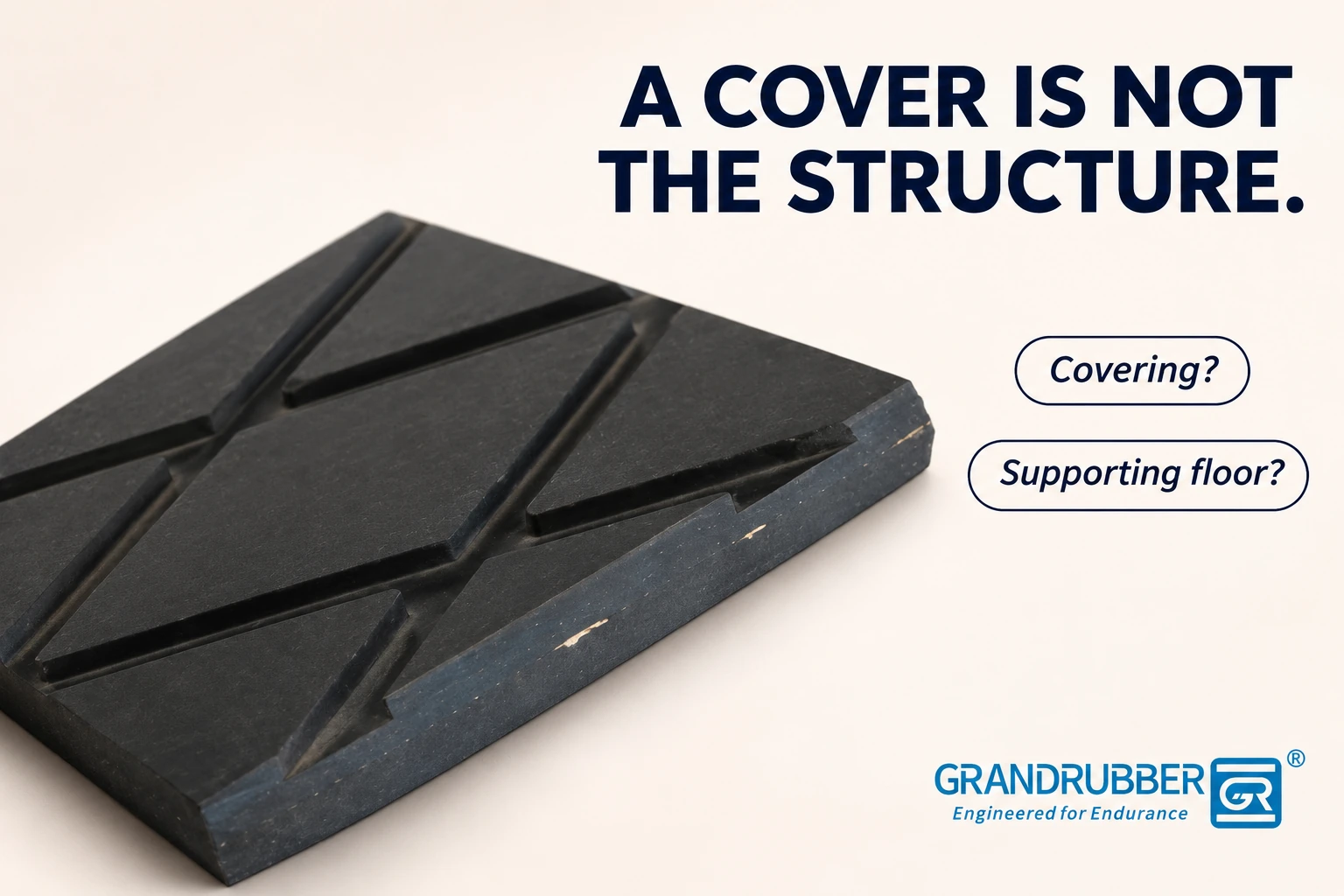
An overlay does not establish the load-bearing adequacy of the slats below it. Keep the rubber product, its proposed interface and the existing structural elements on separate review lines. Obtain the responsible structural assessment before treating a mat quotation as approval of a floor refurbishment.
On this page
 Open full-size image ↗
An overlay does not establish the load-bearing adequacy of the slats below it. Keep the rubber product, its proposed interface and the existing structural elements on separate review lines. Obtain the responsible structural assessment before treating a mat quotation as approval of a floor refurbishment.
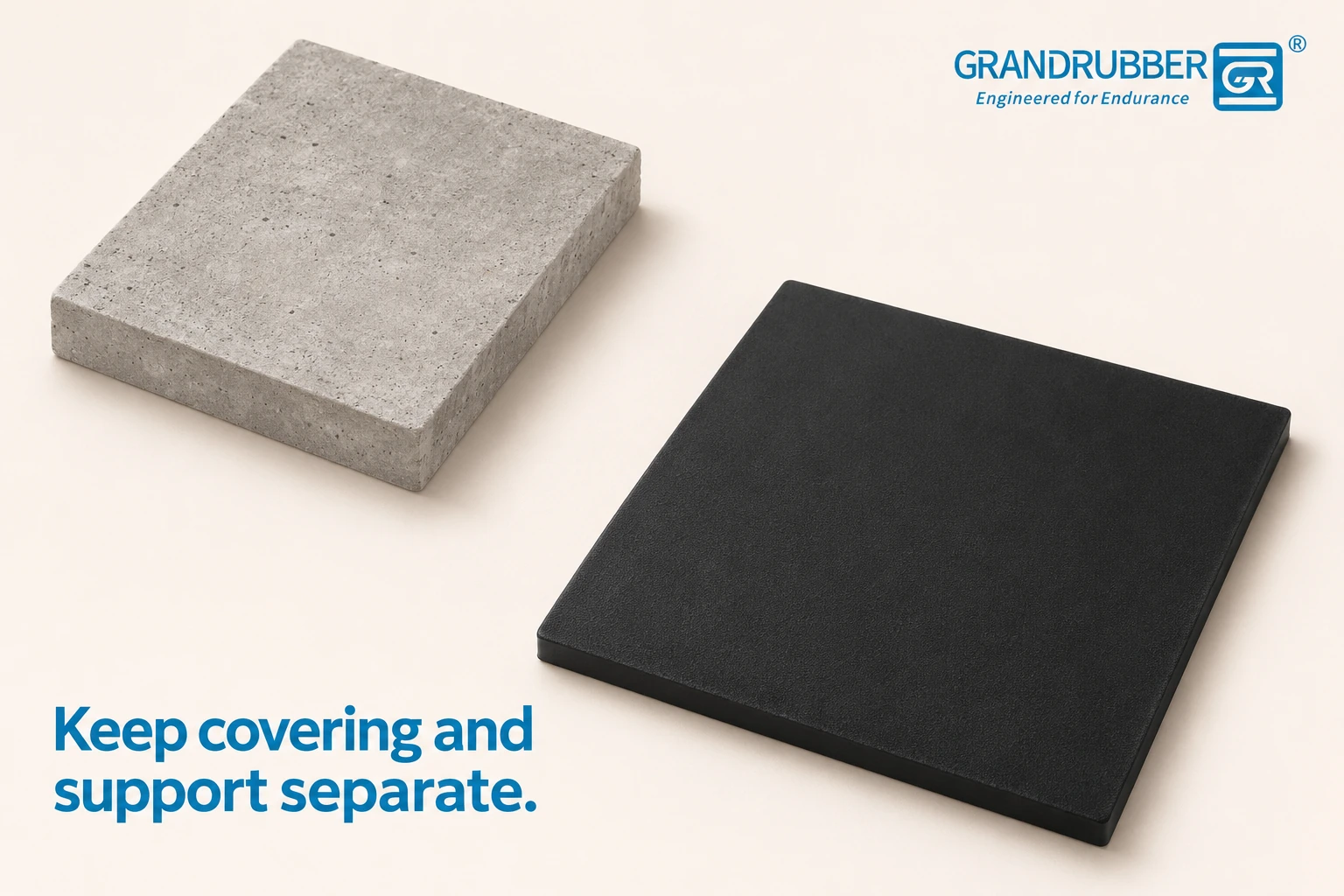
A surface covering and the supporting element do different jobs
A rubber covering is part of the finished floor arrangement. The supporting slat or other structural element carries a separate responsibility. A quotation for the former does not establish the condition, capacity or suitability of the latter, even when both appear in one refurbishment drawing.
KRAIBURG’s German instructions for its own slatted-floor coverings make assured load capacity a prerequisite and identify the concrete elements’ structural basis as decisive for vehicle traffic. This is evidence that an overlay system can retain underlying structural prerequisites. It is not evidence that a GR product is approved for that system or that a particular existing floor is adequate.
Keep three objects visible: the proposed rubber product, the connection or interface proposed for it, and the existing supporting construction. A catalogue photograph can illustrate a surface without identifying the actual support or proving that a different floor can receive it.
Build the refurbishment record around the existing floor
Ask the site owner for the available original floor drawings, element identification and relevant structural records. Identify the actual proposed area, existing use and planned use. Where a record is unavailable, list the missing item explicitly for the responsible structural reviewer rather than reconstructing an approval from a mat supplier’s brochure.
Provide actual condition observations through the site’s established inspection process. Date and locate photographs and distinguish an observation from a diagnosis. A visible crack, repair or surface change should be referred to the appropriate competent party; neither a buyer nor this article can establish structural safety from an image.
Describe any proposed changes in use or equipment as project inputs. Vehicle access, maintenance equipment and animal-use areas need the relevant responsible review rather than an assumption that yesterday’s arrangement automatically approves tomorrow’s. The first table is a responsibility map, not a load assessment or installation specification.
| Object | Evidence or input needed | Responsible scope to establish |
|---|---|---|
| Existing support | Identified elements, available drawings, condition records, proposed use | Structural suitability review |
| Rubber covering | Actual offered form and intended area | Material/product suitability |
| Interface | Actual proposed arrangement and relevant drawings | Connection and floor-function review |
| Project change | Revised traffic/use or element references | Whether earlier assessments remain applicable |
| Handover | Accepted references and unresolved items | Who owns each remaining decision |
Separate product fit, openings and structure in the quotation
Ask what product form the material supplier actually proposes and whether that form is supported for the intended arrangement. General cow-mat or mattress supply does not by itself establish a slatted-floor-specific covering, fixing system or compatibility assessment. GR’s general product category should not be interpreted as confirmation of any of those capabilities.
The proposed interface also needs its own identification. The responsible project parties should reconcile drawings and any requirements concerning openings, adjacent elements and the intended floor function. Do not take a generic rubber sheet image as a construction detail or invent a fixing arrangement to make a preliminary price look complete.
The structural question remains independent even if the product dimensions appear to fit. Dimensional compatibility can be one input, but it cannot certify the support. Conversely, a sound supporting floor does not by itself show that a particular unconfirmed mat arrangement meets the site’s other requirements.
Worked refurbishment comparison: two prices, different scope
Consider a hypothetical farm refurbishment with existing slats and a proposed rubber overlay. Offer A prices material to the dimensions supplied. Offer B includes a drawing labelled complete floor solution but supplies no identified structural assessment of the existing elements. These are illustrative offers, not a real project or GR service record.
Offer A may be a clearly limited material proposal. Offer B’s broader wording leaves an important applicability gap. Ask both parties to identify the actual rubber product and included interfaces, then ask the project’s responsible party for the separate assessment of the existing structure and proposed use. A broader heading does not supply missing engineering evidence.
If the owner changes the planned traffic during comparison, record that revision and return the changed input for review. Do not close the issue by comparing only the rubber thickness or price per square metre. The new input concerns the use of the whole floor arrangement.
The second table shows how the two scope lines can be compared without pretending to decide capacity. It helps the buyer distinguish an honestly limited supply price from an unsubstantiated claim that all refurbishment work has been resolved.
| Offer or change | What it establishes | Question still to close |
|---|---|---|
| Material priced to dimensions | Defined material supply basis | Underlying structure and actual application suitability |
| Complete-solution label only | A commercial description | Which documented assessments and interfaces are included? |
| Changed traffic/use | A revised project input | Has the responsible structural scope been reassessed? |
| Visible defect hidden by a covering | A changed surface appearance | What is the competent disposition of the original finding? |
Do not cover an unresolved defect and call the floor repaired
An overlay can change what is visible at the surface without establishing what has happened to the supporting element. If a condition finding is unresolved, retain that issue in the project record and obtain the responsible disposition. Rubber supply should not be represented as repair of structural deterioration.
Ask who owns the decision to proceed, what records support it and which actual configuration was assessed. A material supplier may need information from that assessment to define its own proposal, but this does not turn the supplier into the structural designer or site inspector. The commercial scope should reflect the real responsibilities.
Retain the final accepted references at handover. If an element or proposed use changes later, ask the responsible reviewer whether the earlier disposition remains applicable. No capacity number, installation method, defect classification or permission to continue using a suspect floor is given in this guide.
Send one scoped enquiry after identifying the structural review owner
For a GRAND RUBBER enquiry, provide the intended product/application, available layout and material dimensions, with the existing-floor question and responsible project contact separately identified. Ask what product form GR can actually offer and which documents are available. Do not assume a proprietary slatted-floor product or fixing system is included.
Use the cow-flooring area guide to distinguish use zones and finished-floor requirements. The distinctive decision here is whether an overlay has been incorrectly treated as proof of the original support’s adequacy. The product price and structural disposition must remain separately traceable.
The immediate next step is a refurbishment scope sheet showing the proposed covering and the actual supporting-floor assessment status. Keep any unassessed structural question open for the competent responsible party; a completed rubber order is not the missing assessment.
Buyer FAQ
Does a rubber covering restore the slats’ load capacity?
No restoration is established by covering them. Obtain the actual supporting-element assessment and any required repair disposition from the responsible structural party.
Can a mat supplier approve cracks from photographs?
Do not assume that capability or scope. Locate and record observations and refer them through the site’s competent structural inspection process.
Does a mat product category confirm a slatted-floor system?
No. Identify the actual offered product and any supported fixing/interface arrangement. GR-specific slatted-floor capability is not confirmed here.
What if the original floor drawings are missing?
Record the gap and ask the responsible structural reviewer what investigation or records are required. Do not invent a capacity or treat the overlay catalogue as a substitute.
Is a vehicle-compatible mat enough to approve vehicle access?
That product claim cannot establish the supporting floor’s adequacy. Both the product and the actual structural/use requirements need their applicable evidence.
Should a structural report be copied into the rubber specification?
Link the actual relevant assessment reference and its scope while retaining it as a separate record. Do not alter its subject or imply it approves every later arrangement.
What is the useful first purchase action?
Identify the responsible structural review and prepare a scope sheet separating the existing floor, proposed covering and interface. Then request the actual material proposal.
Sources
Related technical resources
Related products
 Cow Mats & Mattress Covers
Document and page references
- KRAIBURG — Montage von KRAIBURG Spaltenauflagen: PDFp1 load-bearing prerequisite and concrete-element structural basis; p2 document date. Use structural prerequisite only. No fixing/cutting steps, traffic permission, load calculation or GR slatted-floor system/repair capability inferred.
- Editor-derived evergreen purchasing analysis; hypothetical examples are not real cases, field results or approved operating procedures.
Download the reference tables
Source-labelled review extract. Historical references remain historical; this is not a formal TDS, certificate or current availability confirmation.
Download guide tables CSV