
Rubber-Lined Equipment in Storage: Who Owns Care and Pre-Service Review?
Assign custody, the applicable preservation documents and a pre-service review before lined equipment is held between delivery and use. Receipt of the item does not establish that later storage, installation and return to service have been accepted.
On this page
 Open full-size image ↗
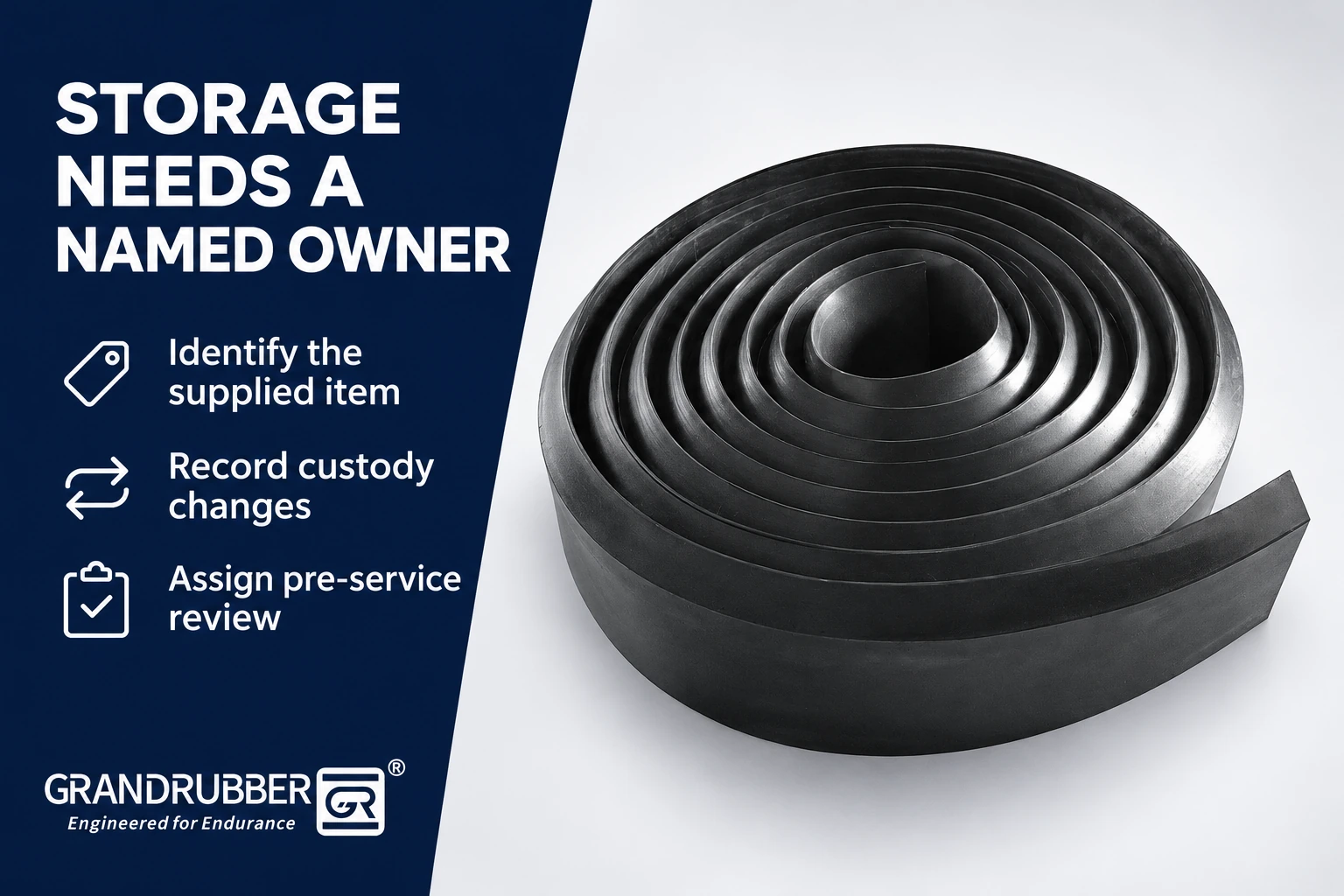
When delivery and commissioning are separated, the purchase file needs a handover plan for the lined equipment, not only a packing list. Identify who holds the item, which supplier instructions apply, how changed conditions are escalated and who accepts its condition before service. This guide allocates evidence and responsibilities; it supplies no preservation recipe or permission to operate.
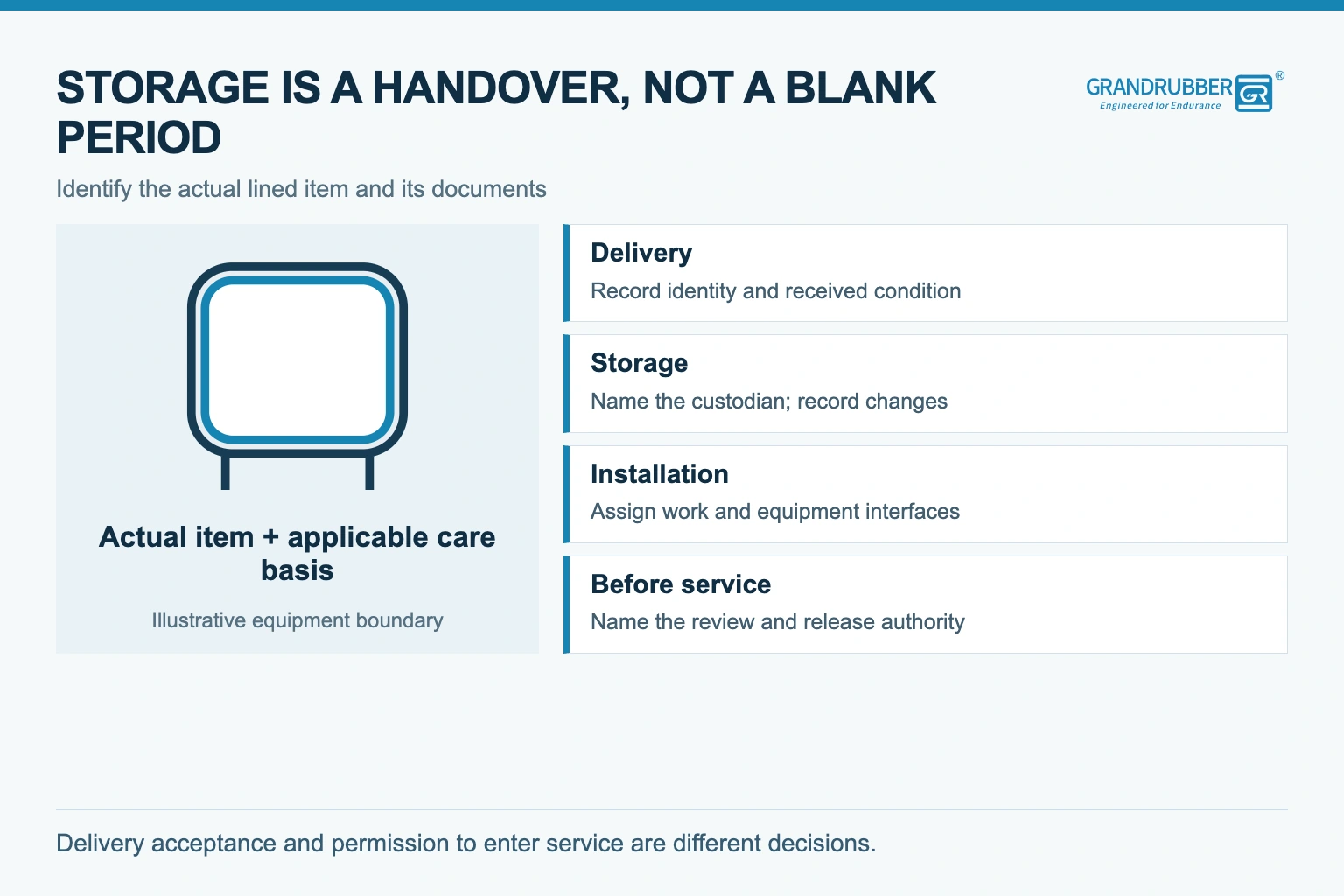
Separate four handovers instead of one delivery date
List delivery, the storage period, installation and the proposed start of service as separate stages. The custodian, site contractor, equipment owner and lining/material supplier may have different responsibilities at each. A signature confirming receipt does not automatically accept later storage or installation conditions.
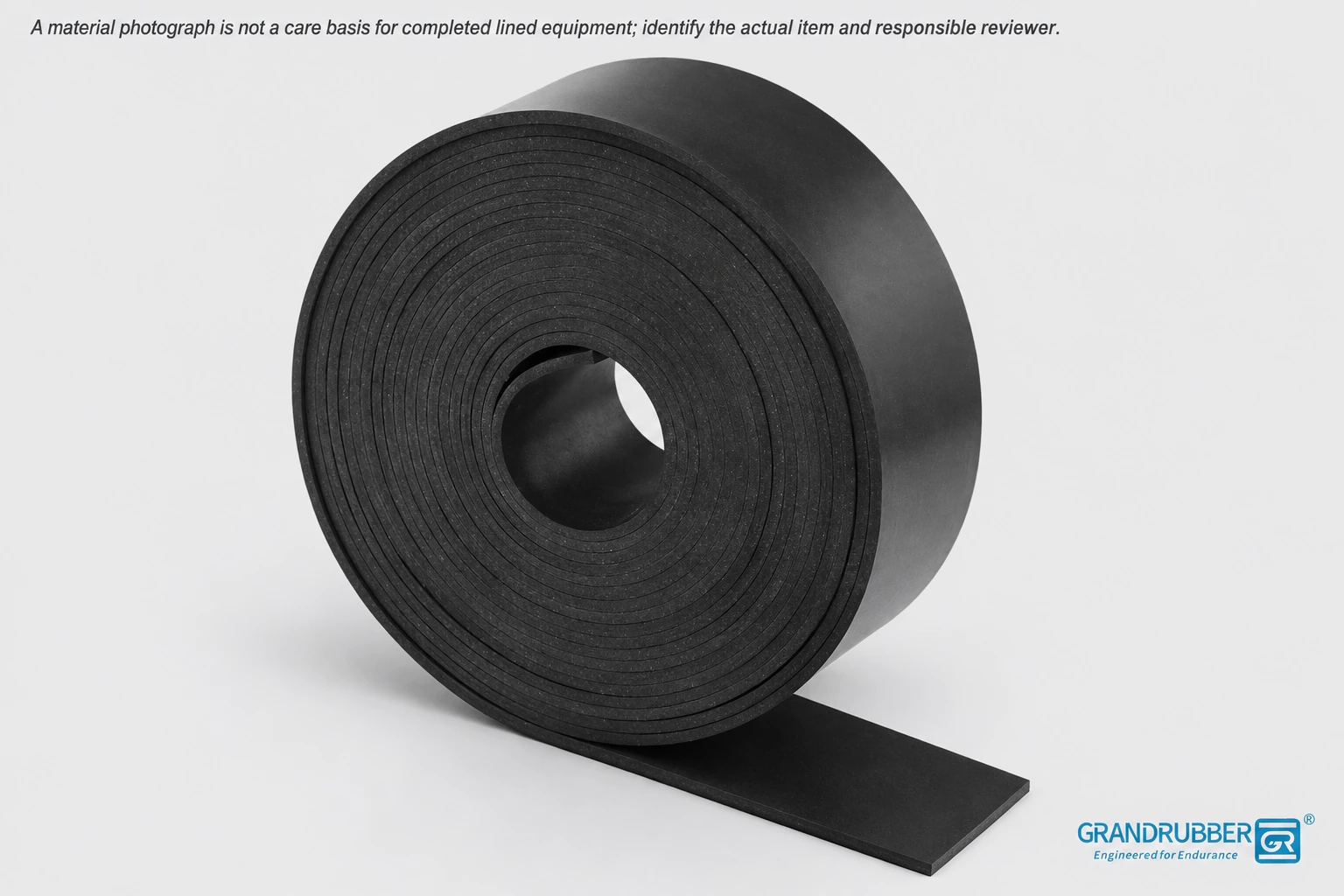
Identify the equipment and the actual lining/material reference, including what remains uncertain. A bare sheet, a finished lined vessel and installed process equipment are different subjects. Do not transfer a rubber-roll storage note to a completed vessel without asking which instructions govern that item.
Obtain the applicable care documents before a delay
Ask the equipment and lining parties for the preservation and inspection basis applicable to the supplied item and expected delay. Record the document identity, revision, scope, custodian and known storage setting. Relevant exposure questions include sunlight, ozone sources, temperature conditions and mechanical damage; they are questions for the item-specific plan, not limits supplied by this article.
The first table is a responsibility register. It does not make the supplier liable for every period or declare a universal storage duration. Clarify what the contract actually includes and who must notify whom if the planned environment, access or timetable changes.
Polycorp’s care/storage publication p2 treats stored lined vessels separately and calls for review before they enter service. The custody allocation below is an editorial handover tool, not an allocation already imposed on the buyer or GRAND RUBBER by that manufacturer’s publication.
| Stage | Assign | Record |
|---|---|---|
| Delivery | Receiving party and item identity | Condition and supplied documents |
| Storage | Named custodian and applicable care basis | Location/condition changes |
| Installation | Responsible work/interface party | Applicable controlled documentation |
| Before service | Review and release authority | Disposition and open items |
Preserve the condition history, not an assumed approval
Keep the receiving condition record, known changes in custody/location and any documented incidents linked to the equipment identity. Where history is missing, record the gap. Ask the responsible party what further review is needed rather than recreating a clean history from a present-day photograph.
Do not invent a chemical fill, protective atmosphere, inspection voltage, frequency or acceptance result. Different lining systems and equipment can need different controlled arrangements. A general care publication may identify questions, but it cannot approve an improvised preservation treatment for an unknown construction. The material and equipment parties must identify the applicable instructions and responsible personnel.
Worked example: commissioning slips after delivery
Assume a hypothetical buyer accepts delivery of lined equipment and later delays installation. The original plan did not allocate storage care after a transfer to another yard. No storage duration, environmental limit or damage condition is invented.
Identify the current custodian and reconstruct only the history supported by records. Ask which original preservation assumptions changed and which parties need to review them. Request a documented plan for the remaining hold period and the pre-service disposition.
The second table separates a schedule change from a technical conclusion. A delay is not, by itself, proof of damage; a lack of visible damage is not proof that every condition remained acceptable. The useful buying result is assigned responsibility and an evidence-based release decision, not a guessed shelf life.
| Change | Ask | Do not assume |
|---|---|---|
| New location | Which care assumptions changed? | Original plan still applies |
| Missing history | What reliable records exist? | An invented clean history |
| Proposed preservation | Which item-specific approval applies? | A generic chemical recipe |
| Commissioning pressure | Who closes the pre-service review? | Delivery signature grants release |
Define the pre-service review and its owner
Before service, ask who will review the equipment identity, receiving and storage records, relevant installation information and applicable inspection basis. Name the party who records the disposition and closes outstanding items. Distinguish a document review from physical inspection and from authorization to start the equipment.
If a repair or further examination is proposed, keep its scope separate from routine receipt acceptance. A materials supplier’s reply may identify an information gap without authorizing work on site. Do not let schedule pressure turn that gap into an assumed pass. Any actual preservation, examination or operation follows the applicable controlled process, not this article.
Send one custody-and-release schedule
Use the related lining enquiry to send the identified item, expected timetable, known storage context, custody record and requested document scope. Ask for the applicable care basis and a clear responsibility schedule for changes and pre-service review.
GRAND RUBBER’s material categories do not establish management of the buyer’s storage yard, vessel maintenance or on-site commissioning. Keep the agreed supply boundary and named site responsibilities with the order. A complete handover record helps the next reviewer understand what happened without treating missing history as a completed inspection.
Buyer FAQ
Does delivery acceptance cover storage until commissioning?
Only the agreed scope can establish that responsibility. Identify custody and applicable care requirements for the actual hold period.
Does a longer delay automatically mean the lining is damaged?
No such conclusion is made here. Review the actual history and item-specific requirements with the responsible parties.
Can I use a generic liquid or gas preservation method?
This article does not authorize one. Obtain the applicable equipment/lining instructions and approvals rather than copying a generic treatment.
What if custody changed without a complete log?
Record what is supported and what is missing. Ask the responsible reviewer how to assess the gap before service.
Is a visual photograph enough to release the equipment?
A photograph has a limited scope. The responsible authority identifies the evidence and inspections needed for the actual item.
Can the supplier quote care and inspection as separate scope?
Yes, the offer should identify exactly what is included and who remains responsible for custody, site work and release. No service capability is assumed here.
Sources
Related technical resources
Related products
 NR40 Wear-resistant Rubber Linings
Document and page references
- Polycorp: Care, Maintenance and Storage, general context: Section14 physical PDF p2, Storage of Rubber Lined Vessels,2.1/2.6; no preservation treatment adopted.
- New comparison/checklist entries and worked examples are editorial review aids, not measured results, approved specifications or real customer cases.
Download the reference tables
Source-labelled review extract. Historical references remain historical; this is not a formal TDS, certificate or current availability confirmation.
Download guide tables CSV