
What is needed to select pulley lagging?
Select lagging through the actual pulley duty, surface form, environment and bonding/installation interface. A plain, diamond or ceramic description is a product category, not a universal traction or wear guarantee.
On this page
 Open full-size image ↗
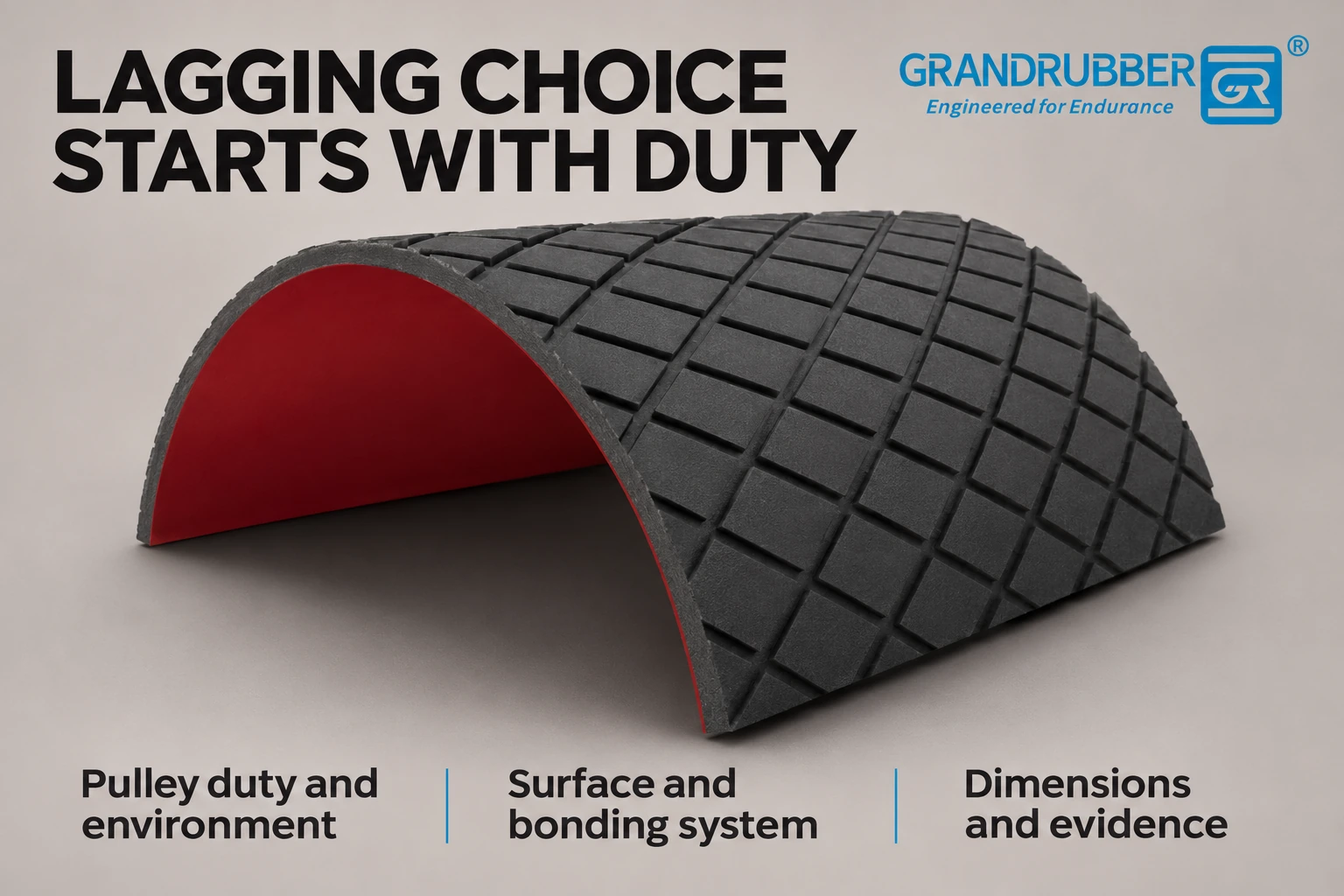
Identify the pulley and the service problem before choosing lagging. Compare the proposed surface and material with the actual belt-contact, contamination and installation conditions. The product form, bonding system and work scope must be explicit; this guide does not assign a friction coefficient or prescribe lagging thickness.
Describe the pulley and observed condition
Record pulley role, diameter/face reference and the existing surface arrangement from available equipment documents. Describe water, mud, contamination, temperature and the actual observed issue separately. A slipping or worn-looking interface is evidence to investigate, not proof that ceramic or a different pattern is the appropriate remedy.
The source catalogue separates ceramic and rubber surface forms. Its product descriptions identify options for discussion. They are not a controlled comparison proving one option outperforms every other under unidentified duty.
Connect the surface proposal with the attachment system
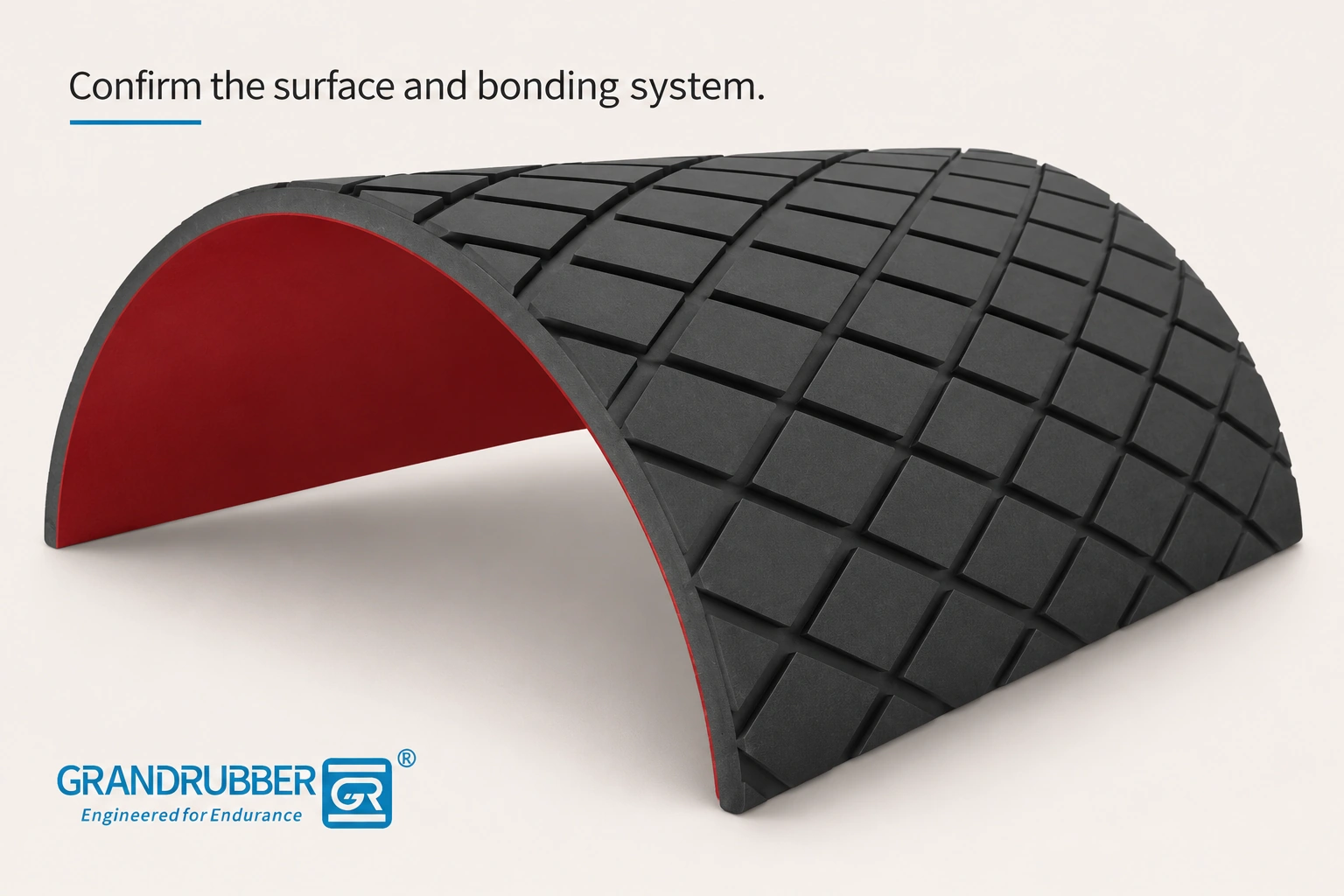
State the offered material, coverage/pattern and applicable dimensions, then identify the bonding/backing system and substrate. Ask what preparation, installation and acceptance requirements apply through the actual controlled product instructions and equipment scope.
The first table keeps pulley, surface and attachment evidence together. A parts quote can define the supplied sheet without defining who removes old material, prepares the pulley or accepts the finished work. Those gaps must remain visible.
| Area | Identify | Avoid |
|---|---|---|
| Pulley | Role, drawing and condition | Choosing by generic diameter alone |
| Environment | Actual contamination/exposure | Assuming a dry reference applies |
| Surface | Offered material/pattern/coverage | A name as a performance result |
| Attachment | Backing, bonding and substrate | Mixing unrelated adhesive systems |
Worked example: a surface upgrade leaves site work undecided
Assume a hypothetical buyer receives a ceramic-lagging proposal for a pulley currently using rubber. The offer does not establish the complete surface/bonding specification or who assesses the substrate. No traction gain, life extension or dimension is assumed.
Request the exact product and attachment basis and ask the equipment/site reviewer to identify what else must be checked. Do not rank the proposal from the material name alone or treat a catalogue application photograph as evidence of the existing pulley’s condition.
The second table separates a material offer from a finished installed surface and records the evidence needed to compare them.
| Scope | Required clarification | Decision record |
|---|---|---|
| Material | Exact product and supplied form | Identified item |
| Preparation | Who assesses/removes/prepares? | Assigned task, not assumed |
| Installation | Applicable system and responsible party | Controlled work scope |
| Acceptance | Which record and owner? | Delivered material versus installed result |
Send one pulley-specific lagging review
Use the appropriate related lagging product enquiry with the pulley reference, observed condition, environment and proposed surface. Ask for a written material/system proposal with inclusions, exclusions and applicable supporting documents.
Keep the review of the belt/pulley system separate from an assumed product upgrade. This page gives no adjustment, curing, groove or loading instruction; physical work follows the responsible controlled procedures, not a generic marketing description.
Buyer FAQ
Is ceramic always the better choice?
No universal ranking is established here. Compare the actual duty, product and attachment evidence before accepting a change.
Does a pattern photo define groove dimensions?
No. Obtain the actual drawing or product specification and the applicable source revision.
Can an adhesive be selected independently of the lagging?
Ask for the defined compatible system and substrate basis. Do not assemble an unverified combination from separate catalogue entries.
Does a supplied lagging sheet include pulley preparation?
Not by implication. State the material and site-work scope separately.
Can the offer’s claimed friction value be compared with another method?
Check the methods, conditions and subjects first. Keep unlike data separate and ask for a suitable comparison basis.
Related technical resources
Related products
 Ceramic Pulley LaggingCeramic lagging sheets for conveyor pulley interfaces. Specify pulley diameter, face length, sheet pattern and bonding procedure to review the selected lagging format.
 Diamond Rubber Pulley LaggingDRL-series diamond-pattern rubber lagging for conveyor pulleys. Match the catalogue format, rubber grade and bonding side to your pulley drawing and operating exposure.
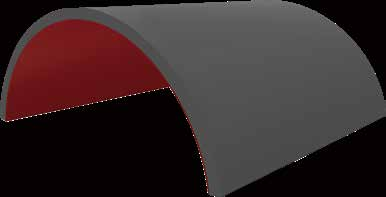 Plain Rubber Pulley LaggingPRL-series plain rubber lagging for conveyor pulleys. Check drum diameter, face length, sheet dimensions and bonding-layer requirements before defining the installation scope.
Document and page references
- GRAND_RUBBER_Conveyor_Components.pdf, PDF pp20,21,22,23,24,25: Lagging surface and backing categories; no universal traction or lifespan claim adopted.
- Decision tables, hypothetical examples and follow-up questions are editorial purchase-review aids; they are not customer cases, site instructions or technical approval.
Download the reference tables
Source-labelled review extract. Historical references remain historical; this is not a formal TDS, certificate or current availability confirmation.
Download guide tables CSV