
What does an impact-bed enquiry need?
An impact bed or replacement bar must be reviewed against loading duty, belt support and its fixing/frame interface. A catalogue bar length or bed code alone does not establish load suitability or fit.
On this page
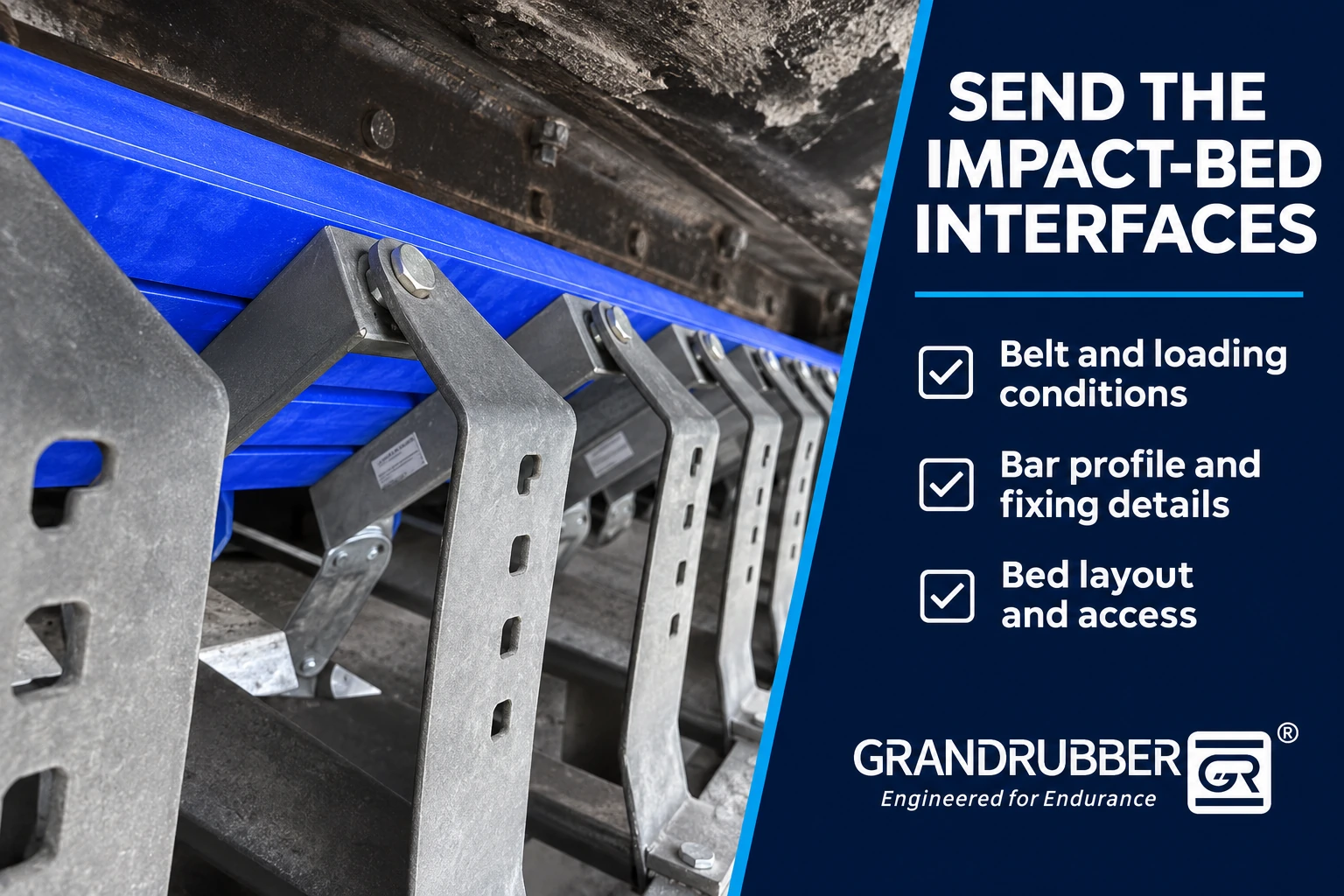 Open full-size image ↗
Specify the loading-zone requirement and the actual frame/bar interfaces together. Buying a complete impact bed differs from replacing bars in an existing assembly. Keep those scopes distinct before comparing dimensions or material descriptions; neither a product code nor a photograph establishes impact capacity.
Identify a new bed or a replacement component
The source pages show bed arrangements and bars with a surface layer, elastic body and metal carrier. Their component illustrations help identify the assembly, not an approved loading calculation. Some source material labels need the actual offered TDS rather than inference from abbreviated catalogue wording.
State whether the request concerns an entire support assembly, bar replacement, fasteners or a material evaluation. Record the existing machine reference and why the change is proposed. A damaged bar does not by itself identify the loading cause.
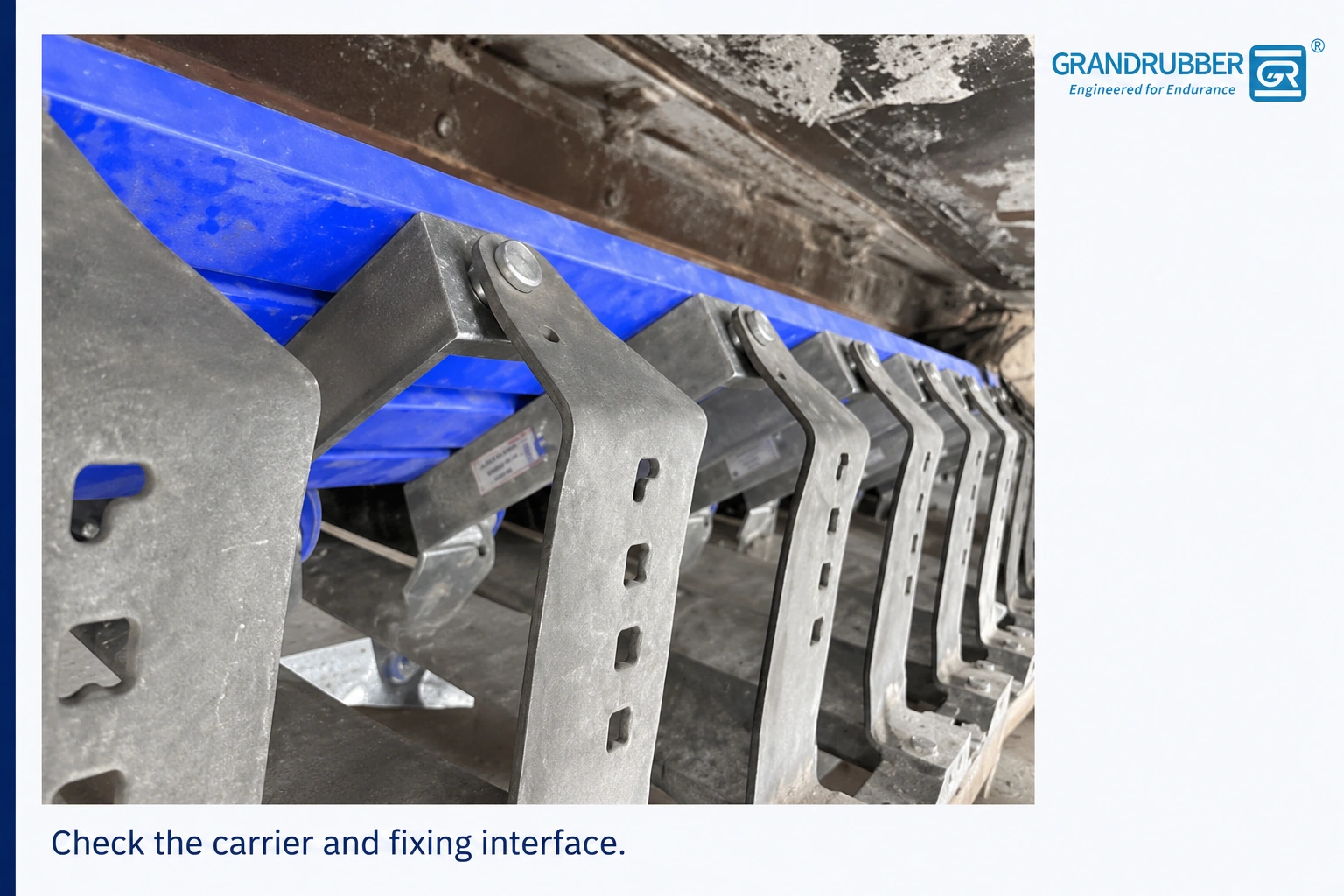
Collect both duty and frame information
Give the reviewer material size, loading drop, throughput and loading direction where known, together with belt width, trough arrangement, support/frame drawing and available space. For replacement bars, identify dimensions, carrier/fixing channel and fastener arrangement from the actual assembly.
The first table separates an overall layout from a replaceable bar interface. If loading data or hidden fixing details are missing, identify the responsible site/equipment input rather than assuming the catalogue picture represents the installed machine.
| Review | Record | Missing input owner |
|---|---|---|
| Loading | Material/drop/throughput/direction | Site or process team |
| Belt support | Width, trough and arrangement | Equipment/design reference |
| Replaceable bar | Full dimensions/carrier/fixing | Assembly drawing and supplier |
| Complete bed | Frame, mounting and clearance | Project equipment review |
Worked example: the bar fits in length but not yet in the assembly
Assume a hypothetical offer matches the recorded bar length but does not identify its metal carrier or fastening interface. The existing loading duty is also incomplete. No impact rating, replacement dimension or performance improvement is invented.
Request the full bar/assembly drawing and the applicable material specification, then ask the reviewer what loading evidence is needed. A length match is a partial dimensional observation, not proof of suitable support or fixing.
The second table records the unresolved decisions for a bar-only and complete-bed offer separately. It prevents an apparently complete parts quote from hiding a frame or duty review.
| Offer | Must identify | Not established by code |
|---|---|---|
| Bars only | Material, carrier, fasteners and assembly fit | Complete bed capacity |
| Complete bed | Frame and actual mounting scope | Every loading duty |
| Material alternative | Applicable grade and evidence | Equivalent behaviour from colour |
| Site modification | Responsible design and installation | Permission from a parts quote |
Request an assembly-specific response
Send the loading-zone record and existing assembly/bar drawing through the impact-bed or impact-bar enquiry. Ask for the proposed components, attachment details, assumptions and exclusions.
Keep equipment changes, installation and site acceptance with the responsible parties. No source rating is transferred to unknown conditions, and this article does not specify a support gap, torque, loading limit or operating procedure.
Buyer FAQ
Does matching bar length mean interchangeability?
No. Check carrier, cross-section, fixing and the applicable assembly specification.
Can a pictured polymer surface identify the material grade?
Not reliably. Request the offered material identity and supporting data; catalogue abbreviations alone can be incomplete.
Does an impact bed supply include frame installation?
Only if explicitly defined. Separate material/components, equipment work and acceptance in the scope.
Can a bar solve an unexplained belt impact problem?
Do not infer the remedy. Record loading and damage evidence and obtain the responsible assessment before changing support components.
Should I select a load rating from another bed model?
No. Identify the actual proposed assembly, applicable conditions and evidence. Do not transfer another model’s rating.
Related technical resources
Related products
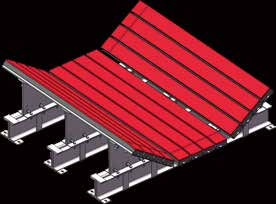 Conveyor Impact BedsConveyor impact-bed assemblies for loading-zone review. Provide belt width, trough angle, drop height and material size to check the frame and loading interfaces.
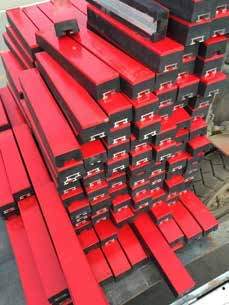 Conveyor Impact BarsLayered conveyor impact bars combining UHMWPE, rubber and a metal base. Match the selected bar dimensions and mounting drawing to the loading-zone arrangement.
Document and page references
- GRAND_RUBBER_Conveyor_Components.pdf, PDF pp11,12,13,14: Bed/bar arrangements and carrier layers; material labels require offered TDS. No load or improvement numbers reproduced.
- Decision tables, hypothetical examples and follow-up questions are editorial purchase-review aids; they are not customer cases, site instructions or technical approval.
Download the reference tables
Source-labelled review extract. Historical references remain historical; this is not a formal TDS, certificate or current availability confirmation.
Download guide tables CSV