
Does an Adhesive-Backed Sponge Strip Suit Every Surface?
An adhesive backing does not establish compatibility with every surface or duty. Identify the actual sponge, adhesive and receiving surface, then obtain the applicable bonding response for that combination. Keep backing availability and function explicit; a general sponge-sheet listing is not confirmation of a particular adhesive-backed product.
On this page
 Open full-size image ↗
An adhesive backing does not establish compatibility with every surface or duty. Identify the actual sponge, adhesive and receiving surface, then obtain the applicable bonding response for that combination. Keep backing availability and function explicit; a general sponge-sheet listing is not confirmation of a particular adhesive-backed product.
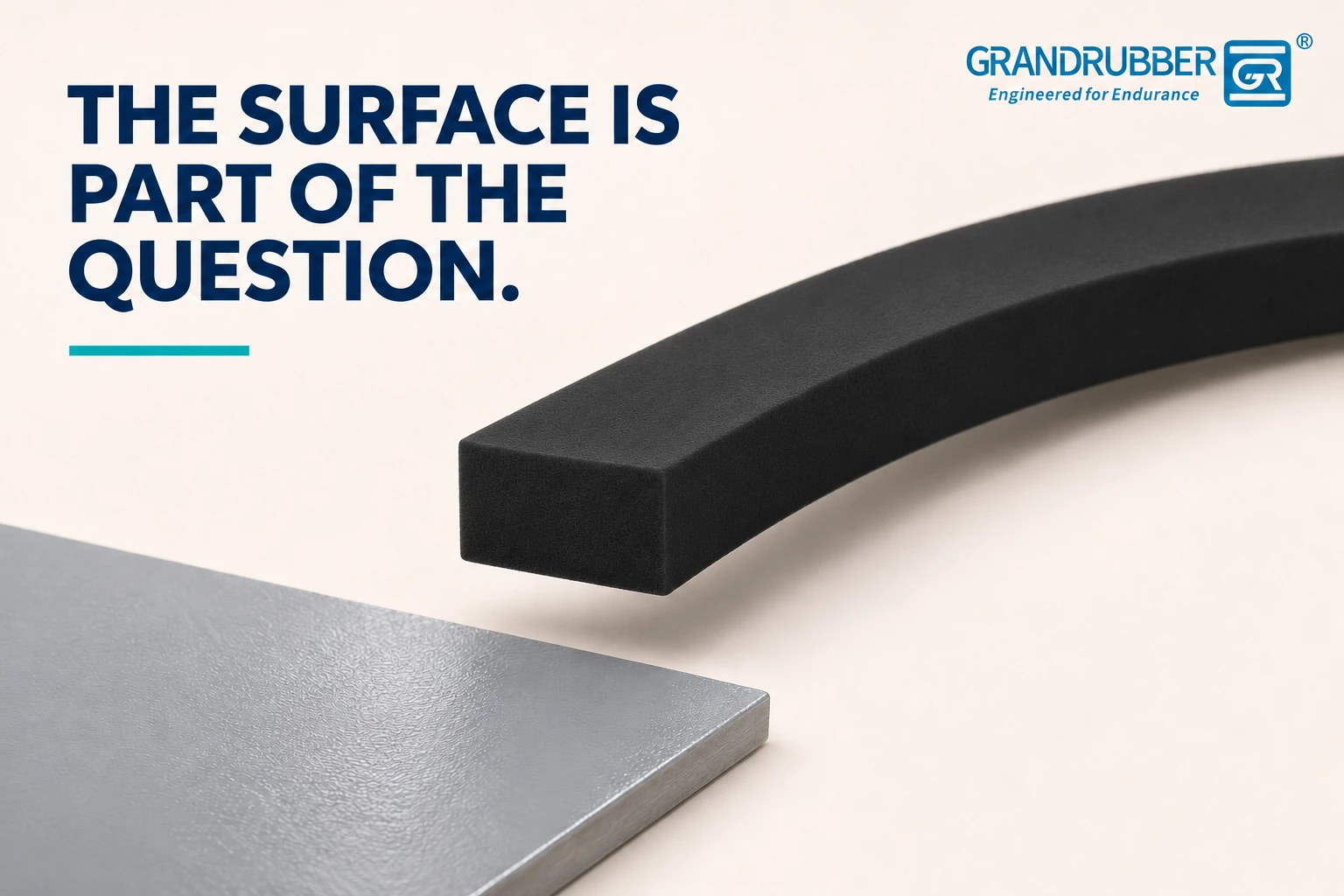
The receiving surface is part of the product question
A request for self-adhesive sponge is incomplete if it names only the sponge and dimensions. The backing meets an actual receiving surface with a particular condition and intended duty. A proposed adhesive system needs that context; it is not a universal property of the word adhesive.
3M’s electronics-bonding guidance identifies hard-to-bond surfaces and discusses pressure-sensitive adhesive wet-out in relation to conditions. The purchasing lesson is to identify the actual interface and applicable instructions. Its products, numeric application conditions and claimed performance do not establish a GR backing system or a universal method for sponge strips.
Also define the backing’s intended function. It might be requested for a particular positioning or bonding role, but that role must be stated and confirmed for the actual offer. Do not assume that every adhesive backing is temporary positioning tape, or that any one backing is structural, permanent or removable.
Describe the actual adherend rather than a broad material label
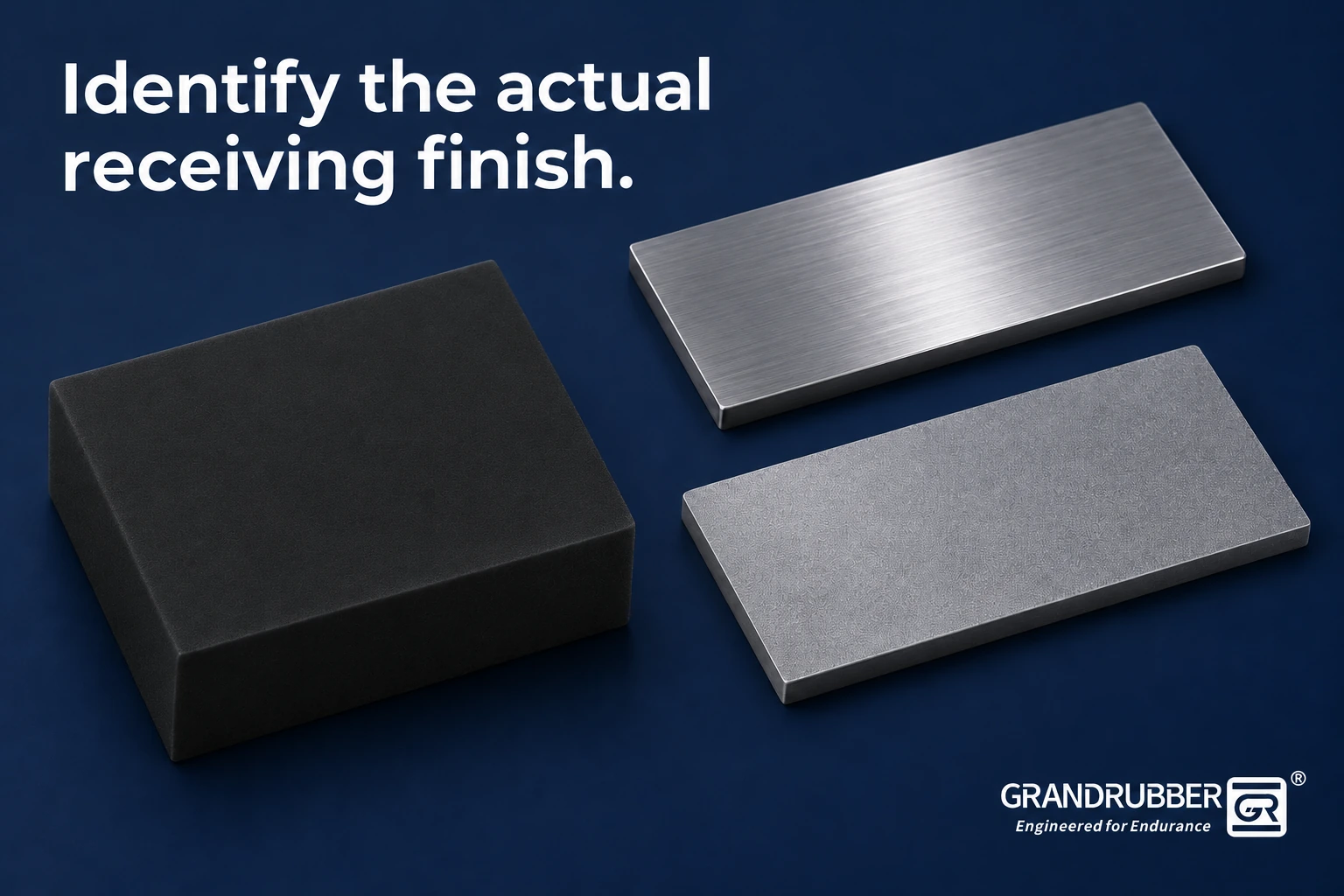
An adherend is a surface being bonded. Ask the buyer to identify what surface the strip will actually meet: the substrate and any coating or finish that forms that contact. A description such as metal may leave the actual painted or coated surface unidentified.
Provide relevant actual condition and exposure information requested by the responsible bonding party. Where the surface identity is unknown, record that gap. A photograph can provide context without establishing a coating chemistry or an applicable preparation process. Do not guess a treatment from appearance.
The first table separates sponge, backing and receiving surface. It does not prescribe cleaning chemicals, abrasion, activation or application settings. Those choices need the actual applicable controlled instructions and competent responsible review, not a generic webpage adapted to an unidentified combination.
| Input | What to identify | Why the label alone is insufficient |
|---|---|---|
| Sponge | Actual offered material and form | Does not identify the backing |
| Backing | Actual product/system and confirmed function | Does not qualify every surface |
| Adherend | Receiving substrate and contact finish/coating | Bulk material name can omit the real surface |
| Duty | Intended role and relevant exposure | Adhesion and assembly sealing are distinct |
| Evidence/instructions | Actual combination and conditions | Another surface’s result retains its own scope |
Ask what the complete backing construction and supply scope include
Ask the supplier whether an adhesive-backed form is actually offered and how it is identified. Keep the sponge material and thickness, backing identity and any relevant converting or liner scope connected in the quotation. Do not infer them from a product photograph showing only a black strip.
A test result for an adhesive on one surface is not proof of every sponge-to-adhesive and adhesive-to-substrate arrangement. Ask what interfaces and conditions the actual evidence describes. If the claimed function requires a complete arrangement, retain the gap where only a component data sheet is available.
Separate this from enclosure sealing. A backing may be involved in a gasket arrangement, but its bonding response does not automatically certify an ingress outcome. The required assembled function needs its own appropriate assessment. Conversely, a closed-cell label does not identify a compatible adhesive system.
Worked purchase: an unspecified coating behind a self-adhesive request
Consider a hypothetical enclosure buyer asking for self-adhesive sponge on a painted surface. The quotation gives sponge dimensions and a generic adhesive label, while the paint/coating and intended backing function are not identified. No actual bond failure or GR product result is represented.
The supplier cannot demonstrate that missing relationship merely by adding the word strong. Ask which backing is proposed, what actual surface information is needed and what applicable response supports the intended duty. If the coating changes during procurement, treat that as a revised interface input.
A competing offer may state a named backing and provide a test on another surface. That identifies useful component evidence but leaves applicability to the actual coated part open. Ask the responsible party to address that difference rather than copying the other surface’s result into the comparison.
The second table turns these gaps into practical questions. It does not decide whether the strip will hold, instruct surface preparation or recommend an application pressure. Those answers require the actual system and its scope.
| Offer detail | Gap | Follow-up |
|---|---|---|
| Self-adhesive with no backing identity | Actual proposed system unknown | State the available backed form and identification |
| Painted surface without coating reference | Receiving interface unknown | Identify actual finish and required review input |
| Test for another substrate | Applicability not established | Obtain the response for the actual adherend |
| Strong permanent wording | Function/acceptance undefined | Define duty, evidence and any removal requirement |
Keep application conditions and service exposure distinct
Ask for the actual instructions and conditions governing the proposed combination, and distinguish application requirements from later service conditions. The fact that a material is expected to see a certain environment does not establish how an adhesive-backed component should be applied or accepted.
Do not borrow a supplier’s general numeric examples for an unidentified backing. Time, temperature and pressure references in a different system are not a substitute for the applicable response. This guide gives no solvent, activation treatment, waiting time or universal pressure setting.
If removal, replacement or maintenance is a requirement, state it explicitly in the enquiry. A claim of adhesion does not automatically establish clean removal or reusability. Keep the intended function and actual evidence together rather than using permanent, strong or easy as unqualified acceptance terms.
Send an interface-specific sponge request
For a GRAND RUBBER enquiry, provide the actual sponge requirement, receiving substrate/finish, intended backing function, exposure and relevant drawing. Ask whether the requested backed form is available and what identified documentation can be provided. The general EPDM-sponge product entry does not confirm a specific backing or tape brand.
Use the closed-cell sealing guide for the different assembled-ingress question and the material-selection guide for the sponge itself. Here the decision is whether an offered backing has an applicable basis for the actual adherend and duty.
The next action is a single interface record linking sponge, backing, receiving surface and confirmed function. Retain unresolved coating or applicability questions before treating an adhesive-backed label as completion of the bonding review.
Buyer FAQ
Does self-adhesive mean suitable for all painted surfaces?
No such compatibility is established. Identify the actual receiving finish and the offered backing, and obtain the applicable response.
Does a sponge product page confirm adhesive-backed supply?
No. Ask whether that form is actually offered and which backing and scope are available.
Is every backing only for temporary positioning?
Do not assume the function. State and confirm the intended role for the actual system.
Can the source’s application pressure or waiting time be copied?
Not to an unidentified different system. Obtain the actual applicable instructions; this guide supplies no universal settings.
Does a backing test prove enclosure ingress performance?
Not by itself. Keep the actual bonding interfaces and assembled sealing requirement on their own evidence lines.
What if the paint or coating changes?
Return the revised surface identity for the applicable bonding review. An earlier response keeps its original scope.
What should the enquiry include?
Sponge form, proposed backing/function, actual substrate/finish, drawing and exposure, with any unknown interface clearly identified.
Sources
Related technical resources
Related products
 Closed-cell EPDM Sponge Rubber
Document and page references
- 3M — Electronic Bonding Adhesives for Design and Assembly Challenges: Hard-to-bond surfaces and pressure-sensitive-adhesive wet-out context. Concept of actual adherend and controlled conditions only. No cleaning solvent, surface-treatment procedure, pressure/time/temperature values or GR/3M backing capability claimed.
- Editor-derived evergreen purchasing analysis; hypothetical examples are not real cases, field results or approved operating procedures.
Download the reference tables
Source-labelled review extract. Historical references remain historical; this is not a formal TDS, certificate or current availability confirmation.
Download guide tables CSV