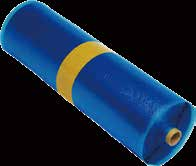
Cover rubber, tie gum, rubber solution and cord-fill materials for belt splicing. Select the matched system using the belt construction and controlled splice procedure.
Specifications & construction
Technical specifications
Field
Catalogue value
Cover rubber catalogue formats
3 / 4 / 5 mm × 500 mm
Tie gum catalogue formats
0.8 / 2 mm × 500 mm
. Catalogue values are not batch test results or an approved quotation
Application & ordering review
Interface and selection conditions
Select the system with the belt construction and controlled splice procedure. Source cure times/temperatures are not a universal field instruction.
Information for procurement
Provide the equipment drawing or existing part reference, required quantities, destination, operating conditions and required technical/safety documentation.
Source and evidence scope
These are catalogue references, not batch results, compliance certification or confirmation of every available size combination. Request the quotation-specific construction, drawing and acceptance documents
Formal TDS revision, batch report and certification original: pending confirmation for the selected product and order.
Catalogue PDF references
These are complete catalogues. Use the product and physical-page references below. They are not single-model datasheets, approved drawings, batch test reports or certification originals. Different catalogue schedules and versions must not be combined.
Conveyor components — full product manual
Full source catalogue for reference only. Check the physical pages and the selected construction. Catalogue claims do not replace order-specific technical approval, test results or certification evidence.
File version: 90e4dfe160e9 · 42 PDF pages. Issue date: not confirmed.
What information should I provide for Conveyor Components & Maintenance Materials?
Identify the equipment part, dimensions and operating problem; separate replacement hardware, repair materials and any installation-service requirement.
How do I identify the required conveyor component?
Start with the equipment location, interface drawing, dimensions and operating problem. State hardware, maintenance materials and any installation-service requirement separately.