
Truly Endless or Spliced Endless: How Can Buyers Verify the Belt Construction?
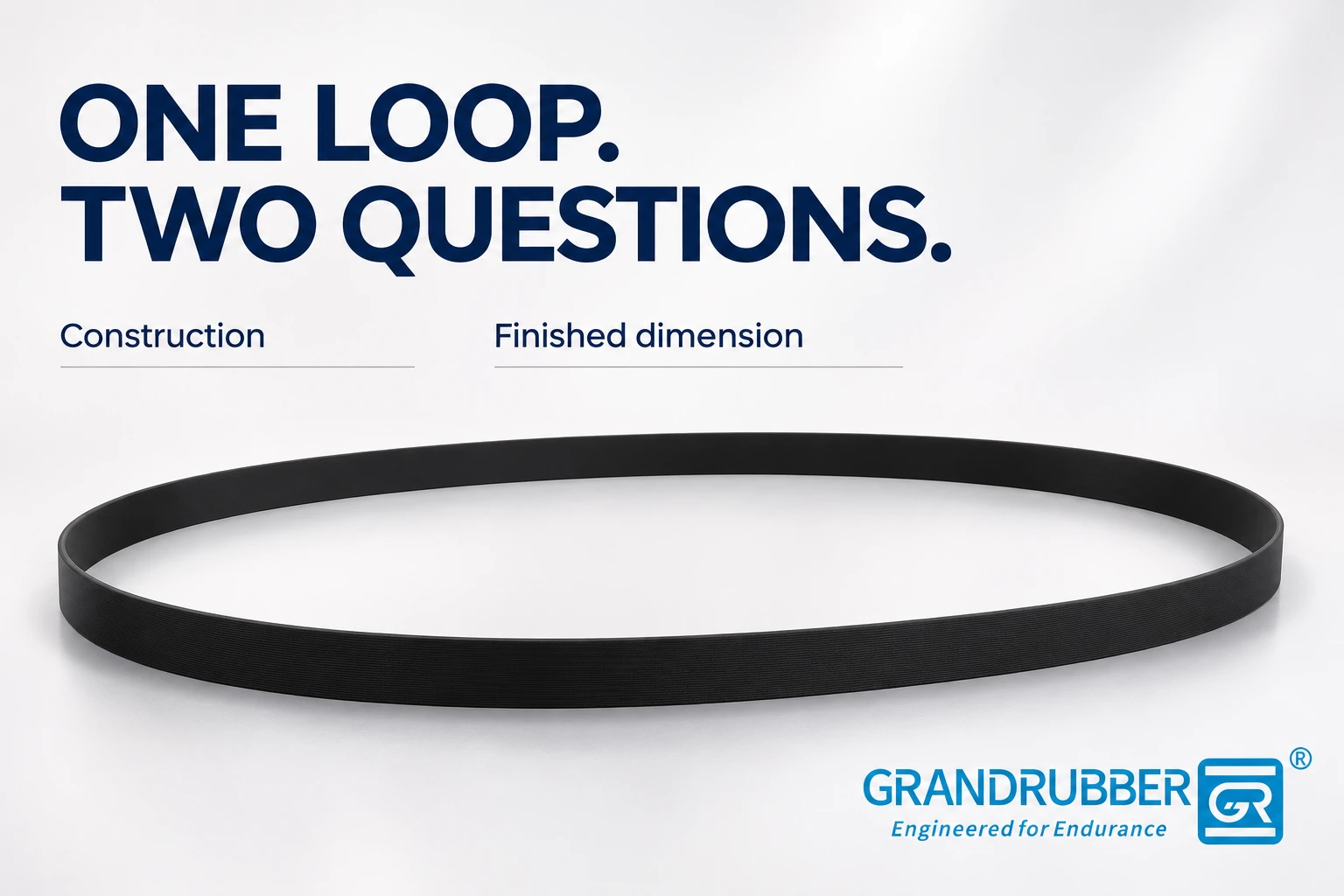
A closed loop does not by itself prove joint-free manufacture. If the requirement is truly endless construction, ask the supplier to identify how the carcass is made and whether any splice is present. Define circumference and installation access separately so the delivered loop fits the actual machine.
On this page
 Open full-size image ↗
A closed loop does not by itself prove joint-free manufacture. If the requirement is truly endless construction, ask the supplier to identify how the carcass is made and whether any splice is present. Define circumference and installation access separately so the delivered loop fits the actual machine.
Separate the shape supplied from how that shape was made
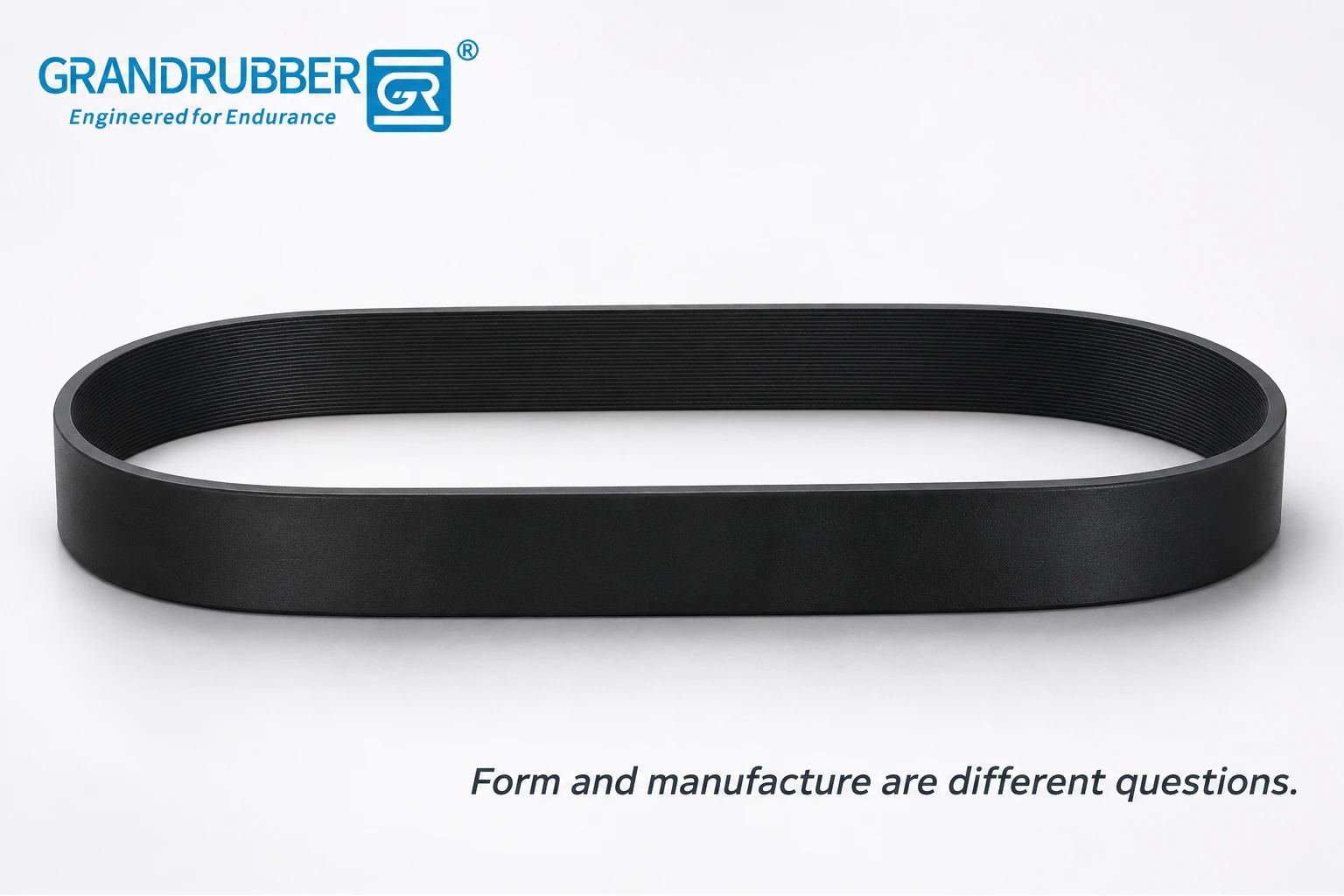
Endless can describe the delivered form: a belt that is already a closed loop. Truly endless is also used to describe manufacture without a splice joint. A buyer who needs the latter should not rely on the former word alone. The supply description must answer whether a joining interface exists in the offered construction.
Fenner Conveyors’ slinger-belt page explicitly describes its named products as manufactured endless without a splice join. That is a clear example of a construction statement. It does not establish the construction of another supplier’s belt, nor does this guide adopt that manufacturer’s materials, speed, ratings or tracking claims.
The purchasing question is identity rather than terminology preference. Ask for a written description of the offered carcass and joining status. A product photograph that looks continuous may not reveal all construction details, and an absence of a visible joint in a small catalogue image is not evidence of joint-free manufacture.
Define the loop dimension with its measurement basis
Give the supplier a controlled drawing that identifies how the finished loop length or circumference is defined. Record the specified reference and units, and ask what measurement condition and tolerance apply. If a buyer and supplier use different dimensional references, the same written number may not describe the same finished item.
Do not substitute conveyor centre distance, an old belt’s remembered length or a flattened-loop measurement without explaining the basis. Where only a worn sample is available, state its condition and what was actually measured. The supplier and equipment reviewer should establish a usable ordering dimension rather than silently treating a used specimen as the original nominal size.
The first table connects the dimensional question to the construction question while keeping them separate. A correct closed-loop dimension does not prove joint-free manufacture, and a joint-free construction statement does not prove the proposed dimension fits the machine. Both require an identified response.
| Question | Required identification | Not established by |
|---|---|---|
| Construction | Manufactured joint-free or actual joining form | A closed-loop photograph |
| Finished size | Circumference/length reference, condition and units | An undefined number called belt length |
| Equipment fit | Actual pulley/layout reference and responsible review | Construction identity alone |
| Installation scope | Access route and work responsibility | Factory-finished loop supply alone |
| Delivered identity | Traceable accepted construction and drawing revision | A generic product category name |
Check whether the supplied loop can be installed in the equipment
A belt delivered as a closed loop needs an equipment-compatible installation route. Send the applicable machine drawing, pulley arrangement and access constraints to the responsible reviewer. The procurement team should ask who confirms the route and scope; it should not invent a disassembly or lifting method from a product image.
This is especially important when replacing an earlier belt that was joined on the machine. A proposal to deliver a factory-finished loop can change the installation boundary even if the nominal working dimensions appear similar. Identify the proposed supply form, the equipment response and any work excluded from the material quotation.
Keep this review separate from the claim of truly endless manufacture. A closed loop with a splice and a joint-free loop both need the actual equipment interface considered. The absence of a splice does not, by itself, establish access, pulley suitability, available adjustment or a safe installation procedure.
Worked order review: both quotations say endless, but only one defines it
Assume a hypothetical OEM enquiry requires joint-free manufacture. One quotation says endless supply without identifying the carcass construction. Another states a joint-free construction but leaves the finished circumference reference undefined. Neither example contains actual GR availability, a test outcome or a customer case.
The first quotation has a construction gap. Ask whether the offered belt is closed by a splice and request the actual manufacturing description. A new label on the quotation is not enough if the underlying item remains unspecified. The second quotation has a dimensional gap: construction is described, but the final size still needs a defined basis and equipment review.
If the supplier proposes a spliced alternative, treat that as an explicit departure from a joint-free requirement. The responsible purchaser and equipment reviewer can assess the proposal; this guide does not approve it as equivalent or reject it as universally unsuitable.
The second table helps record those separate outcomes. A buyer should be able to identify which fact is established and which decision remains open before releasing the order. Avoid letting a lower price or a familiar catalogue name conceal a changed construction.
| Offer response | Established information | Unresolved requirement |
|---|---|---|
| Endless supply only | Closed-loop form proposed | Whether a splice exists |
| Joint-free stated; size reference absent | Manufacturing claim identified | Finished dimensional definition |
| Spliced alternative to joint-free requirement | Explicit construction departure | Responsible technical and purchasing disposition |
| Loop identified; access not reviewed | Product proposal available | Equipment installation boundary |
Ask for evidence appropriate to the construction claim
Request the applicable product drawing or construction statement and identify how the supplier will trace the delivered loop to the accepted item. If inspection is required, agree its scope and the evidence expected. A generic certificate or an unlabelled close-up should not silently replace the actual manufacturing statement.
Joint-free does not mean that every other belt performance question has been answered. Covers, environment, working duty, geometry and relevant evidence still belong to the actual enquiry. Do not derive an unlimited life, zero tracking problem or universally higher allowable load from the absence of a splice.
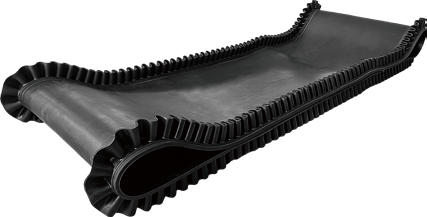
If a sidewall or other configured version is involved, identify those features separately on the drawing. Do not transfer a flat-loop illustration into approval for every profile, basebelt or dimensional combination. The final offer should describe what is actually proposed and which interfaces still need assessment.
Send one manufacturing-and-loop-definition request
Use the truly endless conveyor-belt enquiry with the required joint status, the defined loop dimension, width and construction, and the actual machine references. Ask GRAND RUBBER to state the offered supply form, available item-specific documents and any departures. Its product category is an enquiry route, not evidence that every requested geometry is available.
Where an existing joint is being evaluated for repair, use the separate belt-repair guide. That is a different decision from ordering an initially joint-free loop. Likewise, use the main specification checklist for the complete duty rather than expecting the word endless to describe the entire belt.
The next action is a marked construction and dimensional schedule, together with the equipment owner’s installation-scope response. Keep all three with the accepted order revision so neither manufacturing identity nor access constraints are lost.
Buyer FAQ
Does a factory-spliced loop count as joint-free manufacture?
It is a closed loop with a joining interface. If joint-free manufacture is the requirement, identify a factory-spliced proposal as a different construction and obtain an explicit disposition.
Can the supplier prove the construction with a photograph alone?
A photograph may support a specific item record but does not necessarily establish the hidden manufacturing details. Request the applicable construction statement and agreed traceability or inspection evidence.
Is conveyor centre distance the same as the finished loop length?
They are different dimensional descriptions. Use the actual equipment drawing and an agreed finished-loop measurement basis; do not replace one with the other without the responsible review.
What if a worn sample is the only available reference?
Record the sample condition and the measurement actually obtained. Ask the supplier and equipment owner to establish the ordering basis rather than treating wear or stretch as original nominal geometry.
Does no splice guarantee no tracking problem?
No universal outcome follows from that construction feature. The actual belt, equipment and duty still need assessment; this guide makes no zero-tracking or life guarantee.
Can a closed loop be installed like an open roll?
Do not assume the installation boundary is unchanged. Ask the equipment owner or installer to confirm the appropriate route, access and scope for the supplied loop.
What should the final purchase line say?
Identify the accepted joint status, complete construction, defined finished size and drawing revision. Preserve any accepted departure and the associated equipment-scope response.
Sources
Related technical resources
Related products
 Truly Endless Conveyor Belts
Document and page references
- Fenner Conveyors — Slinger conveyor belts: An endless array of slinger belts, distinction of manufacture without splice join. Named manufacturer construction reference only; no proprietary materials, ratings, dimensions, speed or tracking/life claim adopted.
- Editor-derived evergreen purchasing analysis; hypothetical examples are not real cases, field results or approved operating procedures.
Download the reference tables
Source-labelled review extract. Historical references remain historical; this is not a formal TDS, certificate or current availability confirmation.
Download guide tables CSV