
Anti-Fatigue or Anti-Slip Matting: What Should a Standing-Workstation Buyer Specify?
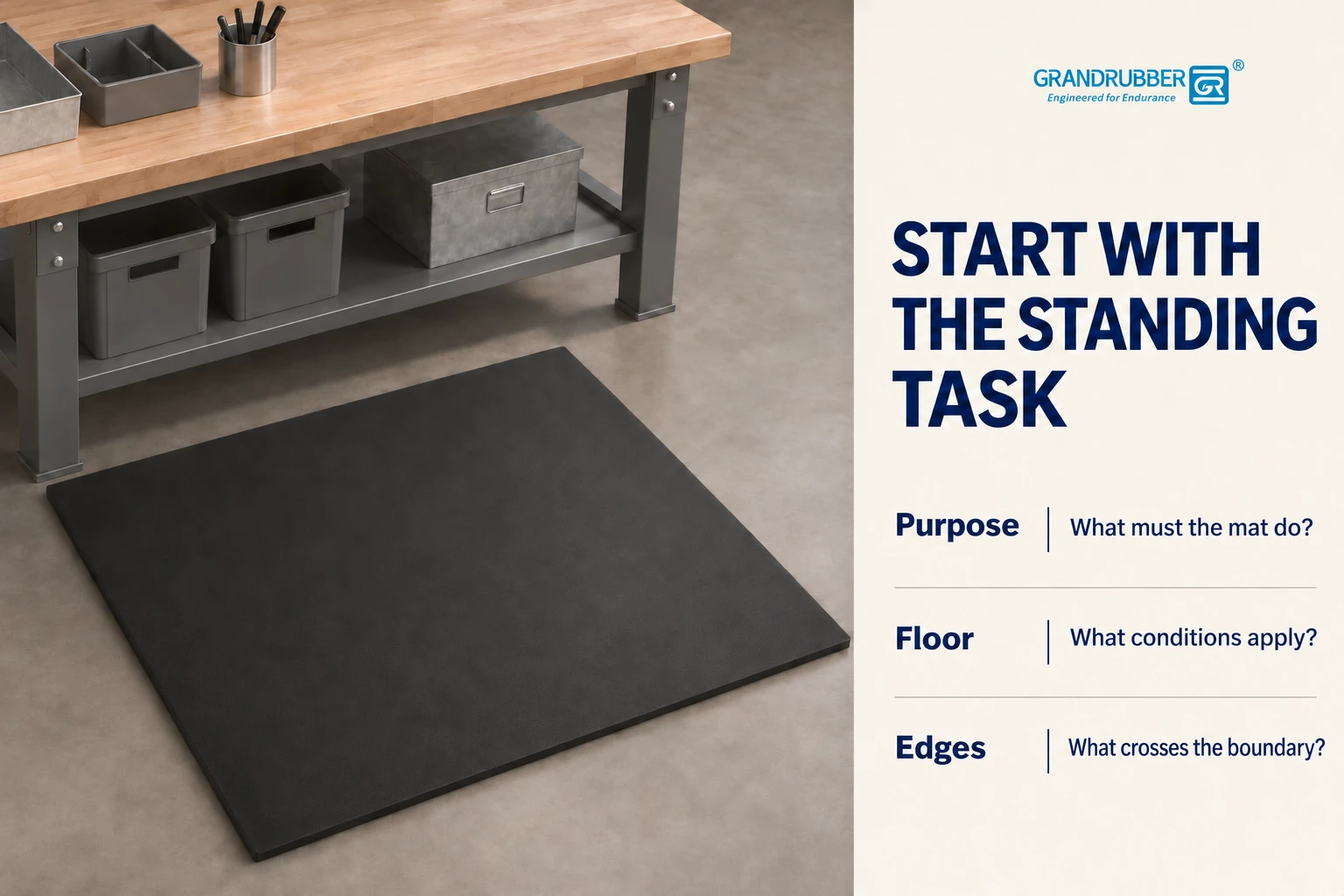
Start with the job the mat must perform. Standing comfort and slip control are different requirements, and thickness alone does not select a suitable workstation mat. Define the standing task, footwear and floor, traffic, edges and cleaning arrangement before evaluating an identified product.
On this page
 Open full-size image ↗
Start with the job the mat must perform. Standing comfort and slip control are different requirements, and thickness alone does not select a suitable workstation mat. Define the standing task, footwear and floor, traffic, edges and cleaning arrangement before evaluating an identified product.
Separate the purpose of the mat from a promised worker outcome
A mat for a person standing at a workstation is a different purchasing problem from a livestock-flooring layout or a general rubber sheet. The workstation has a task, an operator position, footwear, nearby traffic and a floor interface. Those inputs should establish the enquiry before a buyer chooses a texture or the thickest option.
CCOHS distinguishes anti-fatigue matting from anti-slip matting and places mat selection alongside work design, footwear and flooring. Its guidance also cautions that softer and thicker is not automatically better. These are general workplace evaluation considerations, not an endorsement or certification of a GRAND RUBBER product.
Define the intended purpose in the requirement. If the buyer needs both standing comfort and a particular slip-related response, record each separately and ask what applicable evidence and workplace review are needed. Do not translate a catalogue anti-fatigue label into a promise of reduced injury, a medical benefit or a measured outcome for every worker.
Describe the standing task and the floor the mat must work with
Record the actual workstation, where people stand and move, and the relevant documented floor condition. Identify footwear or protective-equipment requirements through the workplace’s responsible process. Keep a specific task description rather than asking for one mat for an entire facility with different environments.
List the liquids, debris or cleaning exposure actually present, if any. A dry workstation and an area with a cleaning regime do not have identical input records. The buyer should ask for an item-specific material and layout response rather than assuming that a rubber surface or holes establish the required suitability.
The first table organizes the enquiry without diagnosing discomfort or prescribing a work design. The responsible workplace personnel assess the complete task and applicable safety requirements. A product supplier can identify its offered material, form and documents; it cannot establish the whole workplace outcome from a mat photograph.
| Input | What to describe | Separate requirement |
|---|---|---|
| Purpose | Standing task and intended mat function | Comfort wording is not slip-test evidence |
| Work context | Standing/movement pattern and workplace references | A mat does not replace the whole work assessment |
| Floor/exposure | Actual floor, liquids/debris and cleaning context | Rubber appearance does not establish suitability |
| Boundary/traffic | Layout, edges, adjacent paths and crossings | Same area size does not mean the same installed edge |
| Product evidence | Identified model/material and applicable documents | General guidance is not GR product certification |
Evaluate edges, movement and cleaning as part of the proposal
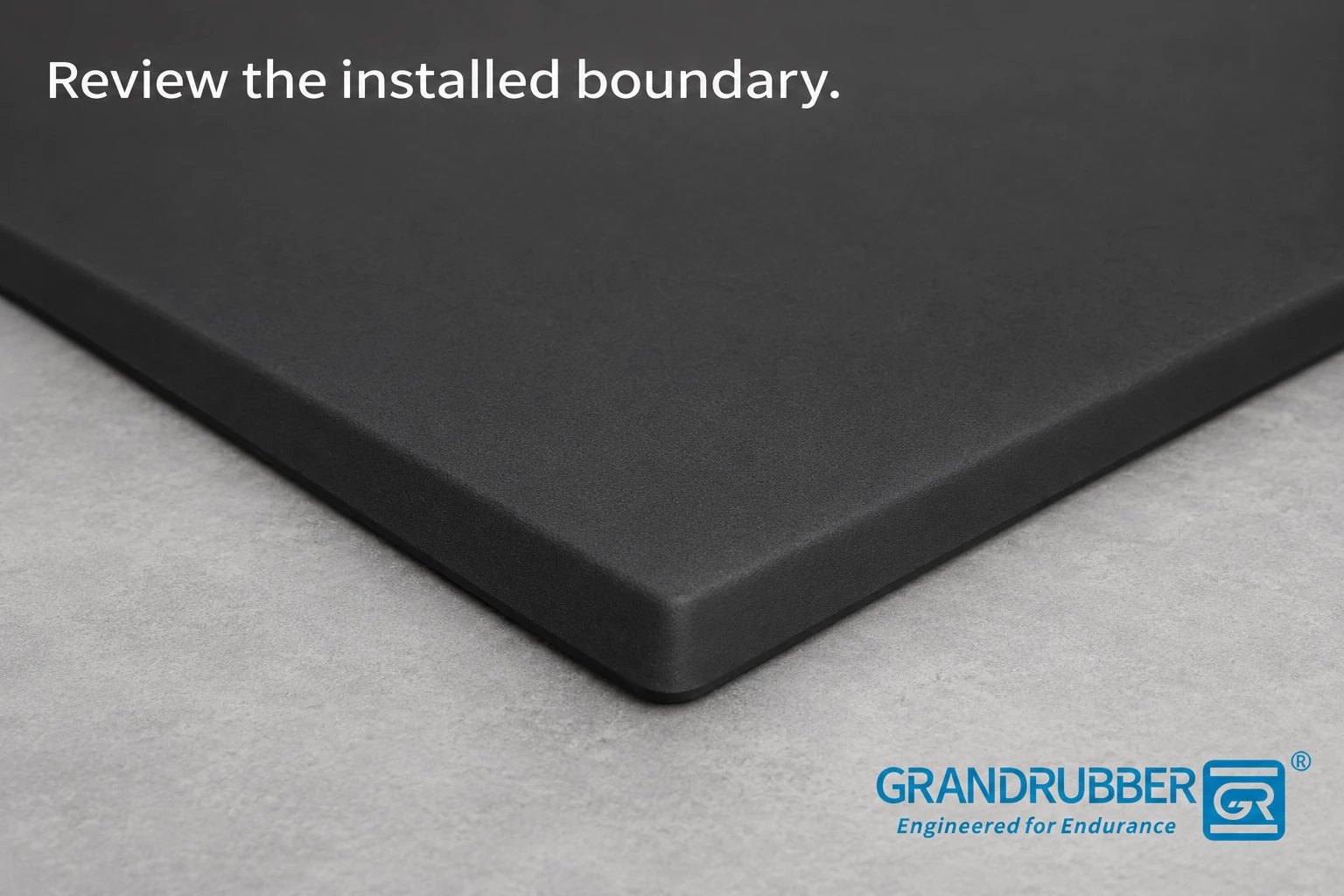
A mat changes the floor interface where people or equipment cross it. CCOHS’s selection guidance calls attention to slipping/tripping, edge form and cleaning. For procurement, this means the boundary of the mat is a functional question, not a decorative detail to choose after the order.
Identify the actual standing area, adjacent walking paths and any cart or equipment crossing. Ask which offered edges, transitions or joining features are included and how they relate to the proposed layout. Do not assume that two mats with the same face dimensions present the same installed boundary.
Also identify who will clean, inspect and manage the installed mat under the applicable workplace process. A supplier’s material description is not an approved cleaning procedure for every chemical or a guarantee that the mat remains in place on an unidentified floor. Keep these operational responsibilities visible in the purchasing handover without inventing a frequency or method.
Worked comparison: the thickest offer misses the workstation boundary
Assume a hypothetical facility requests a mat for a standing task beside a cart route. One offer emphasizes thickness but does not define the edge arrangement or cleaning compatibility. Another gives an identified form but leaves the actual workplace assessment to the buyer. No worker-health outcome or real site case is represented.
The first offer has not answered the full enquiry by supplying a thickness value. The buyer should request the proposed layout and edge scope, the applicable material/exposure response and any relevant evidence for the separate performance requirements. The second offer is not automatically complete either: the workplace still needs to supply and assess its actual task and crossing conditions.
Use the second table to keep purpose, product and workplace questions separate. A softer feel is an observation, not a complete specification or a universal ranking. An item can be well identified while still requiring a responsible review against the intended area.
The comparison should end with an accepted product/layout and explicit open items, not a claim that the chosen mat solves every prolonged-standing issue. This guide does not give medical advice, diagnose pain or prescribe footwear or worker posture.
| What is supplied | What it answers | What remains to review |
|---|---|---|
| Thickness emphasis | One product characteristic | Purpose, edge and actual workplace suitability |
| Named model and layout | An identified product proposal | Applicability to actual floor/traffic/cleaning |
| General ergonomics guidance | Workplace factors worth considering | Evidence for the offered product’s claimed performance |
| Material document | Properties within its actual scope | A worker-health outcome or complete site approval |
Request product evidence without treating general guidance as certification
Ask the supplier which offered model and construction are covered by its stated dimensions, material and performance documents. Keep nominal catalogue information separate from actual test results. If the project specifies a particular method or acceptance basis, name it in the enquiry rather than assuming the anti-fatigue or anti-slip wording establishes it.
CCOHS’s general information does not identify GR8003 as assessed or approved. Its advice can help organize the buyer’s questions, but a citation to the guidance is not product evidence. A supplier should respond with the actual scope of its own documents, including limitations.
If the work area or cleaning plan changes, revisit the affected material and layout questions. A product selected for one standing task should not be rolled out to wet areas, food-preparation areas or other workstations merely because the same company owns them. Retain the area-specific requirement and responsible disposition.
Send a task-and-layout enquiry for the identified mat
Use the GR8003 enquiry with the actual workstation layout, purpose, floor and traffic description, cleaning exposure and required supporting documents. Ask GRAND RUBBER to identify the offered product form and which requirements remain to be reviewed. Its catalogue format is not proof of every workplace suitability or any health outcome.
Keep the workplace assessment and the product proposal connected but distinct. The buyer’s responsible site personnel need the actual product description; the supplier needs the actual intended conditions. Neither should have to infer those facts from a broad request for comfortable rubber matting.
The next step is one area-specific comparison sheet recording purpose, product, installed edges and cleaning responsibilities. Retain the accepted layout and evidence with the purchasing record, rather than ordering solely by surface pattern or nominal thickness.
Buyer FAQ
Are anti-fatigue and anti-slip mats interchangeable?
They describe different purposes. Define the required functions for the actual workstation and obtain the applicable product and workplace response to each.
Is a softer or thicker mat automatically better?
CCOHS cautions against that assumption. Evaluate the actual product with the task, floor and boundary conditions rather than ranking thickness alone.
Does a product labelled anti-fatigue guarantee reduced injury?
No such GR product outcome is established here. General workplace guidance is not a product-specific health claim or medical advice.
Should cart crossings be included in the enquiry?
Yes, identify the actual route and proposed mat boundary so the responsible parties can assess the offered edge/layout and intended use.
Can the same mat be moved into a wet or chemically cleaned area?
Do not assume that the earlier assessment applies. Identify the changed exposure, floor and cleaning requirement and obtain an item-specific response.
Does the CCOHS source certify GR8003?
No. It is general workplace guidance. Request the actual offered model’s documents and keep their scope separate from the guidance citation.
What should I send for an actionable quotation?
The specific workstation layout, purpose, floor/traffic/cleaning context, proposed dimensions and required evidence. Ask for the identified product and any unresolved applicability questions.
Sources
Related technical resources
Related products
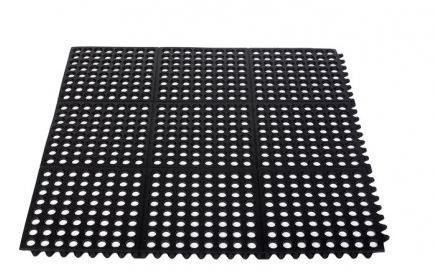 GR8003 Anti-fatigue Mat
Document and page references
- CCOHS OSH Answers — Anti-fatigue Mats: Purpose; work design/footwear/flooring; How do I select an anti-fatigue mat?. General workplace purchasing considerations only; no GR certification, medical advice, injury reduction or product health outcome claim.
- Editor-derived evergreen purchasing analysis; hypothetical examples are not real cases, field results or approved operating procedures.
Download the reference tables
Source-labelled review extract. Historical references remain historical; this is not a formal TDS, certificate or current availability confirmation.
Download guide tables CSV